Rick Simpson Oil (RSO) in Manatee County: The Complete Gulf Coast Guide by OilWell Cannabis
If you’re reading this from your home in Bradenton, maybe looking out at the Manatee River, or from your condo on Anna Maria Island where the Gulf breeze comes through the windows, or from Lakewood Ranch where the citrus groves still remind us of Florida’s agricultural roots—you’ve found something different. You’ve found a complete, honest conversation about Rick Simpson Oil, written specifically for our community here on Florida’s Gulf Coast. Not hype. Not miracle claims. Just the facts, the science, and a product built from a decade of real-world formulation that started with a dying dog named Bentley and evolved into something that serves cancer patients, chronic pain sufferers, veterans with PTSD, and anyone in Manatee County looking for options when conventional medicine falls short.
We know the Manatee County landscape. We know the retiree community in Palm Aire dealing with arthritis that makes it hard to cast a line off the pier. We know the veterans in East Manatee who served our country and came home with invisible wounds. We know the families in Parrish watching a loved one go through chemotherapy at Manatee Memorial or Blake Medical Center, searching for anything that might ease the nausea and restore some appetite. We know the chronic pain patients in Palmetto who’ve been through the opioid cycle and are looking for something else. This guide is for you. All of you.
What Is Rick Simpson Oil, Really?
Rick Simpson Oil is the most recognized name in concentrated cannabis extract, but here’s what most people in Manatee County don’t realize: the original RSO was never a standardized product. It was one man’s desperate experiment.
Rick Simpson was born in 1949 in Amherst, Nova Scotia, a blue-collar power engineer who became a cannabis advocate not because he set out to change the world, but because the medical system failed him. In 1997, while working at a hospital in Moncton, Simpson fell from scaffolding and suffered a severe head injury. The tinnitus, dizziness, and post-concussion symptoms that followed didn’t respond to his prescriptions—some made things worse. Cannabis helped when his doctor wouldn’t consider it.
The pivotal moment came in 2003. Simpson had three bumps on his arm diagnosed as basal cell carcinoma. Instead of conventional treatment, he applied concentrated cannabis oil directly to the lesions, covered them with bandages, and claimed they disappeared in four days. No biopsy confirmation. No independent medical verification. No published case study. Just his personal testimony—historically significant as the catalyst for a global movement, but not medical evidence.
After that experience, Simpson committed himself to producing and distributing oil for free from his property in Maccan, Nova Scotia. He gave it away to cancer patients, chronic pain sufferers, people with diabetes, infections, glaucoma, arthritis, depression, insomnia—anyone who asked. He never charged. He documented his process in the 2005 documentary Run From The Cure, which became the underground film that introduced millions to concentrated cannabis oil. The RCMP raided him in 2005 and 2009. He was charged with cultivation, possession, and trafficking. Eventually, he left Canada for Europe, continuing his advocacy from Croatia and the Netherlands.
Simpson’s position was uncompromising: he claimed RSO could cure cancer and that pharmaceutical companies, government agencies, and medical institutions were actively suppressing this knowledge. He framed his work as a fight against institutional corruption. That conspiratorial worldview resonated with many who felt abandoned by the medical system—including, undoubtedly, some people right here in Manatee County who’ve faced their own struggles with doctors dismissing cannabis as an option.
Simpson’s 60-gram, 90-day protocol became legendary: start with a half-grain-of-rice-sized dose, double every four days, work up to 1 gram per day (600-900mg of THC daily), then maintain. He recommended oral ingestion primarily, topical application for skin lesions, and acknowledged inhalation only for immediate symptom relief. He believed patients would develop tolerance to the psychoactive effects within 3-4 weeks and urged them to push through the “high” as a minor side effect.
But here’s the critical context: Simpson’s protocol was designed around crude, single-strain, unstandardized extract. No lab testing. No potency verification. No contaminant screening. The solvent—naphtha or isopropyl alcohol—carried real risks. Every batch was different. The 600-900mg daily THC dose far exceeds anything studied in controlled clinical settings and carries documented risks of severe intoxication, anxiety, tachycardia, and cannabis use disorder.
Simpson got one thing absolutely right: he drew attention to cannabinoids as serious biomedical research when the world was ignoring them. His advocacy helped create the conditions for the legal cannabis industry. The term “RSO” remains the most recognized name for full-spectrum cannabis extract. But he also overstated—dramatically. No human clinical trial has demonstrated RSO cures cancer. The National Cancer Institute acknowledges preclinical anticancer research but does not endorse cannabis oil as cancer treatment. The FDA has not approved any cannabis plant product for cancer. Encouraging patients to use RSO instead of proven therapies carries genuine harm potential.
The OilWell Story: From Bentley’s Miracle to Manatee County
OilWell Cannabis wasn’t born in a boardroom. It was born in a moment of desperation that every pet owner in Manatee County can understand.
Colin Valencia, our founder, grew up in McAllen, Texas—one of the most economically challenged and dangerous border regions along the U.S.-Mexico border. By sixteen, he’d left home, having seen violence that most people in Manatee County’s peaceful beach communities can’t imagine. He learned cannabis in the traditional, pre-legalization world—intimately, from the plant itself. He later became a formally trained software engineer, doing custom development for Baylor College of Medicine in the Texas Medical Center. That combination—deep plant knowledge plus medical-grade technical precision—defines everything we do.
But the real start was Bentley. Colin’s dog. Family. When Bentley became paralyzed in his back legs, veterinarians delivered the verdict no pet owner wants: euthanasia was the only humane option. The pain medications would destroy his organs. The choice was prolonged suffering or mercy killing.
Colin wasn’t ready to give up. In his search for alternatives, a rescue worker named Jessica asked him a question that changed everything: “You’ve moved how many tons of weed and you’ve never heard of CBD?”
That question exposed a blind spot. Colin’s cannabis experience had been recreational—getting high. He’d never explored therapeutic applications. He learned to create CBD golden paste. It wasn’t a cure, but it was hope. And that hope delivered what veterinary medicine said was impossible: Bentley got up. He walked over to Colin and brought him his ball. From paralyzed to playing. Dogs don’t respond to placebo. This was cannabinoid medicine working where pharmaceuticals failed.
Bentley lived another ten years, dying naturally at age twenty. During those years, Colin developed specialized formulas for every age-related condition Bentley faced. Neurodegeneration led him to CBG’s neuroprotective properties and THCa’s PPARγ agonism for brain cell protection. Dementia led him to CBC’s role in neurogenesis. Glaucoma led him to THC’s CB1 agonism for intraocular pressure. Crippling arthritis led him to multi-pathway anti-inflammatory approaches using CBD, CBG, THCa, and beta-caryophyllene working through different receptor systems simultaneously.
Single cannabinoids weren’t enough. Bentley’s evolving conditions required multi-cannabinoid synergy. Pharmaceutical precision mattered—Bentley’s life depended on formula accuracy, not guesswork.
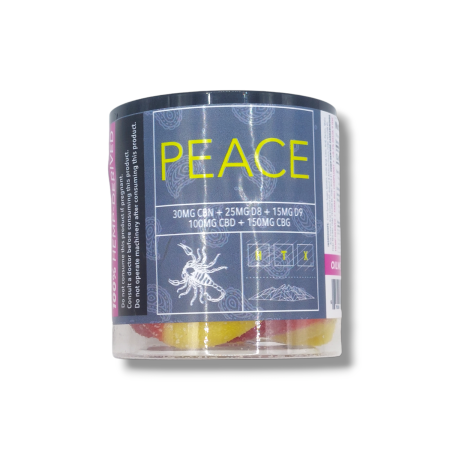
Colin also knows pharmaceutical dependence personally. He struggled with PTSD and benzodiazepine addiction. When he decided to quit Xanax cold turkey—a notoriously dangerous feat—he used the same cannabinoid knowledge he’d developed keeping Bentley alive. The Peace Gummies formula was created during midnight experiments while fighting through benzo withdrawal. He personally uses the vape form for insomnia and severe PTSD. This isn’t theoretical. Colin lived what RSO patients live: desperation for relief, failed pharmaceuticals, the discovery that cannabinoids work when pills don’t.
Why OilWell’s RSO Is Different: Four Core Principles
We respect what Rick Simpson started, but we’ve evolved his vision for the modern world—especially for communities like Manatee County that need safe, legal, consistent options.
1. Accessibility Over Gatekeeping
In Manatee County, you don’t need a medical marijuana card. You don’t need to qualify under Florida’s restrictive list of conditions. You just need to be 21 or older. We ship directly to your home in Bradenton, your condo on Longboat Key, your ranch in Parrish—wherever you are in Manatee County. No medical appointments. No state registry. No qualifying conditions.
Simpson believed medicine should be accessible to everyone. We’ve built a product and distribution model that makes that legally possible. Whether you’re dealing with chemotherapy side effects and can’t drive to a dispensary, or you’re a veteran in East Manatee who doesn’t want to navigate the medical system, or you’re a retiree on Anna Maria Island managing chronic pain—we come to you.
2. Patient-Controlled Potency
Traditional RSO was always psychoactive. The heat of production converted all THCa to delta-9 THC. You had no choice—you were going to get high, and if you needed daytime relief without impairment, you were out of luck.
Our sublingual oil contains 1,500mg of THCa in its raw, non-psychoactive form. You decide:
-
Raw, no heat: All 1,500mg stays as THCa—completely non-psychoactive. You get anti-inflammatory benefits via COX-2 inhibition and neuroprotective potential via PPARγ agonism without any impairment. Perfect for daytime use, for driving to work in Bradenton, for fishing off the pier, for functioning as a parent or grandparent.
-
Fully activated, home decarboxylation: Heat the oil at 260°F for 45-60 minutes, and that 1,500mg THCa converts to approximately 1,315mg delta-9 THC. Combined with the existing 90mg delta-9 THC, you get ~1,405mg total delta-9 THC—full psychoactive potency comparable to traditional RSO, 100% legally, because you control the activation after purchase.
-
Partial activation: Decarboxylate only a portion in a separate container, preserving the rest raw. Customize your experience.
-
Vape for instant relief: Our vape cartridge auto-decarboxylates at 400-450°F, delivering freshly converted THC with each puff. Onset in 1-2 minutes for breakthrough pain, panic, or nausea.
This design puts the potency decision entirely in your hands—aligning with Simpson’s principle that patients should control their own medicine, but implementing it through actual chemistry rather than rhetoric.
3. Open-Source Formulas
We publish our complete formulas publicly—every cannabinoid, every milligram, every percentage. If you’re in Manatee County and $129.99 for our sublingual oil or $49.99 for our vape cartridge isn’t in your budget, you can see exactly what’s in it, source the individual distillates and isolates, and make your own version. The formulas are right here in this document.
Simpson gave his oil away for free and taught people how to make it. He never patented his method. We’ve adapted that ethos for the modern marketplace: we sell a professionally manufactured, lab-tested, standardized product for those who want it, and we publish the complete recipe for those who want to make it themselves.
This is the most powerful trust signal we can offer. No other RSO company does this. Most guard their formulas as trade secrets. We give ours away because the mission matters more than the margin.
4. Evidence-Informed, Not Evidence-Overstating
The GENERAL KNOWLEDGE section of this document—detailed below—is our commitment to honest education about what the science actually says. Simpson operated without access to peer-reviewed literature or clinical trial data. We have that access, and we use it to distinguish between what is well-supported, what is emerging, and what is overstated.
Every cannabinoid and terpene in our formula has its own evidence profile. We don’t cherry-pick. We don’t hype. We show you the research hierarchy: human clinical evidence first, then systematic reviews, then institutional summaries, then preclinical literature. We tell you when the evidence is strong (CBD for seizures), when it’s promising but early (CBG for neuroprotection), and when it’s weak (CBN for sleep).
This is the kind of transparency that builds trust in Manatee County’s educated, research-aware community—especially among the retirees who’ve spent careers evaluating information critically, and the veterans who’ve learned to spot snake oil from a mile away.
The Formulas: Complete Transparency
RSO Sublingual Oil — $129.99
| Cannabinoid | Amount |
|---|---|
| CBD | 4,500mg |
| CBG | 3,000mg |
| Delta-8 THC | 6,000mg |
| THCa | 1,500mg |
| Delta-9 THC | 90mg |
| CBN | 750mg |
| CBC | 750mg |
| Total Cannabinoids | 16,590mg |
- Live Terpenes: 5% (limonene, myrcene, caryophyllene, pinene, linalool, humulene, terpinolene)
- Format: 30mL bottle with graduated dropper (0.1mL increments)
- Active per mL: 553mg
- Base: Organic MCT oil
- Onset: 15-45 minutes (sublingual)
- Peak: 1-2 hours
- Duration: 4-6 hours
- Bioavailability: 13-19%
- Doses per bottle: 40-60 depending on serving size
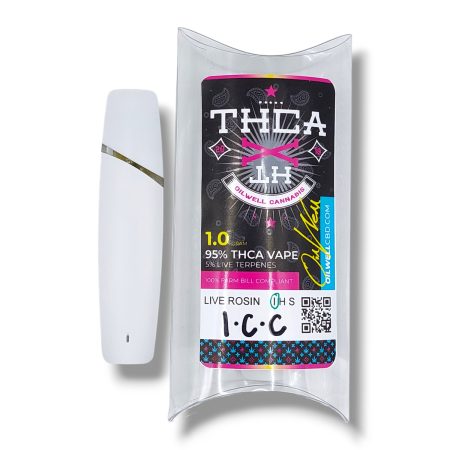
RSO Vape Cartridge — $49.99
| Cannabinoid | Percentage |
|---|---|
| CBD | 30% |
| CBG | 20% |
| Delta-8 THC | 15% |
| THCa | 10% |
| CBN | 10% |
| CBC | 10% |
- Live Terpenes: 5%+
- Format: 1 Gram cartridge, 510-thread universal battery compatible
- Onset: 1-2 minutes (fastest delivery)
- Peak: 10-15 minutes
- Duration: 2-4 hours
- Bioavailability: 10-35%
- Auto-decarboxylation: THCa converts instantly at 400-450°F
Terpene Profile: The Sensory Experience
Both products contain the same seven-terpene blend:
- Limonene — citrus-bright, mood-lifting
- Myrcene — earthy depth, potential relaxation
- Caryophyllene — pepper/spice, CB2 receptor agonist
- Pinene — forest-fresh, clarity
- Linalool — floral lavender, calm
- Humulene — woody earthiness
- Terpinolene — piney-fruity complexity
For Manatee County residents familiar with our local flora—citrus groves, pine forests, coastal herbs—these terpenes create a sensory experience that feels like home.
The Evidence: What Science Actually Says
We promised you honesty. Here’s what the peer-reviewed literature says about each compound in our formula.
Research Method: How We Evaluate Evidence
We prioritize sources in this order:
- Human clinical evidence
- Systematic reviews and meta-analyses
- NIH and institutional summaries
- Preclinical and mechanistic literature
This matters because the evidence base is uneven. CBD and delta-9 THC have the strongest human data; the rest rely more on reviews and animal work. We don’t pretend otherwise.
Cannabinoid Evidence Profiles
CBD (4,500mg in our formula)
- Strongest evidence: Purified CBD for certain rare epilepsies—this is the clearest major indication acknowledged by institutional literature
- Anxiety: 2024 systematic review of 316 participants found significant anxiolytic signal but stressed limited clinical samples need more trials
- Pain: 2024 review concluded promising but heterogeneous, with trial quality limiting broad analgesic claims
- Sleep: 2023 review found literature methodologically weak, few objective assessments
- Safety: 2023 meta-analysis found real signal for liver enzyme elevation and possible drug-induced liver injury, especially relevant for concentrated oral products and polypharmacy
- Bottom line: Most evidence-developed non-intoxicating cannabinoid, but strong evidence is concentrated in specific indications, not broad wellness claims
CBG (3,000mg)
- Evidence: Mostly review and preclinical; human evidence sparse
- Pharmacology: Distinct from THC/CBD; interacts with cannabinoid receptors, alpha-2 adrenoceptors, 5-HT1A signaling
- Research areas: Neurologic disorders, inflammatory bowel disease, antibacterial activity—primarily pharmacology-led hypotheses
- Caution: 2021 review notes CBG is already commercially sold while evidence base remains thin
- Bottom line: Promising minor cannabinoid with limited clinical validation
Delta-8 THC (6,000mg)
- Evidence: Pharmacologically relevant, psychoactive, much less clinically characterized than delta-9
- Pharmacology: Partial CB1 agonist, less potent than delta-9, similar PK/PD behavior
- Public health: 2023 scoping review found evidence base dominated by animal studies, product chemistry, use reports; noted adverse consequences and regulatory concerns
- Manufacturing: Commercial interest tied to stability and easier synthesis; product-byproduct and lab-testing questions matter
- Bottom line: Psychoactive THC analogue with real pharmacologic activity, incomplete human safety characterization, more manufacturing-quality uncertainty than consumers realize
THCa (1,500mg)
- Evidence: Important chemically, low on direct human therapeutic evidence
- What it is: Acidic precursor to THC; decarboxylates with heating
- Psychoactivity: Does not produce THC’s psychoactive effects IF it stays acidic
- Research: In vitro and rodent literature suggest anti-inflammatory, neuroprotective possibilities, but not established human outcomes
- Bottom line: Relevant precursor whose interpretation depends on route, temperature, processing, storage
Delta-9 THC (90mg)
- Evidence: Strongest human evidence of psychoactive cannabinoids, clearest adverse-effect burden
- Institutional support: THC-containing medicines relevant to chemo nausea, HIV/AIDS appetite, some MS/pain outcomes; many other uses uncertain
- Pain: 2022 systematic review found high-THC products may provide short-term pain benefit but increase dizziness, sedation, nausea, discontinuation
- Pharmacokinetics: Inhaled onset seconds-minutes, peaks 15-30 min, tapers over hours; oral onset later, peaks later, lasts longer
- Mental health risk: 2025 systematic review of high-concentration THC found consistent unfavorable associations with psychosis/schizophrenia and cannabis use disorder
- Safety: Anxiety/panic at high doses, tachycardia, blood pressure changes, dependency, withdrawal, pregnancy concerns, vape lung injury concerns
- Bottom line: Legitimate therapeutic relevance in some settings, but carries clearest intoxication, psychiatric, and dose-related safety liabilities
CBN (750mg)
- Evidence: Weak human evidence; marketing moved ahead of data
- Sleep claims: 2021 review screened 99 human-study abstracts, found no clinical trials using validated sleep questionnaires or polysomnography
- Broader sleep literature: 2024 review concluded cannabinoid sleep research doesn’t match scale of real-world use; need for better trials substantial
- Bottom line: Reputation stronger than clinical evidence; one of clearest examples of culture outrunning science
CBC (750mg)
- Evidence: Emerging, intriguing, overwhelmingly preclinical/review-based
- Pharmacology: Distinct PK/PD and receptor behavior; antinociceptive, antibacterial, anti-seizure areas interesting
- Safety: 2024 review explicitly notes over-the-counter CBC products sold despite little evidence establishing clinical efficacy or safety
- Bottom line: Scientifically credible minor cannabinoid deserving more research, not already-validated clinical active
Terpene Evidence Profiles
Limonene
- Evidence: Review and preclinical; multifunctional monoterpene with antioxidant, anti-inflammatory, cardioprotective possibilities
- Safety: Oxidation products are clinically relevant contact allergens
Myrcene
- Evidence: Mostly preclinical; anxiolytic, antioxidant, anti-inflammatory, analgesic properties hypothesized
- Interpretation: Human studies lacking; sedative claims ahead of evidence
Caryophyllene
- Evidence: Most mechanistically interesting; selective CB2 receptor agonist
- Research: Anti-inflammatory, immunomodulatory, neuroprotective, gastroprotective
- Bottom line: Strongest candidate for cannabinoid-system significance, but not clinically proven
Pinene
- Evidence: Promising preclinical; antioxidant, anti-inflammatory, neuroprotective signals
- Caution: Memory/clarity claims remain hypotheses, not settled facts
Linalool
- Evidence: Substantial preclinical interest; stress, mood, brain-health pharmacology
- Safety: Oxidized hydroperoxides are recognized allergens
Humulene
- Evidence: Translationally interesting; anti-inflammatory, some rodent cannabimimetic properties
- Interpretation: Valuable for hypothesis generation, not consistent human efficacy
Terpinolene
- Evidence: Least clinically characterized; dominated by in silico, in vitro, animal studies
- Bottom line: Biologically interesting but especially underdeveloped
Research Limits
- Evidence base is highly uneven; don’t let evidence from one category stand in for another
- Minor cannabinoids/terpenes are commercially interesting because underexplored—claims often inflated
- Product quality matters as much as molecule identity: labeling inaccuracies, contamination, synthesis byproducts, dose variability all affect real-world interpretation
- THCa chemistry changes with storage/heating—destiny is determined by handling
Condition-Specific Usage Context for Manatee County
Critical disclaimer: These contexts are informed by cannabinoid research, not medical prescriptions. Not FDA-approved. Not a substitute for professional medical care. Our products not evaluated by FDA. Not intended to diagnose, treat, cure, or prevent disease. Always consult a qualified healthcare provider, especially with medical conditions, medications, pregnancy/nursing concerns. Do not operate vehicles or machinery under psychoactive cannabinoid influence.
Chemotherapy-Related Nausea and Appetite Support
For Manatee County residents undergoing treatment at Manatee Memorial Hospital Cancer Center or Blake Medical Center Oncology:
- Pre-chemo: 0.5-1.0 mL sublingual approximately 1 hour before treatment
- Acute breakthrough nausea: 2-3 vape puffs for immediate relief (1-2 minute onset)
- Post-chemo: 0.5 mL sublingual every 6 hours as needed
- Sleep support during treatment: 1.0-2.0 mL sublingual before bed (delivers 25-50mg CBN)
- Evidence: Delta-8 antiemetic properties, delta-9 THC well-established for chemo nausea, CBD provides anxiolytic buffering
Chronic Pain (Arthritis, Fibromyalgia, Neuropathy)
For the many retirees in Manatee County dealing with joint pain that makes it hard to enjoy the beach, fishing, or golfing:
- Daytime: 0.3-0.5 mL raw sublingual—anti-inflammatory cannabinoid exposure without psychoactive impairment
- Nighttime: 0.5-1.0 mL decarboxylated sublingual—combines pain relief with CBN sleep support
- Breakthrough pain: Vape as needed for rapid onset
- Evidence: CBD and delta-9 THC pain literature, beta-caryophyllene CB2 activation for inflammation, THCa COX-2 inhibition
Sleep Support
For the insomnia that plagues so many in our community, whether from chronic pain, anxiety, or the stress of medical treatments:
- Before bed: 1.0-2.0 mL sublingual
- At 2.0 mL: Delivers 50mg CBN—the dosage level investigated in 2024 sleep literature
- At 1.0 mL: Delivers 25mg CBN—above threshold associated with reduced sleep disturbance
- Evidence: CBN sleep research remains limited but promising; combined with other cannabinoids may support sleep architecture
Anxiety and Stress
For veterans in Manatee County dealing with PTSD, for caregivers overwhelmed by responsibility, for anyone facing the anxiety that comes with health challenges:
- Daytime functional relief: 0.3 mL raw sublingual—CBD and CBG address anxiety pathways without impairment
- Nighttime: 1.0 mL sublingual—full cannabinoid profile including CBN for sleep
- Evidence: CBD anxiolytic research, CBG pharmacology, limonene entourage potential
General Titration Principle
Start low, go slow. Begin with 0.25-0.5 mL sublingual and assess effects over 2-3 hours before increasing. Individual responses vary by body weight, metabolism, tolerance, medications. This is especially important for Manatee County’s large retiree population, who may be on multiple medications and have slower metabolism.
Delivery to Manatee County: How You Get It
We know Manatee County is spread out—from the urban core of Bradenton to the barrier islands, from the rural stretches of Parrish to the planned communities of Lakewood Ranch. We’ve built a delivery system that serves everyone.
Shipping to Manatee County
- All areas served: Bradenton, Palmetto, Longboat Key, Anna Maria Island, Lakewood Ranch, Parrish, Ellenton, Cortez, Bayshore Gardens, West Samoset, Memphis, Oneco, Whitney Beach, Perico Island
- Shipping method: USPS Priority Mail (2-3 business days), FedEx or UPS Ground (3-5 business days)
- Discreet packaging: No cannabis branding visible—plain box, sender listed as “OilWell CBD”
- Tracking: Provided for all orders
- Temperature-stable packaging: Essential for Florida summers—we’ve got you covered
- Signature-required option: Available for security
Delivery Timing
Orders placed by 2 PM EST ship same business day. Most Manatee County addresses receive orders within 2-3 business days. You’ll have your tracking number within hours of ordering.
Legal Documentation Included
Every shipment includes:
- Full Certificate of Analysis (COA) showing cannabinoid content
- Receipt with batch number and testing date
- Farm Bill compliance documentation
- Customer responsibility notice for THCa conversion
This matters for Manatee County residents who want to understand exactly what they’re getting and have documentation for their records—whether for personal peace of mind or for discussions with healthcare providers at Manatee Memorial or Blake Medical Center.
The Manatee County Context: Why This Matters Here
Manatee County has a unique health landscape. With 25% of our population over 65, we have high rates of chronic pain, arthritis, sleep disorders, and cancer. We have a significant veteran community—many dealing with PTSD and trauma. We have agricultural workers with occupational injuries. We have families navigating serious illness at our local hospitals.
We also have a community that values independence, self-reliance, and honest conversation. The beach culture, the fishing lifestyle, the small-town connections—these values shape how Manatee County residents approach healthcare decisions. You want options, but you don’t want hype. You want science, but you want it explained plainly. You want accessibility, but you want quality.
OilWell’s approach fits this community because it’s built on the same values. We’re not a faceless corporation. We’re a company founded by someone who grew up in hardship, who learned cannabis from the ground up, who saved his dog with a formula he then gave away for free, and who personally used these compounds to quit benzos and manage PTSD. We don’t pretend cannabis is right for everyone. We give you the information and let you decide.
Farm Bill Compliance and Florida Law
Our products are legal under the 2018 Farm Bill because they contain less than 0.3% delta-9 THC by dry weight. The sublingual oil contains only 90mg delta-9 THC in the entire 30mL bottle—3mg per mL.
Florida law permits hemp-derived products that meet this federal standard. You do not need a medical marijuana card. You do not need a qualifying condition. You must be 21 or older.
Important legal notice: THCa converts to delta-9 THC when heated. You are responsible for understanding and complying with Florida law regarding cannabinoid products. Florida’s hemp laws align with federal Farm Bill provisions. Our products ship with full documentation for your records.
Common Questions from Manatee County Residents
Is this actually legal in Florida?
Yes. Our products contain less than 0.3% delta-9 THC and are hemp-derived, making them legal under both federal law and Florida’s hemp program. We ship throughout Florida daily.
Will I get in trouble with local law enforcement?
No. Our shipments are legal hemp products with complete documentation. However, if you choose to decarboxylate THCa into THC, understand that Florida’s recreational cannabis laws have not changed. Possession of high-THC products remains illegal unless you’re a medical marijuana patient. The conversion choice is yours and carries legal responsibility.
What about drug tests?
THCa in its raw form will not trigger a standard THC drug test. Delta-8 THC and decarboxylated THCa (converted to delta-9 THC) will trigger positive results. If you’re subject to drug testing for work, probation, or medical care, use the raw form only or abstain entirely.
How do I know it’s safe?
Every batch is third-party tested for potency, terpenes, pesticides (400+ compounds), heavy metals (arsenic, cadmium, lead, mercury), residual solvents, and microbial contaminants. Certificates of Analysis are available on our website and included with every shipment. Our production is solvent-free—no naphtha, no butane, no isopropyl alcohol. Just food-grade organic MCT oil and precisely measured cannabinoids.
Does this actually work?
The evidence varies by compound and condition. CBD has the strongest human data, especially for seizures. Delta-9 THC is well-established for chemo-induced nausea. Delta-8 shows antiemetic promise. CBG, CBN, CBC, and terpenes are scientifically plausible but clinically immature. We don’t overstate. We give you the research and let you evaluate.
How is this different from CBD oil I can buy at a Bradenton health store?
Most CBD oils contain only one cannabinoid—CBD—at much lower concentrations (typically 1,000mg per bottle vs. our 16,590mg). Our formula has seven cannabinoids and live terpenes at specific ratios. It’s a completely different pharmacologic approach. Plus, our THCa gives you the option for psychoactive potency that CBD oil cannot provide.
Why is it expensive?
You’re getting 16,590mg total cannabinoids across seven compounds, lab-tested, Houston-made, with open-source formulas published. Compare to single-cannabinoid products at 1,000mg for $40-50. On a cost-per-milligram basis, our pricing reflects the complexity and quality. And if you can’t afford it, you have the recipe to make your own.
How do I use it?
See our condition-specific usage contexts above. Start low (0.25-0.5mL), go slow, assess effects over 2-3 hours. Use raw for daytime non-psychoactive needs. Decarboxylate for full potency. Vape for rapid relief.
The Complete Formula: For Those Who Want to DIY
We promised open-source. Here are the exact formulas, published for anyone in Manatee County who wants to source ingredients and make their own.
RSO Sublingual Oil Formula
- CBD Isolate: 4,500mg
- CBG Isolate: 3,000mg
- Delta-8 THC Distillate: 6,000mg
- THCa Isolate: 1,500mg
- Delta-9 THC Distillate: 90mg
- CBN Isolate: 750mg
- CBC Isolate: 750mg
- Live Terpene Blend: 5% (limonene, myrcene, caryophyllene, pinene, linalool, humulene, terpinolene)
- Organic MCT Oil: QS to 30mL
Mix at low temperature (under 120°F) to preserve THCa. Bottle in amber glass with graduated dropper.
RSO Vape Cartridge Formula
- CBD Distillate: 30%
- CBG Distillate: 20%
- Delta-8 THC Distillate: 15%
- THCa Isolate: 10%
- CBN Isolate: 10%
- CBC Isolate: 10%
- Live Terpene Blend: 5%
- No cutting agents (no VG, PG, MCT, vitamin E acetate)
Mix thoroughly, fill 1g 510-thread cartridges. Vaping temperature auto-decarboxylates THCa.
Connect With Us
We’re here for the Manatee County community. Whether you have questions about dosing, want to discuss the research, need help deciding between formats, or just want to talk to someone who understands what you’re going through, we’re available.
- Phone: (832) 416-2816
- Email: [email protected]
- Website: https://oilwellcbd.com/
- Instagram: @oilwellcbd
- Hours: Mon-Thu 10AM-7PM, Fri-Sat 10AM-10PM, Sun 10AM-4PM (Houston time—we’re a Texas company proudly serving Florida)
We are not doctors. We are not trying to sell you snake oil. We are a company built on a dog’s miracle, a founder’s personal recovery, and a commitment to giving you the best possible version of the information so you can decide if it’s right or wrong for you.
From our family to yours in Manatee County—whether you’re watching the sunset over the Gulf from Longboat Key, heading out for early morning fishing in Cortez, or enjoying retirement in Lakewood Ranch—we’re here to provide serious cannabis options with serious transparency.
Order today for delivery to your Manatee County address. Discover what patient-controlled, evidence-informed RSO can do for you.
THCa Rick Simpson Oil
Full-Spectrum • In-House Extraction
THE OILWELL PASSION PROJECT: THCa RSO
Experience true full-spectrum relief. Our Rick Simpson Oil is meticulously crafted in-house to preserve the complete cannabinoid and terpene profile of the plant. Potent, pure, and profound.
- 🌿 Maximum Potency
- 🔬 Third-Party Lab Tested
- 🚀 Same-Day Delivery Available