Last updated: April 2, 2026 — All citations verified against official government sources.
If you’re reading this, you probably heard that Texas “banned” hemp. Maybe you’re a veteran who relies on CBD for sleep. Maybe you’re a cancer patient who found relief in a legal product when nothing else worked. Maybe you’re a parent who finally found something for your child’s seizures, or someone managing chronic pain without wanting to depend on opioids. Maybe you just enjoy a legal gummy after a long day at work.
Whatever brought you here — you deserve accurate information, not sensationalized headlines.
⚠️ A Note for Our Texas Customers:
This page explains Texas-specific hemp law. OilWell CBD serves customers nationwide and internationally. You may see products on our website that are listed as available and in stock — but due to the Texas regulatory changes described below, we may not be able to sell certain products to Texas addresses. Those products remain fully legal under federal law and are available to customers in the many other states and jurisdictions where these changes have no effect. If you’re in Texas and have questions about what we can ship to you, please call (832) 416-2816 or email us before ordering.
We went through every relevant statute, administrative rule, and section of the United States Code — the actual government-published text, not summaries or social media posts. Then we verified every citation against the official sources. What follows is a thorough, plain-English explanation of where Texas hemp law stands in 2026, with every claim sourced directly to the statute it came from.
Our goal is simple: to help our community — customers, neighbors, fellow Texans — understand the current legal landscape so that everyone can make informed decisions and stay on the right side of the law. Hemp remains legal in Texas. The details matter, and that’s what this page is for.
Table of Contents
- What Actually Happened on March 31, 2026
- A Rule Is Not a Law — Why That Distinction Matters
- What Federal Law Actually Says (Verbatim)
- What Texas Law Actually Says (Verbatim)
- The Criminal Law Question — Can You Be Arrested?
- Consumer Possession — Your Rights
- Interstate Commerce — Why Out-of-State Hemp Is Protected
- What’s Still Legal to Buy in Texas (Product by Product)
- A Few Questions Worth Considering
- The Federal Deadline: H.R. 5371 and November 2026
- Pending Court Cases That Could Change Everything
- Frequently Asked Questions
- Complete Legal Citations
1. What Actually Happened on March 31, 2026
On March 31, 2026, the Texas Department of State Health Services (DSHS) put into effect a set of administrative rules under 25 Texas Administrative Code Chapter 300. These rules changed how “total THC” is calculated in hemp products by adding a new formula:
Total delta-9 THC = (0.877 × THCA) + delta-9 THC
Under this formula, the naturally occurring THCA in hemp flower — which can be 20–35% in raw plant material — now counts toward the 0.3% legal limit. A pre-roll with 25% THCA, which contains virtually no active THC until it’s heated, now calculates to roughly 22% “total THC” under the DSHS formula. That’s how smokable hemp products were effectively removed from the regulated Texas market.
DSHS also dramatically increased licensing fees:
- Manufacturers: $258/year → $10,000/year (a 39× increase)
- Retailers: $155/year → $5,000/year (a 32× increase)
These fees apply to every business that sells consumable hemp products in Texas — including convenience stores, grocery stores, liquor stores, and restaurants. According to TABC’s own website: “holding a TABC license or permit does not authorize a business to engage in the CHP industry. Any business that wants to engage in the CHP industry must first get proper authorization from DSHS.” In other words, a liquor store selling Delta-9 gummies needs the same DSHS retail hemp registration — and pays the same $5,000/year fee — as a dedicated hemp shop. TABC then adds additional rules on top: TABC-licensed businesses that sell hemp products must verify the customer is 21+ with government-issued ID before every sale (TABC Rule 35.6), and if they sell to a minor, TABC can suspend or cancel their alcohol license (TABC Rule 35.5). There is no separate, cheaper, or easier pathway for TABC-licensed businesses.
How We Got Here — Timeline
| Date | Event |
|---|---|
| June 2019 | Hemp legalized in Texas (HB 1325), aligning with the federal 2018 Farm Bill |
| March 2025 | Texas Senate passes SB 3 (near-total hemp ban), 30–1 |
| June 2025 | Governor Abbott vetoes SB 3, citing unconstitutional taking of property |
| June 2025 | SB 2024 signed — bans all cannabinoid vapes (Class A misdemeanor) |
| September 2025 | Vape ban takes effect; 21+ age requirement begins; HB 46 expands medical cannabis |
| September 2025 | Governor signs Executive Order GA-56 directing DSHS, TABC, and DPS to regulate hemp |
| December 2025 | DSHS publishes proposed rules |
| January 2026 | Public hearing; over 1,400 comments received |
| March 2026 | Rules adopted and published in the Texas Register |
| March 31, 2026 | Rules take effect |
The important thing to understand: the Texas Legislature passed a bill (SB 3) that would have banned most hemp products. The Governor vetoed it. DSHS subsequently adopted administrative rules through the standard rulemaking process — a process that included a public hearing and over 1,400 public comments. These rules took a different regulatory approach than SB 3, but the end result significantly changed the landscape for hemp businesses and consumers in Texas.
2. A Rule Is Not a Law — Why That Distinction Matters
This is the single most important thing to understand about what happened on March 31, 2026.
In our legal system, there is a clear hierarchy:
- The U.S. Constitution — the supreme law of the land
- Federal statutes — laws passed by Congress and signed by the President
- State statutes — laws passed by the state legislature and signed by the Governor
- State criminal statutes — the laws that define what is and isn’t a crime
- Administrative rules — regulations adopted by government agencies
What DSHS adopted on March 31 sits at level 5 — the bottom of this hierarchy. Administrative rules carry regulatory force for the entities they govern (licensed businesses), but they are not criminal statutes. They cannot override federal law, state law, or the Constitution.
What does this mean practically?
- A law (statute) is passed by elected legislators and signed by the Governor (or the President). Statutes can create criminal penalties that apply to everyone.
- An administrative rule is adopted by a government agency under authority granted by the legislature. It carries civil and regulatory consequences — license revocation, fines — that apply to the entities the agency regulates (in this case, DSHS- and TABC-licensed businesses).
- DSHS is a public health regulatory agency. Its role is to oversee licensed businesses through inspections, compliance reviews, and administrative actions. Criminal enforcement is handled by law enforcement agencies operating under the criminal statutes.
SB 3 — the bill that would have broadly restricted hemp through legislation — was vetoed. It did not become law. The current regulatory framework comes from DSHS administrative rules, which apply to licensed businesses operating within the DSHS and TABC systems.
3. What Federal Law Actually Says (Verbatim)
The Agriculture Improvement Act of 2018 — commonly known as the 2018 Farm Bill (Public Law 115-334) — is the federal law that legalized hemp nationwide. Here is what it says, word for word, as published at uscode.house.gov:
The Federal Definition of Hemp — 7 U.S.C. § 1639o(1)
“The term ‘hemp’ means the plant Cannabis sativa L. and any part of that plant, including the seeds thereof and all derivatives, extracts, cannabinoids, isomers, acids, salts, and salts of isomers, whether growing or not, with a delta-9 tetrahydrocannabinol concentration of not more than 0.3 percent on a dry weight basis.”
The language Congress chose is specific: delta-9 tetrahydrocannabinol. As of April 2, 2026, this remains the operative federal definition of hemp. (This definition is scheduled to change in November 2026 — we cover that in Section 10 below.)
Interstate Commerce Protection — 2018 Farm Bill § 10114 (Pub. L. 115-334)
Section 10114 of the 2018 Farm Bill — codified as a statutory note under 7 U.S.C. § 1639o — protects the interstate shipment of hemp products:
“(b) No State or Indian Tribe shall prohibit the transportation or shipment of hemp or hemp products produced in accordance with subtitle G of the Agricultural Marketing Act of 1946 through the State or the territory of the Indian Tribe, as applicable.”
This means that hemp products produced in compliance with federal law — anywhere in the United States — can be legally shipped to and through any state, including Texas. No state can prohibit that shipment.
The Constitutional Backbone
Two provisions of the U.S. Constitution reinforce these protections:
- The Commerce Clause (Article I, Section 8, Clause 3): Congress has the power to regulate commerce among the states. When Congress passes a law governing interstate commerce — like the 2018 Farm Bill — it takes precedence.
- The Supremacy Clause (Article VI, Clause 2): Federal law is “the supreme Law of the Land.” When a state rule conflicts with federal law, federal law prevails.
4. What Texas Law Actually Says (Verbatim)
We pulled every relevant section of the Texas Health and Safety Code directly from statutes.capitol.texas.gov on April 2, 2026. Here are the key provisions, in the Legislature’s own words:
Hemp Products Are Not Controlled Substances — TX H&SC § 443.204
When HB 1325 legalized hemp in Texas in 2019, the Legislature established principles that the HHSC executive commissioner’s rules must reflect. Here are the four principles stated in the statute:
“(1) hemp-derived cannabinoids, including cannabidiol, are not considered controlled substances or adulterants;
(2) products containing one or more hemp-derived cannabinoids, such as cannabidiol, intended for ingestion are considered foods, not controlled substances or adulterated products;
(3) consumable hemp products must be packaged and labeled in the manner provided by Section 443.205; and
(4) the processing or manufacturing of a consumable hemp product for smoking is prohibited.”
We’re showing you all four principles — not just the ones favorable to our business — because transparency matters. Note that principle (4) means the Legislature already prohibited the manufacturing of smokable hemp products in Texas before the 2026 DSHS rules. But principles (1) and (2) make clear that hemp-derived cannabinoids are food, not controlled substances, and that distinction carries legal significance throughout the rest of the code. It means these products are regulated as food items under Texas law — with all the legal treatment that classification entails — not as drugs, not as controlled substances, and not as contraband.
Possession and Purchase Are Legal — TX H&SC § 443.201(a)
“A person may possess, transport, sell, or purchase a consumable hemp product processed or manufactured in compliance with this chapter.”
Out-of-State Products Are Explicitly Allowed — TX H&SC § 443.206
“Retail sales of consumable hemp products processed or manufactured outside of this state may be made in this state when the products were processed or manufactured in another state or jurisdiction in compliance with: (1) that state or jurisdiction’s plan approved by the United States Department of Agriculture under 7 U.S.C. Section 1639p; (2) a plan established under 7 U.S.C. Section 1639q if that plan applies to the state or jurisdiction; or (3) the laws of that state or jurisdiction if the products are tested in accordance with, or in a manner similar to, Section 443.151.”
In plain English: Hemp products made in another state can legally be sold in Texas, as long as at least one of three conditions is met:
- The product was made in a state that has its own hemp program approved by the USDA (most states do — Oklahoma, Arizona, Colorado, Oregon, etc.).
- The product was made in a state that operates under the federal USDA hemp plan (this is the backup plan the USDA created for states that haven’t submitted their own).
- The product was made in a state that has its own hemp laws, and the product was tested to standards similar to Texas’s — meaning lab-verified for cannabinoid content, contaminants, and compliance.
The bottom line: if a hemp product was legally made and properly tested in the state it came from, Texas law says it can be sold here. The Legislature wrote this provision specifically to allow out-of-state hemp products into the Texas market.
Interstate Transport Is Legal — TX H&SC § 443.207
“Consumable hemp products may be legally transported across state lines and exported to foreign jurisdictions in a manner that is consistent with federal law and the laws of respective foreign jurisdictions.”
Cities and Counties Cannot Add Their Own Bans — TX H&SC § 443.003
“A municipality, county, or other political subdivision of this state may not enact, adopt, or enforce a rule, ordinance, order, resolution, or other regulation that prohibits the processing of hemp or the manufacturing or sale of a consumable hemp product as authorized by this chapter.”
This means the hemp regulations are handled at the state level — local jurisdictions follow the state framework established by the Legislature.
5. The Criminal Law Question — Can You Be Arrested?
This is the question we hear most often, and it deserves a careful, accurate answer. Here is what the Texas Controlled Substances Act says:
Hemp Is Excluded from the Texas Criminal Code
The Texas Controlled Substances Act (Chapter 481 of the Health and Safety Code) defines “controlled substance” in Section 481.002(5). That definition explicitly excludes hemp:
“‘Controlled substance’ means a substance, including a drug, an adulterant, and a dilutant, listed in Schedules I through V or Penalty Group 1, 1-A, 1-B, 2, 2-A, 3, or 4. … The term does not include hemp, as defined by Section 121.001, Agriculture Code, or the tetrahydrocannabinols in hemp.“
And in the definition of “marihuana”:
“‘Marihuana’ means the plant Cannabis sativa L. … The term does not include: … (F) hemp, as that term is defined by Section 121.001, Agriculture Code.“
Texas Agriculture Code § 121.001 defines hemp using the same federal standard: delta-9 THC only, not more than 0.3% on a dry weight basis.
Read the marihuana definition again carefully: it says marihuana means Cannabis sativa L. — but then it says hemp is not marihuana. Here’s the thing: hemp is Cannabis sativa L. It’s the same plant. Same genus, same species. There is no botanical difference between hemp and marijuana — they are the same plant by every scientific measure. The only thing that separates “hemp” from “marihuana” under the law is a lab number: 0.3% delta-9 THC. At or below that threshold, the plant is hemp — legal, not a controlled substance, not marihuana. Above it, the same plant is marihuana. The entire legal distinction lives or dies on that one chemical measurement, verified by third-party lab testing.
What This Means
Under Texas criminal law — the statutes that define what is and isn’t a crime — hemp is not marijuana and not a controlled substance. The criminal code’s definition of hemp uses a delta-9-only standard, consistent with the federal definition. The DSHS “total THC” formula is part of the agency’s administrative rules (25 TAC Chapter 300), which are separate from the criminal statutes in Chapter 481.
The criminal standard for hemp compliance is 0.3% delta-9 THC on a dry weight basis. Products that meet this standard — as verified by third-party lab testing — satisfy the criminal definition of hemp.
The one exception: SB 2024, which took effect September 1, 2025, makes it a Class A misdemeanor to sell cannabinoid vapes. That is a criminal statute passed by the Legislature and signed by the Governor. It applies to everyone, not just licensed businesses. If it involves a vape, the law is different.
6. Consumer Possession — Your Rights
We want to be direct about this because we know many of our customers are concerned:
The DSHS rules that took effect March 31, 2026 do not criminalize consumer possession of hemp products.
These rules regulate the manufacture, distribution, and retail sale of consumable hemp products by licensed businesses. They impose civil penalties — license revocation, fines — on businesses that hold DSHS licenses and violate the rules.
They do not:
- Make it illegal for you to possess hemp
- Make it illegal for you to purchase hemp
- Make it illegal for you to receive hemp shipped to your address
- Create any criminal penalty for individual consumers
The Texas statute itself says you have the right to “possess, transport, sell, or purchase” compliant hemp products (§ 443.201(a)). Federal law says no state can prohibit the shipment of compliant hemp products through its borders (2018 Farm Bill § 10114). The Texas criminal code says hemp is not a controlled substance and not marijuana (§ 481.002(5) and (26)(F)).
If you are a veteran, a patient, or anyone who depends on legal hemp products for your quality of life — the law continues to recognize your right to possess and use compliant hemp products. Nothing in the March 2026 DSHS rules changes that.
7. Interstate Commerce — Why Out-of-State Hemp Is Protected
The 2018 Farm Bill didn’t just legalize hemp — it created a national framework for interstate commerce in hemp products. Three layers of law protect the shipment of compliant hemp across state lines:
- Federal statute (2018 Farm Bill § 10114): “No State or Indian Tribe shall prohibit the transportation or shipment of hemp or hemp products produced in accordance with .”
- The Commerce Clause (U.S. Constitution, Art. I, § 8, Cl. 3): Congress regulates interstate commerce. Hemp sold by an out-of-state business to a Texas consumer is interstate commerce under federal jurisdiction.
- Texas statute (TX H&SC § 443.206): Texas law itself authorizes the retail sale of hemp products manufactured out of state, when those products comply with that state’s USDA-approved plan or equivalent testing standards.
This multi-layered legal framework is why products from licensed, compliant operations in other states remain available to Texas consumers. As a Houston-based business, we work with licensed partners in states that have established hemp programs to ensure that everything we offer meets both federal requirements and the originating state’s compliance standards.
8. What’s Still Legal to Buy in Texas (Product by Product)
Here is a straightforward breakdown as of April 2, 2026:
✅ Fully Legal — Available Now
These products remain legal under both federal and Texas law in all sales structures:
- CBD products (oils, tinctures, capsules)
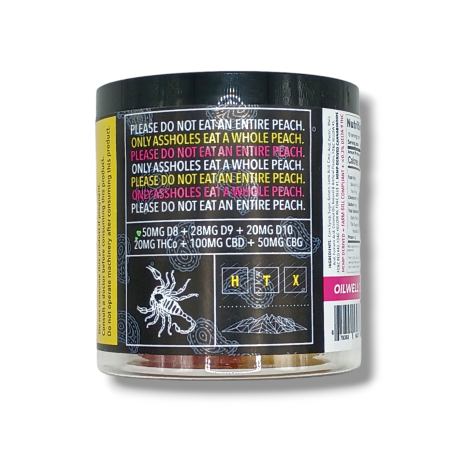
- Gummies (CBD, CBG, CBN, and Delta-9 THC at ≤0.3% dry weight)
- Delta-9 THC edibles (compliant with the 0.3% dry weight standard)
- Edibles (chocolates, baked goods, other formats)
- Topicals (creams, balms, lotions)
- Pet treats (CBD for dogs and cats)
- Mushrooms (Lion’s Mane, Cordyceps, Reishi, and other functional varieties)
- CBG, CBN, CBC, and other non-intoxicating cannabinoid products
- Sublingual oils and tinctures
🔶 Available via Interstate Commerce
These products can no longer be sold by Texas-licensed retailers under the new DSHS rules, but remain federally legal under the 2018 Farm Bill’s delta-9-only definition and are available from licensed out-of-state partners:
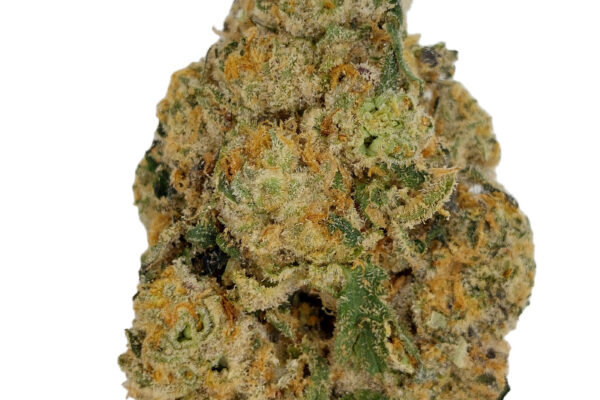
- THCa flower
- Pre-rolls
- Concentrates
- Smokable hemp (all forms)
These products are shipped from our licensed partners in legally compliant states, protected under the 2018 Farm Bill’s interstate commerce provisions (§ 10114) and authorized under Texas law (§ 443.206). Please call (832) 416-2816 or email us to confirm availability.
❌ Not Available (Criminal Statute)
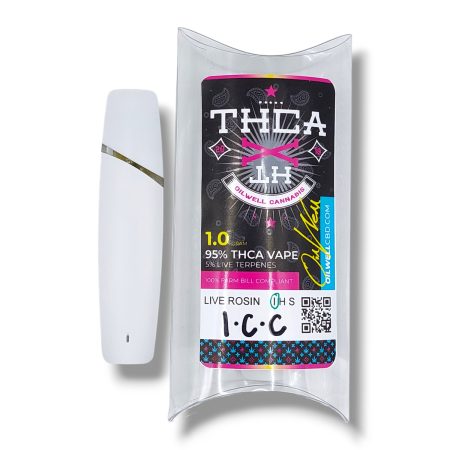
- All cannabinoid vapes — banned under SB 2024 (effective September 1, 2025). This is an actual criminal statute (Class A misdemeanor). We do not sell vape products.
9. A Few Questions Worth Considering
We don’t have all the answers. Nobody does — this is a rapidly evolving area of law, and anyone who claims absolute certainty about every aspect of it is selling something other than hemp.
But there are a few questions we think every reasonable, consenting adult should consider:
Can you smoke a shoe?
Technically — yes. You could set fire to a shoe, a newspaper, a cinnamon stick, a bay leaf, or a bundle of dried lavender. Nobody requires the shoe store to ask what you plan to do with your purchase. Nobody audits the spice aisle to verify your intended method of consumption. The product is legal. What you do with it is your decision.
We sell natural hemp products. Dried flower. Pre-rolls. Plant-based items that have been cultivated, harvested, and lab-tested. Every product comes with a Certificate of Analysis verifying its cannabinoid content and legal compliance. That is what we sell — a legal agricultural product.
What someone of legal age does with their own legal property is not ours to police.
We are not in the business of telling consenting adults how to use the legal products they purchase. We don’t ask, and it is not our place to. The law defines what we can sell. We follow it. What you do with your property, in the privacy of your own home, as a responsible adult — that’s yours.
This isn’t a novel concept. A kitchen supply store isn’t responsible for what you cook. A hardware store isn’t liable for what you build. A bookstore doesn’t answer for what you think after reading. They sell legal products to legal adults, and the rest is between the customer and their own judgment.
We sell legal, tested, natural hemp products. You are a legal, consenting adult. The rest is yours.
10. The Federal Deadline: H.R. 5371 and November 2026
There is a significant change coming at the federal level that everyone in the hemp industry — and every consumer — should be aware of.
On November 12, 2025, President Trump signed H.R. 5371 (the Continuing Appropriations and Extensions Act, Public Law 119-37). Section 781 of that law amends the federal definition of hemp in 7 U.S.C. § 1639o. The amendment takes effect 365 days after signing — November 12, 2026.
What Changes on November 12, 2026
The amended definition will replace “delta-9 tetrahydrocannabinol” with “total tetrahydrocannabinols concentration (including tetrahydrocannabinolic acid)” — meaning THCA will count toward the federal 0.3% limit, similar to what DSHS has already implemented at the state level.
The amendment also:
- Excludes cannabinoids not naturally produced by Cannabis sativa L. — this effectively bans synthetic cannabinoids at the federal level
- Excludes cannabinoids that were “synthesized or manufactured outside the plant” — this targets converted cannabinoids like Delta-8 THC and HHC that are chemically derived from CBD
- Caps final products at 0.4 milligrams combined total THC per container — not per serving, per container
What This Means for You
Until November 12, 2026, the federal definition remains delta-9 only. That is the current law of the land. After that date, the landscape changes significantly at the federal level.
There are active Congressional efforts to repeal or delay these changes:
- H.R. 6209 (Representatives Mace and Massie) — proposes full repeal of Section 781
- The HEMP Act (H.R. 1287) — proposes a comprehensive federal regulatory framework that would preserve consumer access
- Multiple proposals for a two-year delay of implementation
We are monitoring these developments closely and will update this page as the situation evolves. If you want to take action, contact your U.S. Representative and Senators and let them know how hemp products have helped you.
11. Pending Court Cases That Could Change Everything
Sky Marketing Corp. v. DSHS (Hometown Hero Case)
This case is before the Texas Supreme Court. Oral arguments were heard in January 2026. The central question: does DSHS have the authority to reclassify hemp cannabinoids — like Delta-8 THC — without action from the Legislature?
The industry’s argument is that DSHS exceeded its statutory authority (a legal concept called ultra vires) by redefining what counts as a controlled substance when the Legislature’s own definition (§ 481.002(26)(F)) uses a delta-9-only standard.
A ruling in favor of the industry could invalidate parts of the DSHS framework or require legislative action to implement any further restrictions.
Texas Hemp Business Council v. DSHS
This challenge focuses specifically on the new DSHS rules — arguing that the agency exceeded its authority by creating a “total THC” formula that contradicts both the federal definition and the Texas enabling statute (§ 443), which references the federal definition.
Both cases raise important questions about the boundaries of agency rulemaking authority and the relationship between administrative rules and the statutes they’re meant to implement. The outcomes could significantly shape how hemp is regulated in Texas going forward.
12. Frequently Asked Questions
Is it illegal to possess hemp in Texas?
No. Consumer possession of hemp is not criminalized by the DSHS rules or by any Texas criminal statute. The Texas Controlled Substances Act (§ 481.002(5)) explicitly excludes hemp and “the tetrahydrocannabinols in hemp” from the definition of controlled substance. Texas H&SC § 443.201(a) confirms your right to “possess, transport, sell, or purchase” compliant hemp products.
Can I still buy CBD in Texas?
Yes. CBD products are fully legal under federal law and Texas law. Nothing in the March 2026 DSHS rules changes the legality of CBD.
Can I still buy Delta-9 THC gummies?
Yes. Delta-9 THC edibles that comply with the 0.3% dry weight basis standard remain legal. The key is the weight-based calculation: a heavy enough gummy can legally contain a meaningful dose of delta-9 THC while remaining under 0.3% by dry weight.
Can I order hemp products online from another state?
Yes. Federal law (2018 Farm Bill § 10114) expressly prohibits states from blocking the interstate shipment of compliant hemp products. Texas law (§ 443.206) explicitly authorizes the sale of out-of-state hemp products in Texas.
Can I be arrested for having hemp flower?
Under the Texas criminal code, hemp is not marijuana and not a controlled substance (§ 481.002(5) and (26)(F)). The criminal code uses a delta-9-only definition. If your product tests at or below 0.3% delta-9 THC, it is legal under the criminal statute. That said, we always recommend keeping your Certificate of Analysis (COA) accessible with any hemp product — it’s your proof of compliance.
What about Delta-8 THC?
Delta-8 THC’s legality in Texas is the subject of the Sky Marketing Corp. v. DSHS case at the Texas Supreme Court. The ruling has not yet been issued. Delta-8 in edible form is currently available, though its long-term legal status depends on the court’s decision and the November 2026 federal deadline (H.R. 5371 bans converted cannabinoids).
Are there any hemp products that ARE criminally illegal?
Cannabinoid vapes. SB 2024, effective September 1, 2025, makes it a Class A misdemeanor to sell cannabinoid vape products. Unlike the DSHS rules, this is an actual criminal statute passed by the Legislature and signed by the Governor.
Does DSHS enforce these rules with police?
DSHS is a regulatory agency that oversees licensed businesses. Its enforcement tools are administrative in nature: license reviews, compliance inspections, and civil penalties for licensed facilities. Criminal matters are handled by law enforcement and prosecutors under the Texas Controlled Substances Act (Chapter 481), which uses the delta-9 THC standard in its definitions.
I’m a veteran / cancer patient / chronic pain patient. Will I lose access to my products?
We understand this concern deeply, and it’s a big part of why we created this page. The products that have helped you remain federally legal, and we work with licensed, compliant partners to maintain access. Our entire business is built around serving people who depend on these products. If you have questions about a specific product or want to understand how it’s sourced and shipped, please call us at (832) 416-2816 or email [email protected]. We’re here to help.
13. Complete Legal Citations
Every claim on this page is sourced from the actual text of the law. We verified each citation against official government sources on April 2, 2026. We encourage you to verify them yourself — the links are provided.
Federal Law
| Citation | What It Says | Source |
|---|---|---|
| 7 U.S.C. § 1639o(1) | Federal definition of hemp — delta-9 THC only, ≤0.3% dry weight | uscode.house.gov |
| 2018 Farm Bill § 10114 (Pub. L. 115-334) | No state shall prohibit the transportation or shipment of compliant hemp products (statutory note at § 1639o) | uscode.house.gov (see Statutory Notes) |
| 7 U.S.C. § 1639p | State and tribal hemp production plans | uscode.house.gov |
| 7 U.S.C. § 1639q | USDA plan for states without approved plans | uscode.house.gov |
| 7 U.S.C. § 1639r | Secretary of Agriculture’s rulemaking authority; preserves FDA authority | uscode.house.gov |
| H.R. 5371, § 781 (Pub. L. 119-37) | Amends § 1639o to use total THC including THCA; adds 0.4mg/container cap; bans synthetics. Effective Nov 12, 2026. | uscode.house.gov (see Amendment notes) |
| U.S. Const. art. I, § 8, cl. 3 | Commerce Clause — Congress regulates interstate commerce | |
| U.S. Const. art. VI, cl. 2 | Supremacy Clause — federal law is the supreme law of the land |
Texas Law
| Citation | What It Says | Source |
|---|---|---|
| TX H&SC § 443.003 | Municipalities and counties may not prohibit hemp manufacturing or sales authorized by the chapter | statutes.capitol.texas.gov |
| TX H&SC § 443.101 | License required to process hemp or manufacture consumable hemp products in Texas | statutes.capitol.texas.gov |
| TX H&SC § 443.201(a) | “A person may possess, transport, sell, or purchase a consumable hemp product” | statutes.capitol.texas.gov |
| TX H&SC § 443.204(1)–(2) | Hemp cannabinoids are not controlled substances; hemp edibles are food, not drugs | statutes.capitol.texas.gov |
| TX H&SC § 443.206 | Out-of-state hemp products may be sold at retail in Texas when compliant | statutes.capitol.texas.gov |
| TX H&SC § 443.207 | Hemp products may be legally transported across state lines | statutes.capitol.texas.gov |
| TX H&SC § 481.002(5) | Controlled substance does not include hemp or the tetrahydrocannabinols in hemp | statutes.capitol.texas.gov |
| TX H&SC § 481.002(26)(F) | Marihuana does not include hemp (delta-9 only definition) | statutes.capitol.texas.gov |
DSHS Administrative Rules
| Citation | What It Is |
|---|---|
| 25 TAC Chapter 300 | DSHS consumable hemp rules (amended March 2026) — total THC formula, fee schedule, compliance requirements |
Pending Court Cases
| Case | Court | Issue |
|---|---|---|
| Sky Marketing Corp. v. DSHS | Texas Supreme Court | Whether DSHS can reclassify hemp cannabinoids without legislative authority |
| TX Hemp Business Council v. DSHS | Pending | Whether DSHS exceeded authority by redefining total THC to include THCA |
A Note from OilWell CBD
We built this page because we believe our community deserves clarity. Every quotation here comes directly from official government-published text — the United States Code at uscode.house.gov and the Texas statutes at statutes.capitol.texas.gov. The links are provided so you can verify everything for yourself.
We are a Houston-based small business, and we are committed to operating within the law — not around it. We take compliance seriously because our customers deserve to know that what they’re purchasing is legal, tested, and safe. Many of the people we serve are veterans, cancer patients, people with chronic pain, and families who rely on hemp products for their quality of life. They deserve to understand their rights under the law.
We’re not going anywhere. We’ll continue to monitor every legislative development, court decision, and rule change that affects our customers — and we’ll keep this page updated so you always have a reliable, current resource. Navigating this together is what community means.
Questions? Concerns? Need help finding the right product?
📞 (832) 416-2816
📧 [email protected]
🌐 oilwellcbd.com
This page is for informational and educational purposes only. It is not legal advice. For legal advice specific to your situation, consult a licensed attorney. All citations were verified on April 2, 2026 and reflect the law as of that date. This page will be updated as laws, rules, and court decisions change.
THCa Rick Simpson Oil
Full-Spectrum • In-House Extraction
THE OILWELL PASSION PROJECT: THCa RSO
Experience true full-spectrum relief. Our Rick Simpson Oil is meticulously crafted in-house to preserve the complete cannabinoid and terpene profile of the plant. Potent, pure, and profound.
- 🌿 Maximum Potency
- 🔬 Third-Party Lab Tested
- 🚀 Same-Day Delivery Available