Rick Simpson Oil (RSO) in Andrews County, Texas: The Complete Guide by OilWell Cannabis
If you are searching for Rick Simpson Oil in Andrews County, Texas, you are likely looking for something specific that conventional medicine has not provided—relief from chronic pain, support through chemotherapy, help with PTSD, or perhaps an alternative to pharmaceuticals that have failed you. We understand that search intimately. We are OilWell Cannabis, and while we operate from Houston, we have built our company specifically to reach people in communities like Andrews County—rural West Texas communities where access to specialized cannabinoid medicine has historically meant long drives to urban centers or navigating uncertain online markets.
This guide is comprehensive because your health decisions deserve comprehensive information. We will walk you through the true history of Rick Simpson Oil—not the myths, but the actual documented story—explain why traditional RSO had significant limitations, and show you exactly how our formulas differ. We will share the science behind every cannabinoid and terpene in our products, provide you with our complete open-source formulas so you can verify what you are putting in your body, and explain specifically how we can deliver these products to Andrews County legally and safely.
Understanding Rick Simpson Oil: The History and the Reality
Rick Simpson was not a doctor. He was a power engineer from Nova Scotia, Canada, who suffered a serious head injury in 1997 while working at a hospital in Moncton. When conventional medications failed to resolve his post-concussion symptoms—persistent tinnitus, dizziness, and chronic pain—he turned to cannabis. After reading about a 1974 NIH-funded study at the Medical College of Virginia that reported THC slowed tumor growth in mice (findings that were never replicated in human trials), Simpson became convinced that concentrated cannabis oil held medical potential.
In 2003, Simpson reported that three bumps on his arm, diagnosed as basal cell carcinoma, disappeared after he applied concentrated cannabis oil to them and covered them with bandages. No independent medical verification, biopsy confirmation, or peer-reviewed documentation of this outcome has ever been published. Nevertheless, this personal testimony became the foundation of Rick Simpson Oil and sparked a global movement.
Simpson began producing oil in large quantities, giving it away for free to cancer patients and others suffering from chronic pain, diabetes, infections, glaucoma, arthritis, depression, and insomnia. His 2005 documentary, Run From The Cure, distributed freely online, introduced the concept of RSO to a global audience. However, his advocacy brought him into conflict with Canadian law. The Royal Canadian Mounted Police raided his property in 2005 and again in 2009. He was charged with cultivation, possession, and trafficking, and eventually left Canada for Europe, where he continued his advocacy from abroad.
Simpson’s position remained consistent and uncompromising: he maintained that RSO could cure cancer and that pharmaceutical companies and government agencies were actively suppressing this knowledge. While his advocacy drew necessary attention to cannabinoid research, his claims exceeded what the evidence could support. No human clinical trial has ever demonstrated that RSO cures cancer. The National Cancer Institute acknowledges cannabinoid anticancer research in laboratory and animal models but does not endorse cannabis or cannabis oil as a cancer treatment. The FDA has not approved any cannabis plant product for cancer treatment.
The Traditional RSO Protocol and Its Problems
Simpson’s core treatment recommendation was a 60-gram, 90-day protocol. Patients would start with a dose the size of half a grain of rice—roughly 10 to 15 milligrams—taken three times daily, then double the dose every four days until reaching approximately 1 gram per day. The goal was to consume 60 grams of high-THC oil over roughly three months, followed by a maintenance dose of 1 to 2 grams per month indefinitely.
This protocol was designed around crude, unstandardized material. Traditional RSO was produced using naphtha (petroleum-based lighter fluid) or 99% isopropyl alcohol—neither of which is food-grade. The extraction process involved soaking plant material in solvent, filtering it, and evaporating the solvent in a rice cooker. The heat involved (60 to 80 degrees Celsius for naphtha, 82 degrees for isopropyl) was sufficient to convert all THCa to delta-9 THC, meaning the final product was always fully psychoactive. The process also destroyed virtually all terpenes, leaving a thick, black, tar-like oil that was THC-dominant (60-90% estimated) but completely unstandardized.
At peak dosing, Simpson’s protocol delivered approximately 600 to 900 milligrams of delta-9 THC per day—doses far exceeding anything studied in controlled clinical settings. For context, the FDA-approved synthetic THC drug dronabinol is typically dosed at 2.5 to 20 milligrams per day. These high doses carried real risks: severe intoxication, impairment, anxiety, panic, tachycardia, hypotension, and cannabis use disorder.
Perhaps most critically, traditional RSO was never lab-tested. There was no Certificate of Analysis, no cannabinoid quantification, no contaminant screening for residual solvents, heavy metals, pesticides, or microbial contaminants. Every batch was different, and patients had no way to verify what they were consuming.
The OilWell Difference: Born from Necessity, Built on Science
We did not start OilWell in a boardroom. We started with a dog named Bentley.
Bentley was paralyzed in his back legs, facing euthanasia. Veterinarians said pain medications would destroy his internal organs, leaving only the choice between prolonged suffering and immediate mercy killing. Colin Valencia, our founder, refused to accept that outcome. Growing up in McAllen, Texas—across the river from Reynosa in one of the most economically challenged border regions in the country—Colin had learned early that survival often required finding alternatives when conventional paths failed.
A rescue worker named Jessica asked Colin a question that changed everything: “You’ve moved how many tons of weed and you’ve never heard of CBD?” Despite years in the traditional cannabis world, Colin had only known the plant recreationally. He had never explored its therapeutic dimensions. He learned to create CBD golden paste—a specialized cannabinoid formula for pets. Bentley got up. He walked over to Colin and brought him his ball to play. From paralyzed and facing death to fetching his ball. Dogs do not respond to placebo. This was cannabinoid medicine doing what pharmaceuticals could not.
Bentley lived another ten years, passing naturally at age twenty. During those ten years, Colin developed specialized formulas for every age-related condition Bentley faced: neurodegeneration (leading to CBG’s neuroprotective properties and THCa’s PPARγ agonism), dementia (CBC’s role in neurogenesis), glaucoma (THC’s CB1 agonism for intraocular pressure), and crippling arthritis (multi-pathway anti-inflammatory approaches using CBD, CBG, THCa, and beta-caryophyllene). Single cannabinoids were not enough. Bentley’s evolving conditions required multi-cannabinoid synergy.
Colin also knows pharmaceutical dependence personally. He struggled with PTSD and benzodiazepine addiction. When he decided to break free from Xanax, he did it cold turkey—a feat that is notoriously difficult and dangerous—using the cannabinoid knowledge he had developed keeping Bentley alive. Our Peace Gummies formula was created during midnight experiments while fighting through benzo withdrawal. Colin personally uses the vape form to manage his insomnia and severe PTSD. This is not theoretical knowledge. We have lived what RSO patients live: desperation for relief, failed pharmaceuticals, and the discovery that cannabinoids work when pills do not.
Between 2019 and 2023, ABC13 Houston—Houston’s number-one news source—featured Colin in seven comprehensive news segments spanning Texas marijuana law, Delta-8 legal analysis, COVID-19 community health leadership, criminal justice reform, and cannabis business pioneering. We were selected as the primary industry expert for cannabis policy and product coverage in America’s fourth-largest city. As Colin told ABC13 in our first feature in September 2019: “I’m not trying to sell people snake oil. I’m not trying to sell people hope. But there’s enough research out there that people just need to know and try and have the best possible version to base their opinions off of to give it a fair shot as to whether it’s right or wrong for them.”
That philosophy—honest education, not hype—defines everything we do.
Our Four Core Principles
1. Accessibility Over Gatekeeping
No medical card is required. Anyone age twenty-one or older can purchase. We ship nationwide across the United States and internationally to customers who verify local legality. For Andrews County residents, this means you do not need to drive to Midland, Odessa, or Lubbock to find a dispensary. You do not need a qualifying medical condition or a physician’s recommendation. We bring the medicine to you.
2. Patient-Controlled Potency
Traditional RSO was always fully psychoactive because the heat of production converted all THCa to delta-9 THC. Our sublingual formula contains 1,500 milligrams of THCa in its acidic, non-psychoactive form. You decide whether to use it raw for anti-inflammatory benefits without impairment, or to decarboxylate it at home into delta-9 THC for full psychoactive potency. This means the same product can function as daytime functional medicine or nighttime therapeutic strength—entirely at your discretion.
3. Open-Source Formulas
We publish our complete formulas publicly—every cannabinoid, every milligram amount, every percentage—so that anyone who cannot afford our products can source ingredients and make their own version. This is a direct echo of Rick Simpson’s original ethos: he gave his oil away for free and taught people how to make it. We have adapted that ethos for the modern cannabinoid marketplace by selling a professionally manufactured, lab-tested product for those who want it, and publishing the complete recipe for those who want to make it themselves.
4. Evidence-Informed, Not Evidence-Overstating
We commit to honest education about what the science actually says. Where Simpson operated without access to peer-reviewed literature, we have that access and use it to distinguish between what is well-supported, what is emerging, and what is overstated.
The Science Behind Our Formulas
Our RSO Sublingual Oil contains 16,590 milligrams of total cannabinoids across seven distinct compounds, delivered in a 30 mL bottle at 553 milligrams per milliliter. Our RSO Vape Cartridge contains 900+ milligrams of total cannabinoids across six compounds in a 1-gram format. Both products include live terpenes at 5% with a defined seven-terpene profile.
Cannabinoid Evidence Profiles
CBD (4,500mg in sublingual formula): The strongest human evidence in our formula set. Purified CBD has credible human evidence for seizure disorders, and a 2024 systematic review and meta-analysis covering 316 participants across eight studies reported statistically significant anxiolytic effects for anxiety. Pain research remains promising but heterogeneous, with a 2024 systematic review noting trial quality limitations. Safety concerns include potential liver enzyme elevation and drug-drug interactions, especially relevant for concentrated oral products.
CBG (3,000mg): The biosynthetic precursor to several major cannabinoids, pharmacologically distinct from THC and CBD. Review literature describes interactions with cannabinoid receptors, alpha-2 adrenoceptors, and 5-HT1A signaling. Research areas include neurologic disorders and inflammatory bowel disease, but human evidence remains sparse. CBG is commercially interesting precisely because it is underexplored, meaning claims frequently outrun the science.
Delta-8 THC (6,000mg): A partial CB1 agonist with cannabimimetic activity, broadly similar pharmacologically to delta-9 THC but appearing less potent due to weaker CB1 affinity. A 2023 scoping review found the evidence base dominated by animal studies and public-health concerns rather than strong modern human trials, with reports of adverse consequences and regulatory concerns. It should be treated as a psychoactive THC analogue with real pharmacologic activity but incomplete human safety characterization.
THCa (1,500mg): The acidic precursor to THC. In vitro and rodent literature suggest anti-inflammatory, immunomodulatory, neuroprotective, and antineoplastic possibilities, but these are not equivalent to established human outcomes. THCa itself does not produce psychoactive effects, but heating converts it to delta-9 THC. When heated at 260°F (125°C) for 45 to 60 minutes, 1,500mg of THCa converts to approximately 1,315mg of delta-9 THC. Combined with the existing 90mg of delta-9 THC in the formula, this yields approximately 1,405mg of total delta-9 THC—comparable to traditional high-THC RSO, but achieved legally through customer-controlled decarboxylation after purchase.
Delta-9 THC (90mg): The most evidence-developed psychoactive cannabinoid, with institutional support for chemotherapy-related nausea and vomiting, appetite and weight loss in HIV/AIDS, and some pain-related outcomes. However, it carries the clearest intoxication, psychiatric, and dose-related safety liabilities. A 2025 systematic review found consistent unfavorable associations between high-concentration THC products and psychosis, schizophrenia outcomes, and cannabis use disorder.
CBN (750mg): Marketed heavily for sleep, but the evidence remains weak. A 2021 narrative review screened 99 human-study abstracts and found no clinical trials using validated sleep questionnaires or polysomnography that could substantiate strong sleep-promoting claims. This is one of the clearest examples where cultural reputation exceeds clinical evidence.
CBC (750mg): Distinct pharmacodynamics and receptor behavior relative to better-known cannabinoids. A 2024 focused review highlighted antinociceptive, antibacterial, and anti-seizure areas as interesting research targets, but noted that over-the-counter CBC products are already being sold despite little evidence establishing clinical efficacy or safety.
Terpene Profiles and the Entourage Effect
Both products include live terpenes at 5%: limonene (citrus-bright), myrcene, caryophyllene (pepper/spice), pinene (forest-fresh), linalool (floral, lavender), humulene (earthy, woody), and terpinolene (piney, fruity).
Beta-caryophyllene is particularly notable as a selective CB2 receptor agonist, making it pharmacologically relevant to the cannabinoid system. Limonene shows antioxidant and anti-inflammatory potential in preclinical literature, though oxidation products can be contact allergens. Myrcene is often discussed as a sedative, but human studies are lacking. Pinene and linalool show neuroprotective signals in preclinical work, but robust clinical confirmation remains limited.
The entourage effect—the hypothesis that cannabinoids and terpenes work synergistically—is influential and worth studying, but robust proof of clinically meaningful entourage effects in humans remains limited. We include terpenes because the science is plausible and the sensory experience enhances the product, not because we claim proven therapeutic effects that exceed the current evidence.
Traditional RSO vs. OilWell Formulated RSO
| Dimension | Traditional RSO | OilWell Formulated RSO |
|---|---|---|
| Source material | Single high-THC indica strain | Multi-cannabinoid blend from multiple sources |
| Extraction method | Naphtha or isopropyl alcohol (toxic, non-food-grade) | Modern food-grade ethanol or CO₂ methods |
| Cannabinoid profile | THC-dominant (60-90%), uncontrolled | Seven defined cannabinoids at specific ratios (16,590mg total) |
| Terpene content | Destroyed by high-heat process | Live terpenes at 5% with defined seven-terpene profile |
| Standardization | None—every batch different | Lab-tested with specific mg/mL targets (553mg/mL) |
| Residual solvents | Significant risk with naphtha | Controlled and tested—solvent-free final product |
| Dosing precision | Approximate, syringe-based | Measured per mL with graduated dropper (0.1mL increments) |
| Product formats | Single thick oil only | Sublingual oil and vape cartridge |
| THCa preservation | No—fully decarboxylated by heat | Yes—1,500mg THCa included as separate ingredient |
| Delta-9 THC content | 600-900mg/day at peak dosing | 90mg total in bottle (3mg/mL), with customer-controlled activation option |
| Evidence approach | Anecdotal, personal testimony | Research-backed, evidence-weighted with 29 peer-reviewed citations |
Product Specifications and Usage Guidance
RSO Sublingual Oil — $129.99
- Volume: 30 mL (1 fl oz)
- Total Cannabinoids: 16,590mg (553mg per mL)
- Cannabinoid Breakdown: CBD 4,500mg, CBG 3,000mg, Delta-8 THC 6,000mg, THCa 1,500mg, Delta-9 THC 90mg, CBN 750mg, CBC 750mg
- Terpenes: 5% live terpenes (limonene, myrcene, caryophyllene, pinene, linalool, humulene, terpinolene)
- Carrier: Organic MCT oil
- Onset: 15-45 minutes (sublingual absorption)
- Peak: 1-2 hours
- Duration: 4-6 hours
- Bioavailability: 13-19% (partially bypasses first-pass liver metabolism)
- Dosing: Graduated dropper allows precise 0.1mL increments (55.3mg cannabinoids per 0.1mL)
RSO Vape Cartridge — $49.99
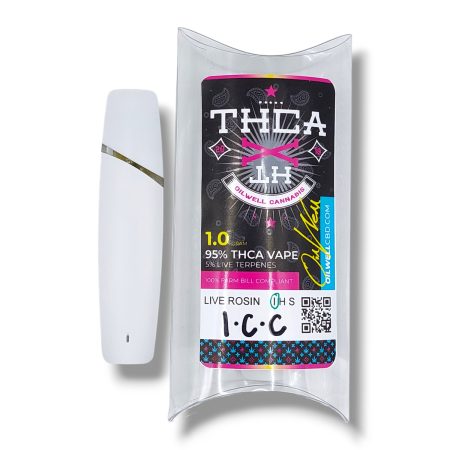
- Volume: 1 gram
- Total Cannabinoids: 900mg+
- Cannabinoid Profile: CBD 30%, CBG 20%, Delta-8 THC 15%, THCa 10%, CBN 10%, CBC 10%
- Terpenes: 5%+ live terpenes
- Compatibility: 510-thread universal battery
- Onset: 1-2 minutes (fastest cannabinoid delivery method)
- Peak: 10-15 minutes
- Duration: 2-4 hours
- Bioavailability: 10-35% (dependent on inhalation technique)
- Note: Vaping temperature (400-450°F) automatically decarboxylates THCa to delta-9 THC with each inhalation
When to Use Each Format
| Use Case | Recommended Format | Rationale |
|---|---|---|
| Fast relief (acute pain, nausea, panic) | Vape | 1-2 minute onset |
| Sustained relief (chronic pain, sleep) | Sublingual | 4-6 hour duration |
| Maximum bioavailability | Sublingual | 13-19% absorption |
| Portability and discretion | Vape | Compact, no measuring required |
| Precise dosing control | Sublingual | Graduated dropper in 0.1mL increments |
| Daytime non-psychoactive use | Sublingual (raw, no heat) | THCa stays inactive, zero impairment |
| Nighttime psychoactive use | Sublingual (decarbed) or Vape | Activated THCa + delta-8 THC |
Condition-Specific Usage Context for Andrews County Residents
Important Disclaimer: The following usage contexts are informed by cannabinoid research cited in our General Knowledge documentation. They are not medical prescriptions, not FDA-approved treatment protocols, and not a substitute for professional medical care. These products have not been evaluated by the Food and Drug Administration and are not intended to diagnose, treat, cure, or prevent any disease. Always consult a qualified healthcare provider before using cannabinoid products, especially if you have a medical condition, are taking medications, are pregnant or nursing, or have any health concerns. Do not operate vehicles or machinery while under the influence of psychoactive cannabinoids.
For Chemotherapy-Related Nausea and Appetite Support:
Pre-chemo: 0.5 to 1.0mL sublingual approximately 1 hour before treatment. Acute breakthrough nausea: 2 to 3 vape puffs for immediate relief. Post-chemo: 0.5mL sublingual every 6 hours as needed. Sleep support during treatment: 1.0 to 2.0mL sublingual before bed (delivers 25 to 50mg CBN). Evidence context includes delta-8 THC antiemetic properties and delta-9 THC efficacy for nausea and vomiting.
For Chronic Pain (Fibromyalgia, Arthritis, Neuropathy):
Daytime: 0.3 to 0.5mL raw sublingual provides anti-inflammatory cannabinoid exposure without psychoactive impairment—critical for those working in Andrews County’s oil and gas industry who need relief without impairment. Nighttime: 0.5 to 1.0mL decarboxylated sublingual combines pain relief with CBN sleep support. Breakthrough pain: Vape as needed for rapid onset. Evidence context includes CBD pain research, delta-9 THC pain evidence, beta-caryophyllene CB2 agonism, and THCa COX-2 inhibition.
For Sleep Support:
Before bed: 1.0 to 2.0mL sublingual. At 2.0mL, this delivers 50mg CBN—the dosage level investigated in recent sleep literature. At 1.0mL, this delivers 25mg CBN, above the 20mg threshold associated with reduced sleep disturbance in published research.
For Anxiety and Stress:
Daytime functional relief: 0.3mL raw sublingual—CBD and CBG address anxiety-related pathways without psychoactive impairment. Nighttime: 1.0mL sublingual for full cannabinoid profile including CBN for sleep architecture.
General Titration Principle: Start low, go slow. Begin with 0.25 to 0.5mL sublingual and assess effects over 2 to 3 hours before increasing. Individual responses vary based on body weight, metabolism, tolerance, concurrent medications, and other factors.
Delivery and Accessibility for Andrews County
We understand that Andrews County—situated in the Permian Basin, surrounded by the vast oil fields of West Texas—presents unique challenges for accessing specialized medicine. Whether you are in Andrews, the county seat, or in the surrounding rural areas near the New Mexico border, you deserve the same access to high-quality cannabinoid medicine as residents of Houston or Dallas.
Nationwide Shipping to Andrews County:
We ship to all 50 states where Farm Bill-compliant products are legal, including Texas. For Andrews County residents, we offer:
- USPS Priority Mail (2-3 business days)
- FedEx and UPS Ground (3-5 business days)
- Discreet packaging with no cannabis branding visible
- Tracking provided for all orders
- Temperature-stable packaging for summer shipments
- Signature-required option available
International Shipping:
We ship internationally and have delivered to multiple countries across multiple continents. All international packages include full documentation, Certificates of Analysis (COAs), and receipts for customs purposes. The THCa legal framework makes this possible: because the product contains less than 0.3% delta-9 THC at the point of sale, it meets the definition of a hemp-derived product under the 2018 Farm Bill.
Legal Framework and Compliance:
The 2018 Farm Bill legalized hemp and hemp-derived products containing less than 0.3% delta-9 THC by dry weight at the federal level. Our RSO Sublingual Oil contains only 90 milligrams of delta-9 THC in the entire 30mL bottle—3 milligrams per milliliter—well under the 0.3% threshold. All cannabinoids are hemp-derived. The product is legal under federal law and in Texas.
THCa is the acidic, non-psychoactive precursor to delta-9 THC. It is not itself delta-9 THC, making it Farm Bill compliant at the point of sale. You may legally purchase, possess, and transport our products in Andrews County. However, if you choose to decarboxylate the THCa into delta-9 THC through heating, you assume responsibility for compliance with local laws regarding possession of activated cannabis products.
Important Legal Notice: THCa converts to delta-9 THC when heated. You are responsible for understanding and complying with local laws regarding cannabinoid products. We ship with full documentation, COAs, and receipts. International customers accept all customs and legal risk.
Competitive Comparison: Why OilWell RSO?
OilWell RSO vs. Texas TCUP Dispensary RSO (e.g., Texas Original):
TCUP dispensary RSO requires a medical card with qualifying conditions (cancer, PTSD, epilepsy, autism, terminal illness, ALS, MS, seizure disorders, or incurable neurodegenerative diseases). It is THC-only (approximately 420mg THC per 0.5g syringe) with zero CBG, CBN, or CBC. You must travel to a physical dispensary location. Our product requires no medical card, contains seven cannabinoids including 3,000mg CBG and 750mg CBN, and ships directly to your door in Andrews County.
OilWell RSO vs. Hemp CBD RSO (e.g., Lazarus Naturals):
Typical hemp CBD RSO contains approximately 1,000mg total cannabinoids (mostly CBD) with minimal CBG, CBN, or THCa, and no psychoactive option. Our sublingual formula contains 16,590mg total cannabinoids with the option to activate 1,500mg of THCa into approximately 1,315mg of delta-9 THC for full psychoactive potency—delivering clinical strength that hemp-only products cannot match.
The Open-Source Formulas: Complete Transparency
We publish our complete formulas so you can verify exactly what you are consuming or make your own if cost is a barrier.
RSO Sublingual Oil Formula:
- CBD: 4,500mg
- CBG: 3,000mg
- Delta-8 THC: 6,000mg
- THCa: 1,500mg
- Delta-9 THC: 90mg
- CBN: 750mg
- CBC: 750mg
- Total: 16,590mg in 30mL MCT oil base
- Terpenes: 5% (limonene, myrcene, caryophyllene, pinene, linalool, humulene, terpinolene)
RSO Vape Cartridge Formula:
- CBD: 30%
- CBG: 20%
- Delta-8 THC: 15%
- THCa: 10%
- CBN: 10%
- CBC: 10%
- Terpenes: 5%+
CBD Golden Paste Recipe for Pets (The Original Open-Source Formula):
If you have pets suffering from arthritis, inflammation, or mobility issues in Andrews County, you can make the same paste that saved Bentley:
- 1/2 cup organic turmeric powder
- 1 cup water
- 1/3 cup coconut oil (unrefined, organic)
- 1-2 teaspoons freshly ground black pepper
- CBD oil (dosage depends on pet size; consult veterinarian)
Mix turmeric and water in a saucepan over low heat, stirring until thick paste forms (7-10 minutes). Add coconut oil and black pepper. Cool and store in refrigerator for up to two weeks. Mix small amount with pet’s food once or twice daily.
Safety, Quality, and Testing
Our production uses no naphtha, no isopropyl alcohol, no butane. We use organic MCT oil as the carrier base—food-grade and facilitating absorption through sublingual tissue. Third-party lab testing covers:
- Potency: HPLC/UHPLC analysis confirms every cannabinoid to ±2% accuracy
- Heavy metals: ICP-MS testing for arsenic, cadmium, lead, mercury below FDA limits
- Pesticides: 400+ compound screening via LC-MS/MS and GC-MS/MS
- Residual solvents: FDA Class 3 limits (<5,000 ppm) verified by headspace GC
- Microbial: Comprehensive pathogen screening including E. coli, Salmonella, Aspergillus
Certificates of Analysis (COAs) are available upon request.
Contact and Ordering
Phone: (832) 416-2816
Email: [email protected]
Website: https://oilwellcbd.com/
Instagram: @oilwellcbd
Address: 810 Richmond Ave, Houston, TX 77006 (Montrose neighborhood)
Business Hours:
- Monday-Thursday: 10:00 AM – 7:00 PM
- Friday-Saturday: 10:00 AM – 10:00 PM
- Sunday: 10:00 AM – 4:00 PM
We are not trying to sell you snake oil. We are not trying to sell you hope. We are offering you the best possible version of cannabinoid medicine—backed by science, transparent in formulation, and accessible to Andrews County residents who need it. Whether you choose to purchase our professionally manufactured products or use our open-source formulas to make your own, we are here to ensure you have the information and access you deserve.
From Bentley’s recovery to Colin’s journey through PTSD and benzo withdrawal, from the ABC13 newsroom to your doorstep in Andrews County, we have built OilWell on one simple principle: people deserve honest education so they can give cannabinoid medicine a fair shot and decide for themselves whether it is right for them.
We are OilWell Cannabis. We are here to help.
THCa Rick Simpson Oil
Full-Spectrum • In-House Extraction
THE OILWELL PASSION PROJECT: THCa RSO
Experience true full-spectrum relief. Our Rick Simpson Oil is meticulously crafted in-house to preserve the complete cannabinoid and terpene profile of the plant. Potent, pure, and profound.
- 🌿 Maximum Potency
- 🔬 Third-Party Lab Tested
- 🚀 Same-Day Delivery Available