Rick Simpson Oil (RSO) in Humboldt County: The Complete Guide by OilWell Cannabis
Humboldt County has always understood cannabis differently. Here in the Emerald Triangle, where the redwoods meet the coastline and the legacy of cultivation runs deeper than any regulated market, we’ve seen what cannabis can do when it’s treated as medicine rather than commodity. When someone in Humboldt asks about RSO, they’re not looking for hype—they’re looking for what works, what the science actually says, and how to access it without jumping through bureaucratic hoops. That’s exactly what we’re here to provide.
About Rick Simpson and Traditional RSO: What Humboldt County Needs to Know
Who Is Rick Simpson?
Rick Simpson was a power engineer from Nova Scotia—not a doctor, not a scientist, just a tradesman who got hurt on the job in 1997 and found that the medical system had nothing for him but pills that made his post-concussion symptoms worse. When he asked his doctor about cannabis, the door was slammed shut. So he did what plenty of folks in Humboldt County’s backwoods have done for generations: he took matters into his own hands.
His story took a turn in 2003 when he claimed that applying concentrated cannabis oil to basal cell carcinoma lesions on his arm made them disappear in four days. No biopsy, no medical verification—but that personal testimony became the origin story for what we now call Rick Simpson Oil. It’s important to be straight with you, Humboldt: this was one man’s experience, not clinical proof. But it was historically significant enough to spark a global movement that eventually reached our own community here on the North Coast.
The Traditional RSO Protocol: 60 Grams Over 90 Days
If you’ve spent time in Humboldt’s legacy circles, you’ve probably heard about the 60-gram protocol. Simpson’s regimen was brutal in its simplicity: start with a dose half the size of a grain of rice, three times daily. Double it every four days. By week five, you’re taking a full gram per day—roughly 600-900mg of THC daily, depending on the starting material. That’s an astronomical amount, far beyond anything studied in legitimate clinical settings.
For Humboldt County residents who’ve seen friends or family attempt this protocol, you know the reality: the psychoactive effects are overwhelming, tolerance builds slowly, and many people simply cannot function at those doses. Simpson recommended nighttime dosing and warned against driving, but the protocol itself was designed around crude, unstandardized extract. No lab testing, no consistency, no safety net.
Important context for evaluating this protocol:
- No controlled trials have ever validated it
- Every batch was different—no standardization
- 600-900mg THC daily carries real risks: severe intoxication, anxiety, tachycardia, blood pressure drops, cannabis use disorder
- For cancer patients in Humboldt County dealing with complex medical conditions, using unregulated oil as primary treatment instead of proven oncologic care can cause irreversible harm
This matters especially here, where we have access to legitimate medical cannabis through California’s regulated system. The traditional protocol might have made sense in the underground days, but Humboldt deserves better now.
What Traditional RSO Actually Was
Traditional RSO was made by soaking cannabis in naphtha or isopropyl alcohol, filtering it, then evaporating the solvent in a rice cooker. The result was a nearly black, tar-like oil with a strong solvent smell. It was THC-dominant (60-90% by weight), contained whatever minor cannabinoids the single strain happened to have, and was essentially stripped of terpenes by the heat process. No lab testing, no Certificates of Analysis, no consistency from batch to batch.
In Humboldt County, where we have legal dispensaries offering lab-tested products, this is the difference between moonshine and single-malt Scotch. Both will get you drunk, but only one is made with precision, safety, and transparency.
Simpson’s Claims vs. The Evidence
Simpson claimed RSO could cure cancer, diabetes, chronic pain, infections, glaucoma, arthritis, depression, insomnia—an endless list. Here’s what the actual evidence shows:
What the preclinical literature shows:
- THC and CBD can induce apoptosis (programmed cell death) in certain cancer cell lines
- Animal studies show some tumor-growth inhibition
- These findings are scientifically interesting but have NOT translated to proven human cancer cures
What the institutions say:
- The National Cancer Institute acknowledges the research but does not endorse cannabis as cancer treatment
- The FDA has not approved any cannabis plant product for cancer
- Health Canada has never approved RSO for cancer
- NCCIH identifies strongest evidence only for epilepsy, chemo nausea, and HIV/AIDS appetite
What Simpson got right:
He drew attention to cannabinoids when the world was ignoring them. He helped create the conditions for the legal cannabis industry we have today—including here in Humboldt County, where legalization has allowed our legacy expertise to flourish legitimately.
What he overstated:
Encouraging patients to use RSO instead of proven cancer therapies carries real harm potential. Delayed treatment for treatable cancers is a documented problem in alternative medicine. In Humboldt, where we have access to world-class oncology at places like St. Joseph Hospital in Eureka or through telemedicine with UCSF, no cannabis product should replace conventional cancer care.
About OilWell Cannabis: Our Story and Humboldt’s Connection
The Origin: From McAllen to Houston to Humboldt County
OilWell Cannabis was founded by Colin Valencia, who grew up in McAllen, Texas—one of the most economically challenged and dangerous border regions in America. The Borderplex, the Reynosa cartel activity, the poverty, the violence—that experience shaped Colin’s understanding of what it means to be failed by institutions and to find alternatives when conventional systems offer nothing but suffering.
That mindset resonates deeply in Humboldt County. Many of us here have watched friends and family suffer while the medical system offered only opioids or dismissal. We’ve seen the pharmaceutical industry extract profits while people in our community wrestled with addiction and side effects. Colin’s story—growing up in a place where you had to hustle to survive, learning cannabis not as a business plan but as a survival tool—mirrors the Emerald Triangle’s own transition from survival cultivation to artisanal craft to regulated industry.
Bentley’s Story: Where It All Began
The company’s origin story begins with a dog named Bentley. When Bentley fell paralyzed in his back legs and veterinarians said euthanasia was the only humane option, Colin refused to accept it. The veterinary consensus was that pain medications would destroy Bentley’s organs, causing more suffering. This is the same calculus Humboldt County pet owners face daily: choosing between pharmaceutical side effects and compassionate alternatives.
A rescue worker named Jessica asked Colin the question that changed everything: “You’ve moved how many tons of weed and you’ve never heard of CBD?” That blind spot exposed a deeper truth—Colin knew cannabis recreationally but not medicinally. He learned to create CBD golden paste, not as a cure, but as a lifeline. The result? Bentley got up, walked across the room, and brought Colin his ball to play. From paralyzed to fetching. Dogs don’t respond to placebo—that was cannabinoid medicine doing what pharmaceuticals couldn’t.
Bentley lived another ten years, dying naturally at age twenty. During those years, Colin developed specialized formulas for every age-related condition Bentley faced. Neurodegeneration led him to CBG’s neuroprotective properties. Dementia led him to CBC’s role in neurogenesis. Glaucoma led him to THC’s CB1 agonism. Arthritis led him to multi-pathway anti-inflammatory approaches using CBD, CBG, THCa, and beta-caryophyllene simultaneously.
That decade of real-world formulation testing on a patient he loved more than anything became the foundation of the RSO formula that Humboldt County residents can access today. This wasn’t developed in a boardroom—it was developed in a living room, watching a beloved companion thrive against all medical odds.
Colin’s Personal Experience: PTSD and Benzo Withdrawal
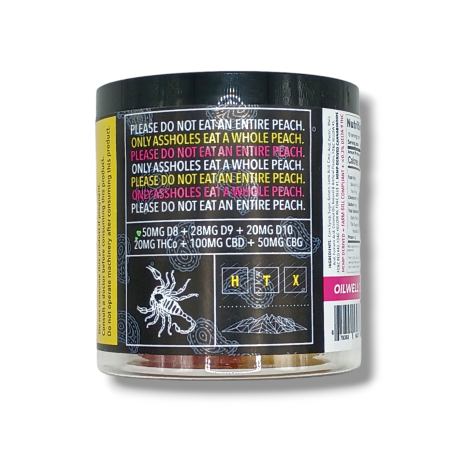
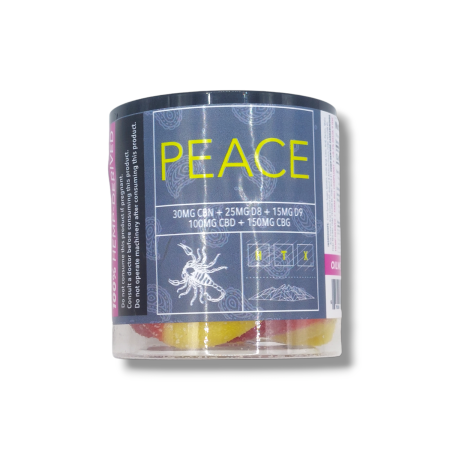
Colin also knows pharmaceutical dependence personally. He struggled with PTSD and benzodiazepine addiction. When he decided to quit Xanax cold turkey—a feat notoriously difficult and dangerous—he used the cannabinoid knowledge he developed keeping Bentley alive. The Peace Gummies formula that became an OilWell product was created during midnight experiments while fighting through benzo withdrawal. Colin personally uses the vape form for his insomnia and severe PTSD.
This is not theoretical knowledge from a textbook. This is lived experience from someone who understands what Humboldt County veterans, trauma survivors, and chronic pain patients face every day. When we talk about these products, we’re not reciting marketing copy—we’re sharing what actually worked when nothing else did.
ABC13 Media Recognition: Seven Features Over Four Years
Between 2019 and 2023, ABC13 Houston featured Colin and OilWell in seven distinct news segments. Five different reporters sought him out for expertise spanning business, law, medicine, community health, and politics. That’s not a PR campaign—that’s earned credibility.
The features that matter for Humboldt County:
-
September 2019: Colin’s foundational quote—”I’m not trying to sell people snake oil. I’m not trying to sell people hope, but there’s enough research out there that people just need to know and try and have the best possible version to base their opinions off of to give it a fair shot as to whether it’s right or wrong for them.” That philosophy has guided every product decision since.
-
August 2021: OilWell gave away 1,000 caviar pre-rolls (about $35,000 in product) to encourage COVID vaccination in Houston, coordinating with city government. No political strings. Just community health. That’s the same spirit that drives Humboldt County’s mutual aid networks and community gardens.
-
October 2021: When Texas suddenly classified Delta-8 as Schedule I overnight, Colin proactively removed all products before enforcement and warned other operators who were unknowingly shipping what had become felony narcotics. He absorbed a major revenue loss to act ethically. That kind of leadership matters in Humboldt, where the transition from legacy to legal has required similar difficult choices.
-
October 2022: The feature revealed Colin’s personal marijuana conviction history. Every quote about therapy and education carries more weight when you know the person speaking has faced the same consequences Humboldt County’s legacy growers have faced. This is real talk from someone who’s been through it.
-
April 2023: Colin framed the current moment as a “Renaissance” for cannabis. He explained that with 10,000 active medical marijuana patients in Texas versus 700,000 in Florida (with two-thirds the population), the market is artificially constrained. Humboldt County knows this story well—we’ve watched regulatory bottlenecks limit patient access while the plant’s potential remains untapped.
This media record isn’t marketing. It’s editorial judgment from a major-market ABC affiliate that repeatedly identified Colin as the most credible voice in legal cannabis. For Humboldt County residents evaluating whether to trust an out-of-state brand, this is independent verification of character and expertise.
Our Philosophy: Four Core Principles
1. Accessibility Over Gatekeeping
No medical card required. Anyone 21+ can purchase. We ship nationwide and internationally to jurisdictions where hemp-derived products are legal. In Humboldt County, where some patients live in remote areas like Petrolia or Whale Gulch, this means access without a two-hour drive to Eureka or Arcata.
2. Patient-Controlled Potency
Our sublingual formula contains 1,500mg of THCa in its raw, non-psychoactive form. You decide: use it raw for daytime anti-inflammatory benefits without impairment, or decarboxylate at home (260°F for 45-60 minutes) to convert it to approximately 1,315mg of delta-9 THC. Combined with the existing 90mg delta-9 THC, you get full-potency psychoactive medicine from the same legal product. For Humboldt County residents who work in agriculture, forestry, or fisheries—jobs where impairment isn’t an option—this flexibility is essential.
3. Open-Source Formulas
We publish our complete formulas publicly. If you can’t afford $129.99 for the sublingual oil, you can source the individual cannabinoid distillates and make your own. This is our adaptation of Rick Simpson’s free-distribution ethos for the modern marketplace. In Humboldt County’s DIY culture, where many people have extraction experience, this isn’t just marketing—it’s a practical gift.
4. Evidence-Informed, Not Evidence-Overstating
We hold ourselves to the same standards we apply to the broader field. The GENERAL KNOWLEDGE section of this document is our commitment to honest education, distinguishing between what’s well-supported, what’s emerging, and what’s overstated. Humboldt County’s educated cannabis community can spot bullshit a mile away. We won’t insult your intelligence.
Farm Bill Compliance and California’s Legal Framework
Our products meet the 2018 Farm Bill standard: less than 0.3% delta-9 THC by dry weight. The entire 30mL bottle contains only 90mg delta-9 THC—well under the legal threshold. All cannabinoids are hemp-derived, making them federally legal and legal in California.
Important for Humboldt County: California’s cannabis laws allow both hemp-derived and marijuana-derived products. However, marijuana-derived RSO requires a medical recommendation or adult-use purchase from a licensed dispensary. Our hemp-derived RSO is accessible to anyone 21+ without a medical card, providing an alternative for patients who either don’t qualify for medical recommendations or prefer not to enter the state tracking system.
The THCa framework is particularly relevant here. Since our product contains THCa, not delta-9 THC, at the point of sale, it’s legal to purchase, possess, and transport. If you choose to decarboxylate it at home, that conversion happens at your discretion. This is the same principle that allows Humboldt County’s legacy growers to legally possess raw flower that only becomes psychoactive when heated.
Our Products: Two Formats for Humboldt County’s Needs
RSO Sublingual Oil — $129.99
- 30mL bottle (1 fl oz)
- 16,590mg total cannabinoids (553mg/mL)
- Seven cannabinoids: CBD 4,500mg, CBG 3,000mg, delta-8 THC 6,000mg, THCa 1,500mg, delta-9 THC 90mg, CBN 750mg, CBC 750mg
- Live terpenes at 5%: limonene, myrcene, caryophyllene, pinene, linalool, humulene, terpinolene
- Organic MCT oil base
- Graduated dropper for precise dosing
- Onset: 15-45 minutes
- Duration: 4-6 hours
- Approximately 40-60 doses per bottle
For Humboldt County residents dealing with chronic pain from agricultural work, this provides sustained relief without the lung irritation of smoking. For cancer patients in Fortuna or Eureka, the graduated dropper allows precise titration. For veterans in McKinleyville dealing with PTSD, the option to use it raw (non-psychoactive) during the day and decarboxylated at night provides flexibility that traditional RSO never could.
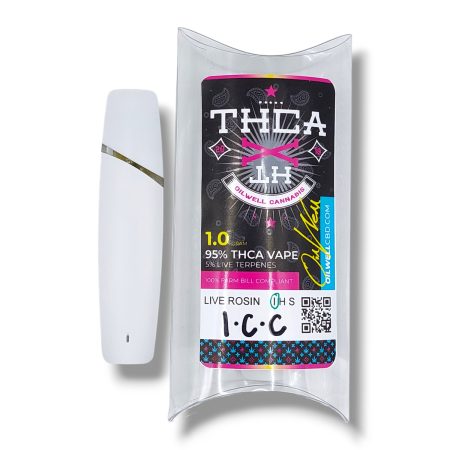
RSO Vape Cartridge — $49.99
- 1-gram cartridge
- 900mg+ total cannabinoids
- Same six-cannabinoid ratio (auto-decarbs THCa at vaping temperature)
- Live terpenes at 5%+
- 510-thread universal battery compatibility
- Onset: 1-2 minutes
- Duration: 2-4 hours
In Humboldt County, where wildfire season can trigger acute anxiety and where chronic pain flares don’t wait for a sublingual dose to kick in, the vape format offers immediate relief. It’s also discreet for use in public spaces or around family.
When to Use Each Format in Humboldt County
| Use Case | Recommended Format | Humboldt County Example |
|---|---|---|
| Fast relief (acute pain, panic, nausea) | Vape | Breakthrough pain while working in the woods |
| Sustained relief (chronic pain, sleep) | Sublingual | All-night sleep support in Willow Creek |
| Maximum bioavailability | Sublingual | Getting the most from each dose on a fixed budget |
| Portability/discretion | Vape | Discreet use at the farmers market in Arcata |
| Precise dosing control | Sublingual | Cancer patient in Eureka needing exact titration |
| Daytime non-psychoactive | Sublingual (raw) | Operating equipment in the Mattole Valley |
| Nighttime psychoactive | Sublingual (decarbed) or Vape | Full-spectrum relief in Trinidad |
Competitive Context for Humboldt County
OilWell RSO vs. Traditional Illegal RSO (Common in Humboldt’s Legacy Market)
| Dimension | Legacy Market RSO | OilWell RSO |
|---|---|---|
| Cannabinoid profile | THC-dominant, unknown ratios | Seven defined cannabinoids at specific ratios |
| Testing | None | Full-panel lab testing (potency, terpenes, pesticides, heavy metals, residual solvents, microbial) |
| Solvents | Naphtha/isopropyl (toxic) | Solvent-free formulation |
| Standardization | None — every batch different | Lab-tested with COAs available |
| Legal status | Schedule I (illegal) | Farm Bill compliant, ships to Humboldt County legally |
| Potency control | Always psychoactive | Patient-controlled via THCa preservation |
Humboldt County has always valued quality and craftsmanship in cannabis. OilWell brings that same artisanal precision to RSO, but with the lab testing and consistency that the modern market demands.
Condition-Specific Usage for Humboldt County
Chemotherapy Support (For patients at St. Joseph Hospital or Humboldt Oncology)
- Pre-chemo: 0.5-1.0mL sublingual 1 hour before treatment
- Breakthrough nausea: 2-3 vape puffs (1-2 minute onset)
- Post-chemo: 0.5mL sublingual every 6 hours as needed
- Sleep: 1.0-2.0mL sublingual before bed (delivers 25-50mg CBN)
Chronic Pain (Agricultural workers in the Eel River Valley, forestry workers)
- Daytime: 0.3-0.5mL raw sublingual (no impairment)
- Nighttime: 0.5-1.0mL decarbed sublingual
- Breakthrough pain: Vape as needed
Sleep Disorders (Common in Humboldt’s seasonal economy)
- Before bed: 1.0-2.0mL sublingual (delivers 25-50mg CBN, the dosage studied in recent sleep research)
PTSD and Anxiety (Veterans, first responders, trauma survivors)
- Daytime: 0.3mL raw sublingual (CBD + CBG without impairment)
- Nighttime: 1.0mL sublingual (full profile including CBN)
Delivery to Humboldt County
We ship nationwide via USPS Priority Mail (2-3 business days), FedEx, and UPS Ground (3-5 business days). All packages are discreet with no cannabis branding. Tracking is provided.
For Humboldt County residents in remote areas like Shelter Cove, Petrolia, or Orleans, we recommend using a PO Box or general delivery address if your location doesn’t receive direct mail service. We also ship to commercial addresses—if you work at a dispensary, farm, or business in Eureka, Arcata, Fortuna, or McKinleyville, we can deliver there.
International shipping: While most of our Humboldt County customers are domestic, we recognize that some residents have family in Canada or other countries where hemp products are legal. We ship internationally with full COA documentation, though customers accept customs responsibility.
The Science Behind Our Formula: General Knowledge for Humboldt County
Research Method and Evidence Weighting
We prioritize sources in this order: human clinical evidence, systematic reviews, NIH/institutional summaries, then preclinical literature. This matters because the evidence base is uneven. CBD and delta-9 THC have the strongest human data; delta-8 THC, THCa, CBG, CBN, CBC, and terpenes rely more on preclinical work.
For Humboldt County’s educated consumers—many of whom have been growing cannabis for decades and understand plant chemistry—this methodology demonstrates that we don’t cherry-pick studies. We follow the science where it leads, even when it’s inconvenient.
Institutional Baseline
The NIH’s National Center for Complementary and Integrative Health (NCCIH) states that the strongest cannabinoid evidence is for:
- Certain rare epilepsies (CBD)
- Chemotherapy nausea/vomiting (THC)
- HIV/AIDS appetite and weight loss (THC)
Chronic pain shows modest evidence; most other claims remain early-stage. The FDA has not approved the cannabis plant itself for medical use—only purified CBD (Epidiolex) and synthetic THC analogues (dronabinol, nabilone).
Safety concerns include impairment, addiction, pregnancy risks, contamination, and vape-related lung injury. These are real concerns for Humboldt County’s community health, especially given our rural healthcare access challenges.
Cannabinoid Profiles
CBD (4,500mg in our formula)
- Strongest human evidence in our formula
- Best validated for seizures; emerging evidence for anxiety and pain
- Safety note: can affect liver enzymes, interact with medications
- Our take: The most developed non-intoxicating cannabinoid, but not a miracle cure-all
CBG (3,000mg)
- Mechanistically interesting but human evidence sparse
- May interact with alpha-2 adrenoceptors and 5-HT1A receptors
- Sold commercially while evidence is still thin—be skeptical of strong claims
- Our take: Promising minor cannabinoid, but treat it as experimental
Delta-8 THC (6,000mg)
- Pharmacologically similar to delta-9 THC but less potent
- Psychoactive—will cause impairment
- Human evidence limited; much comes from animal studies and use reports
- Our take: Not “diet weed”—it’s a real THC analogue with real effects and unknowns
THCa (1,500mg)
- Acidic precursor to THC
- Not psychoactive in raw form
- Evidence suggests anti-inflammatory and neuroprotective potential via COX-2 inhibition and PPARγ agonism
- Critical for Humboldt County: converts to THC when heated or stored improperly
- Our take: The key to legal, patient-controlled potency
Delta-9 THC (90mg)
- Lowest amount in our formula compared to traditional RSO
- Strongest evidence for chemo nausea and appetite
- Clear adverse-effect burden: intoxication, anxiety, tachycardia, addiction risk
- Mental health risk: high-concentration THC linked to psychosis, especially problematic for those with family history
- Our take: Included at minimal dose; primary psychoactivity comes from convertible THCa
CBN (750mg)
- Marketed for sleep, but evidence is weak
- 2021 review found no clinical trials using validated sleep questionnaires or polysomnography
- Our take: Reputation ahead of data; included at dosage studied in recent sleep literature (25-50mg per dose)
CBC (750mg)
- Emerging preclinical data on antinociceptive, antibacterial, anti-seizure potential
- Over-the-counter products already sold despite thin evidence
- Our take: Research target, not proven therapy
Terpene Profiles
Our seven-terpene blend (5% total) serves dual purposes: sensory experience and potential entourage effects. For Humboldt County’s terpene-savvy consumers:
Limonene – Citrus brightness. Multi-functional monoterpene with antioxidant, anti-inflammatory signals in preclinical work. Note: oxidized limonene can be a contact allergen.
Myrcene – Earthy base. Often claimed as sedating, but human evidence for sedation is limited. Anxiolytic and anti-inflammatory potential in preclinical models.
Caryophyllene – Pepper/spice. The standout: selective CB2 agonist, directly interacts with cannabinoid system. Best terpene candidate for pharmacologic relevance.
Pinene – Forest-fresh. Brain-health preclinical signals (antioxidant, neuroprotective) but weak human confirmation.
Linalool – Floral/lavender. Stress and mood preclinical research; no robust human trials.
Humulene – Woody/earthy. Anti-inflammatory preclinical work; some rodent studies suggest cannabimimetic properties via CB1 and adenosine A2a.
Terpinolene – Piney/fruity. Least clinically characterized of our terpenes; dominated by in vitro and animal studies.
Bottom line for Humboldt County: Terpenes make the product smell and taste amazing, and they might contribute to effects, but specific therapeutic claims should be conservative. The entourage effect is plausible but not proven for most terpenes in humans.
Common Overstatements to Avoid (Especially in Humboldt’s Market)
- “CBN is a proven sleep aid” → Actually, human evidence is weak
- “Myrcene makes you sleepy” → Preclinical only; human proof is limited
- “Terpenes have proven entourage effects” → Hypothesis, not established fact
- “THCa is always non-psychoactive” → True until heated or stored improperly
- “Delta-8 is safe because it’s hemp-derived” → It’s psychoactive with less safety data than delta-9
Humboldt County’s cannabis community is too knowledgeable for these half-truths. We respect your intelligence enough to be straight with you.
Practical Takeaways for Our Formulas
- CBD and delta-9 THC have the strongest evidence—use them as anchors
- Delta-8 THC is not trivial—it’s psychoactive with real pharmacology
- THCa changes with processing—your control method matters
- CBG, CBN, CBC are promising but clinically immature—manage expectations
- Terpene claims should be careful—favor aroma/flavor over therapy until better human data exists
Our Commitment to Humboldt County
Humboldt County has been the heart of American cannabis culture for decades. You’ve seen the plant criminalized, medicalized, and commercialized. You’ve watched the Emerald Triangle’s legacy growers fight for legitimacy while corporate interests moved in. You understand that cannabis is not just a product—it’s a plant with history, community, and healing potential.
OilWell Cannabis wasn’t born in a corporate boardroom. It was born from Colin watching his dog Bentley walk again after pharmaceutical medicine failed. It was born from Colin’s own battle with PTSD and benzo addiction. It was born from the same place that drives Humboldt County’s best growers: the refusal to give up on people (or animals) we love.
We don’t claim our RSO cures cancer. We don’t promise miracles. We provide the most thoroughly documented, lab-tested, multi-cannabinoid RSO formula available—complete with the evidence context so you can make informed decisions alongside your healthcare provider at St. Joseph Hospital, Mad River Community Hospital, or your local practitioner.
We publish our complete formulas because Simpson gave his away for free, and because Humboldt County’s DIY culture deserves access to the recipe. We ship to your doorstep because remote communities like Gasquet and Branscomb shouldn’t have to drive hours for medicine. We preserve THCa because Humboldt’s working people—loggers, fishermen, farmers—need daytime relief without impairment.
This is our promise to Humboldt County: the best possible version of the information, the product, and the transparency so you can give it a fair shot and decide if it’s right or wrong for you. No snake oil. No hope-selling. Just real science, real stories, and real medicine.
Contact us:
Phone: (832) 416-2816
Email: [email protected]
Website: https://oilwellcbd.com/
Instagram: @oilwellcbd
Business Hours:
Monday-Thursday: 10:00 AM – 7:00 PM
Friday-Saturday: 10:00 AM – 10:00 PM
Sunday: 10:00 AM – 4:00 PM
Address: 810 Richmond Ave, Houston, TX 77006 (Montrose neighborhood)
Note: All products contain less than 0.3% delta-9 THC and are Farm Bill compliant. Not evaluated by the FDA. Not intended to diagnose, treat, cure, or prevent any disease. Consult your healthcare provider before use. Keep out of reach of children. Do not operate vehicles or machinery while using psychoactive cannabinoids. Customer accepts all legal responsibility for decarboxylation decisions. Void where prohibited by law.
THCa Rick Simpson Oil
Full-Spectrum • In-House Extraction
THE OILWELL PASSION PROJECT: THCa RSO
Experience true full-spectrum relief. Our Rick Simpson Oil is meticulously crafted in-house to preserve the complete cannabinoid and terpene profile of the plant. Potent, pure, and profound.
- 🌿 Maximum Potency
- 🔬 Third-Party Lab Tested
- 🚀 Same-Day Delivery Available