Rick Simpson Oil (RSO) in Jefferson County, Kentucky: The Complete Guide by OilWell Cannabis
Living in Jefferson County means you’ve probably heard about medical cannabis and CBD. Maybe a neighbor in Louisville’s East End swears by hemp oil for their arthritis. Maybe a coworker at one of our manufacturing plants in Jefferson County is quietly looking for alternatives to opioid pain medication. Or maybe you’re a veteran in Valley Station trying to manage PTSD without the fog of prescription drugs. Wherever you are in Jefferson County—whether you’re browsing the shops in St. Matthews, working the bourbon lines in Shively, or managing chronic pain in the Highlands—this guide is for you.
We’re OilWell Cannabis, and we’ve built something different. Our Rick Simpson Oil isn’t the crude, black tar you might have heard about. It’s a modern, multi-cannabinoid formula that honors the original RSO vision while delivering something safer, more precise, and legally accessible right here in Jefferson County. We ship directly to Louisville, Jeffersontown, Pleasure Ridge Park, and every corner of our community. No medical card required. Just age verification and a commitment to honest education.
Understanding Rick Simpson Oil: The History and the Hype
Who Was Rick Simpson?
Rick Simpson was born in 1949 in Amherst, Nova Scotia—a working-class man, not a doctor or scientist. He was a power engineer who, in 1997, fell from scaffolding at a hospital in Moncton and suffered a severe head injury. The aftereffects—tinnitus, dizziness, chronic pain—left him searching for relief that his prescribed medications couldn’t provide. When he discovered cannabis helped more than anything his doctor offered, he asked that doctor to support his use. The doctor refused.
That rejection became a catalyst. Simpson learned about a 1974 NIH-funded study at the Medical College of Virginia that showed THC could slow tumor growth in mice. That study, intended to demonstrate harm, never translated to human trials—but it sparked something in Simpson. In 2003, after being diagnosed with basal cell carcinoma, Simpson applied concentrated cannabis oil directly to his skin lesions. He claimed they disappeared in four days. No biopsy confirmed it. No oncology records were published. But his personal testimony became the origin story of Rick Simpson Oil.
Important context: Simpson’s account is personal testimony, not medical evidence. It’s historically significant as the catalyst for a global movement, but it cannot be evaluated as clinical proof. We honor his story while refusing to repeat his mistakes.
The 60-Gram Protocol: What Simpson Recommended
Simpson’s treatment plan was specific: 60 grams of oil over 90 days. The titration schedule started with a half-grain-of-rice-sized dose three times daily, doubling every four days until reaching 1 gram per day. He administered it orally (sublingual or swallowed) and topically for skin issues. He warned patients would get high, urged nighttime dosing initially, and promised tolerance would develop in 3-4 weeks.
Why this matters for Jefferson County: Many local cancer patients and chronic pain sufferers encounter this protocol through Facebook groups, patient forums, or word-of-mouth at places like Norton Cancer Institute. They find it online and assume it’s a proven treatment. We present the full protocol here because you deserve complete information—but we also need to tell you what Simpson’s protocol was not.
What Simpson’s Protocol Was Not
- No clinical trials. Not a single randomized controlled trial validates this 60-gram regimen for any cancer type or condition.
- No standardization. Every batch varied by strain, growing conditions, and extraction technique. The THC content could range from 60-90%—meaning patients consumed 600-900mg of delta-9 THC daily at peak dosing.
- No safety data. Doses that high carry serious risks: severe intoxication, tachycardia, hypotension, anxiety, panic, and cannabis use disorder. These are well-documented in peer-reviewed literature [15].
- No oversight. No lab testing, no contaminant screening, no consistency.
For Jefferson County residents facing serious illness, the hope this protocol represents is real—but the medical evidence gap is also real. We share this not to dismiss hope, but to ground it in what’s actually known.
Traditional RSO vs. Modern Formulated RSO
Most products labeled “RSO” in Kentucky dispensaries or online bear little resemblance to what Simpson made. The term has become generic—applied to any full-spectrum extract in a syringe. Simpson himself criticized commercial products that used the RSO name without his method.
Here’s how traditional RSO compares to what we’ve built at OilWell:
| Dimension | Traditional RSO | OilWell RSO |
|---|---|---|
| Source material | Single high-THC indica strain | Multi-cannabinoid blend from multiple sources |
| Extraction solvent | Naphtha or isopropyl alcohol (petroleum-based) | Food-grade ethanol in controlled production |
| Cannabinoid profile | 60-90% delta-9 THC, uncontrolled | 7 defined cannabinoids at specific ratios |
| Terpene content | Destroyed by high heat | Live terpenes at 5% with 7 defined terpenes |
| Standardization | None—every batch different | Lab-tested with 553mg/mL active cannabinoids |
| Residual solvent risk | Significant—naphtha may contain benzene | None—solvent-free formulation |
| THCa preservation | No—fully decarboxylated | Yes—1,500mg THCa as separate ingredient |
| Potency control | Always psychoactive | Customer controls activation via heat |
| Legality | Schedule I illegal | Farm Bill compliant, ships to Jefferson County |
Why Our Formulas Diverge
Our RSO isn’t traditional RSO—it’s better. Here’s why:
-
Multi-cannabinoid synergy. Single cannabinoids weren’t enough for Bentley, and they’re not enough for complex human conditions. Our formula includes CBD, CBG, delta-8 THC, THCa, delta-9 THC, CBN, and CBC—each chosen for specific pharmacologic roles supported by emerging research [7][8][9][12][16][18][19].
-
Terpene preservation. Traditional RSO destroyed terpenes. We include live terpenes at 5%: limonene, myrcene, caryophyllene, pinene, linalool, humulene, and terpinolene. These compounds may contribute to the entourage effect, modulating how cannabinoids interact with your endocannabinoid system [20][29].
-
Patient-controlled potency. Traditional RSO was always psychoactive. Our 1,500mg of THCa stays non-psychoactive until you choose to heat it. Work in a safety-sensitive job at Ford’s Louisville Assembly Plant? Use it raw. Need full therapeutic strength for nighttime pain? Decarb it at home. You decide—not the product.
-
Dramatically reduced delta-9 THC. Simpson’s protocol delivered 600-900mg of delta-9 THC daily. Our entire bottle contains just 90mg—enough for therapeutic effect without the overwhelming psychoactivity that makes daily functioning impossible for many Jefferson County residents.
-
Format innovation. We offer both sublingual oil (slow onset, long duration) and vape cartridges (fast relief for breakthrough symptoms). One formula, multiple applications for your actual life in Jefferson County.
The Science Behind Our Formula
Seven Cannabinoids: What the Evidence Says
CBD (4,500mg)
The most evidence-developed cannabinoid in our formula. Strongest human data for rare epilepsies [2]. Moderate evidence for anxiety—a 2024 meta-analysis found significant anxiolytic effects across 316 participants, though researchers stress the sample remains limited [3]. Pain evidence is promising but heterogeneous [4]. Sleep data is weaker, with many studies using subjective measures [5]. Safety concerns include potential liver enzyme elevation, especially with high doses or polypharmacy [6]. For Jefferson County residents on multiple medications (common with chronic conditions), this interaction potential matters.
CBG (3,000mg)
The “mother cannabinoid”—biosynthetic precursor to THC and CBD. Mechanistically fascinating, interacting with cannabinoid receptors, alpha-2 adrenoceptors, and 5-HT1A pathways [7]. Review literature explores neuroprotection, inflammatory bowel disease, and antibacterial activity, but human trials are sparse [8]. It’s commercially interesting precisely because it’s underexplored. We include it because Bentley’s neurodegeneration taught us that minor cannabinoids matter for complex conditions.
Delta-8 THC (6,000mg)
A psychoactive cannabinoid with real pharmacologic activity but less clinical characterization than delta-9 THC. A 2022 review found delta-8 has similar pharmacokinetics to delta-9 but weaker CB1 affinity—making it less potent but still psychoactive [9]. A 2023 scoping review noted adverse event reports and emphasized regulatory concerns [10]. We include it because it contributes to therapeutic effect at lower psychoactivity than delta-9, but we never downplay its effects. If you work at UPS Worldport or any safety-sensitive Jefferson County employer, you should know delta-8 will trigger drug tests.
THCa (1,500mg)
The acidic precursor to THC. Does not produce psychoactive effects unless heated [12]. In vitro and rodent studies suggest anti-inflammatory activity via COX-2 inhibition and neuroprotective potential via PPARγ agonism—relevant for arthritis and neurodegeneration, conditions we see frequently in Jefferson County’s aging population [12]. This is the ingredient that gives you control. Keep it raw for daytime anti-inflammatory benefits. Decarb it for full psychoactive potency.
Delta-9 THC (90mg)
The most studied psychoactive cannabinoid. NCCIH identifies strongest evidence for chemotherapy nausea, HIV/AIDS appetite, and some pain/MS symptoms [1]. A 2022 systematic review found high-THC products may provide short-term pain relief but increase dizziness, sedation, and discontinuation [13]. A 2025 review linked high-concentration THC products to increased psychosis, schizophrenia, and cannabis use disorder risk [15]. Our 90mg total is intentionally low—enough for entourage contribution without the risks Simpson’s 600-900mg daily doses carried.
CBN (750mg)
Marketed as the “sleep cannabinoid,” but evidence is weak. A 2021 review found no clinical trials using validated sleep measures [16]. A 2024 sleep review concluded cannabinoid sleep research doesn’t match real-world use [17]. We include 750mg (25mg per mL) because it matches the dosage range studied, but we’re honest: this isn’t a proven sleep cure. For Jefferson County residents struggling with insomnia—whether from shift work at the GE Appliance Park or caregiving stress—CBN may help, but it’s not a replacement for medical care.
CBC (750mg)
Cannabichromene is emerging as distinct from CBD and THC. A 2024 review highlighted antinociceptive, antibacterial, and anti-seizure potential, but human trials are lacking [18]. It’s commercially available despite thin evidence [18]. We include it because Bentley’s multi-condition decline taught us that single-target approaches fail complex patients.
Seven Terpenes: The Entourage Effect
Terpenes are aromatic compounds that may modulate cannabinoid effects. Evidence is preclinical and emerging—robust human proof of entourage effects remains limited [20][29].
Limonene (citrus-bright): Reviewed for antioxidant, anti-inflammatory, and gastroprotective effects, but mostly from non-cannabis literature [21]. Oxidized limonene is a contact allergen [22].
Myrcene: Anxiolytic and anti-inflammatory in preclinical models, but human studies are lacking [23].
Caryophyllene (pepper/spice): A selective CB2 agonist—directly interacts with your endocannabinoid system [24]. This is why we include it at significant levels.
Pinene (forest-fresh): Preclinical neuroprotective signals, but human cognition claims are exploratory [25].
Linalool (lavender-floral): Discussed for stress and mood, but human trials are sparse [26]. Oxidized linalool is also allergenic [22].
Humulene (earthy-woody): Anti-inflammatory in rodent models, with cannabimimetic properties via CB1 and adenosine pathways [27].
Terpinolene (piney-fruity): Least clinically characterized, with evidence dominated by in silico and animal studies [28].
The entourage-effect hypothesis is influential but unproven in humans [20][29]. We include terpenes because they likely matter, but we won’t overstate what the science can’t yet support.
Our Story: From a Paralyzed Dog to Jefferson County
Bentley: The Dog Who Started Everything
OilWell Cannabis wasn’t born in a boardroom. It started with a dog named Bentley.
Bentley was family—more than a pet. When veterinarians told Colin Valencia that Bentley’s paralysis meant euthanasia was the only humane option, Colin refused. They said pain meds would destroy Bentley’s organs. They said there was no alternative.
A rescue worker named Jessica asked the question that changed everything: “You’ve moved how many tons of weed and you’ve never heard of CBD?”
Colin had experience with cannabis—but it was recreational. He’d never explored therapeutic applications. He learned to create CBD golden paste. It wasn’t a cure, but it was hope.
That hope delivered what veterinary medicine called impossible: Bentley got up. He walked over to Colin and brought him his ball. From paralyzed to playing fetch. Dogs don’t respond to placebo. This was cannabinoid medicine succeeding where pharmaceuticals failed.
Bentley lived another ten years, dying naturally at age twenty. During those years, Colin developed specialized formulas for every age-related condition Bentley faced:
- Neurodegeneration → CBG’s neuroprotective properties and THCa’s PPARγ agonism
- Dementia → CBC’s role in neurogenesis
- Glaucoma → THC’s CB1 agonism for intraocular pressure
- Crippling arthritis → Multi-pathway anti-inflammatory approach using CBD, CBG, THCa, and beta-caryophyllene
Single cannabinoids weren’t enough. Bentley’s evolving conditions required multi-cannabinoid synergy. Precision mattered—his life depended on formula accuracy, not guesswork.
That ten-year formulation journey became OilWell’s RSO formula. What saved Bentley’s life is now available to Jefferson County residents facing their own health crises.
Colin’s Personal Battle: PTSD and Benzo Withdrawal
Colin also knows pharmaceutical dependence personally. He struggled with PTSD and benzodiazepine addiction after his experiences in McAllen and beyond. When he decided to quit Xanax cold turkey—a notoriously dangerous feat—he used the cannabinoid knowledge developed keeping Bentley alive.
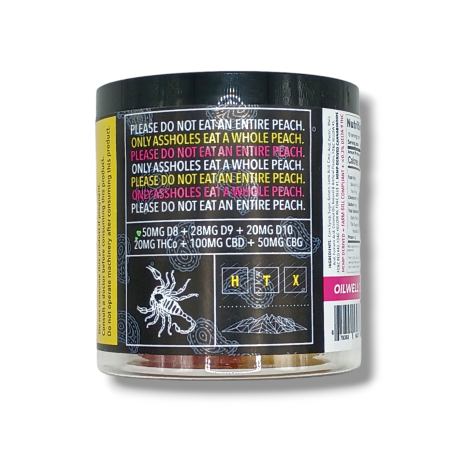
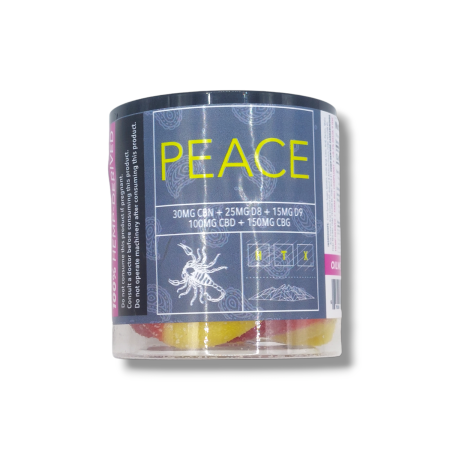
The Peace Gummies formula was created during midnight experiments fighting through benzo withdrawal. Colin personally uses the vape form to manage his insomnia and severe PTSD. This isn’t theoretical knowledge. Colin lived what RSO patients live: desperation for relief, failed pharmaceuticals, the discovery that cannabinoids work when pills do not.
Over time, doctors began using OilWell’s formulas for Crohn’s disease, IBS, ulcerative colitis, PTSD, benzo addiction, and insomnia. We’ve tailored products for vegans, diabetics, and those with specific health needs—because Jefferson County is diverse, and one size never fits all.
Building in Houston, Reaching Jefferson County
OilWell operates from Montrose, Houston, Texas (810 Richmond Avenue). We’ve been in business since 2019, generate approximately $1M in annual revenue, maintain a near-5.0 Google rating, and hold a Texas DSHS license. All artwork, formulations, and packaging are created in-house in Houston—not outsourced, not white-labeled.
We bring Houston grit, McAllen roots, and a builder’s mindset to every bottle we ship. But our posture stays simple: make products with intent, answer directly, and never pretend cannabis is right for everyone.
Products: Two Formats, One Mission
We offer our RSO formula in two delivery formats because Jefferson County residents have different needs—some need fast relief for breakthrough pain, others need sustained support through a long shift or sleepless night.
RSO Sublingual Oil — $129.99
What’s in it:
- 30mL bottle (1 fl oz)
- 16,590mg total cannabinoids (553mg per mL)
- CBD: 4,500mg
- CBG: 3,000mg
- Delta-8 THC: 6,000mg
- THCa: 1,500mg
- Delta-9 THC: 90mg
- CBN: 750mg
- CBC: 750mg
- Live terpenes at 5% (limonene, myrcene, caryophyllene, pinene, linalool, humulene, terpinolene)
- Organic MCT oil base
How to use it:
- Daytime (non-psychoactive): Take 0.3-0.5mL raw (no heat) for anti-inflammatory support while staying clear-headed for work, driving, or parenting.
- Nighttime (psychoactive): Decarboxylate your dose at 260°F for 45-60 minutes to convert THCa to THC. Take 0.5-1.0mL for full therapeutic effect.
- Graduated dropper: 0.1mL increments for precise dosing.
Pharmacokinetics:
- Onset: 15-45 minutes (sublingual absorption)
- Peak: 1-2 hours
- Duration: 4-6 hours
- Bioavailability: 13-19%
- Approximately 40-60 doses per bottle
Why this matters in Jefferson County: If you work at Ford’s Kentucky Truck Plant, UPS, or any safety-sensitive position, you can use the raw form without impairment. If you’re retired in Jeffersontown and need nighttime relief, decarb for full potency. You control it.
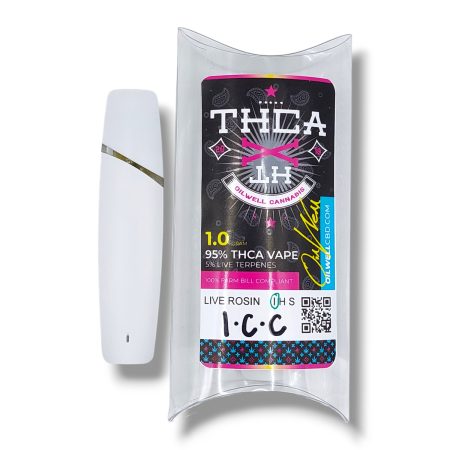
RSO Vape Cartridge — $49.99
What’s in it:
- 1-gram cartridge
- 900mg+ total cannabinoids
- Same six-cannabinoid ratio (THCa auto-decarboxylates at vaping temp)
- Live terpenes at 5%+
- 510-thread universal battery compatibility
How to use it:
- Breakthrough relief: 2-3 puffs for acute pain, nausea, or panic attacks.
- Fast onset: 1-2 minutes
- Peak: 10-15 minutes
- Duration: 2-4 hours
- Bioavailability: 10-35% (variable by inhalation technique)
Why this matters in Jefferson County: When a sudden pain flare hits during a family barbecue at Beckley Creek Park, or anxiety spikes before a big presentation in downtown Louisville, you need relief now—not in 45 minutes. The vape delivers it.
When to Use Each Format
| Your Situation | Recommended Format | Why |
|---|---|---|
| Acute pain flare, nausea, panic | Vape | 1-2 minute onset |
| Chronic pain through workday | Sublingual (raw) | 4-6 hour duration, no impairment |
| Trouble falling/staying asleep | Sublingual (decarbed) | 25-50mg CBN per dose, full nighttime effect |
| Need precision dosing | Sublingual | Dropper measures 0.1mL increments |
| Discreet public use | Vape | No measuring, compact |
| Maximum bioavailability | Sublingual | 13-19% absorption |
| Daytime anti-inflammatory | Sublingual (raw) | THCa stays inactive, zero high |
Kentucky Legality: What Jefferson County Residents Need to Know
Farm Bill Compliance
The 2018 Farm Bill legalized hemp-derived products containing less than 0.3% delta-9 THC by dry weight at the federal level. Our RSO Sublingual Oil contains only 90mg of delta-9 THC in the entire 30mL bottle—3mg per mL—well under the 0.3% threshold. All cannabinoids are hemp-derived.
This means our product is legal to purchase, possess, and ship to Jefferson County, Kentucky. You don’t need a Kentucky medical marijuana card. You don’t need to qualify under the state’s restrictive medical program (which only permits CBD for epilepsy and limits THC content to 0.3% anyway). You just need to be 21 or older.
THCa: The Legal Distinction That Changes Everything
THCa is the acidic, non-psychoactive precursor to delta-9 THC. It’s not THC at the point of sale, which makes it Farm Bill compliant. Here’s what that means practically:
- At purchase: Your product contains 1,500mg THCa and 90mg delta-9 THC—legal hemp.
- If you heat it: At 260°F (125°C) for 45-60 minutes, 1,500mg THCa converts to approximately 1,315mg delta-9 THC. Combined with the existing 90mg, you get ~1,405mg total delta-9 THC—psychoactive potency comparable to traditional illegal RSO.
- If you don’t heat it: The THCa remains inactive. You get anti-inflammatory benefits via COX-2 inhibition with zero impairment [12].
Customer responsibility: You control the decarboxylation decision. Kentucky law focuses on delta-9 THC content at point of sale, so the raw product is legal. Once you convert it, you’re responsible for compliance with local use laws. We provide full documentation, COAs, and receipts with every shipment.
Drug Testing in Jefferson County
This is critical for our local workforce. Jefferson County has major employers—Ford, UPS, GE Appliances, Norton Healthcare, Baptist Health—where drug testing is standard.
- Raw THCa: Will not trigger standard THC drug tests.
- Decarbed THCa: Converts to delta-9 THC. WILL trigger drug tests.
- Delta-8 THC: WILL trigger drug tests.
If you work in safety-sensitive positions in Jefferson County’s manufacturing, logistics, or healthcare sectors, use the raw form only. We’re honest about this because your livelihood matters more than a sale.
Condition-Specific Guidance for Jefferson County
Disclaimer: This information is educational, not medical advice. These products are not FDA-approved to diagnose, treat, cure, or prevent any disease. Always consult your healthcare provider—especially if you’re receiving treatment at Baptist Health Louisville, Norton Healthcare, or any Jefferson County medical facility. Do not operate vehicles or machinery while impaired.
Chronic Pain (Arthritis, Fibromyalgia, Neuropathy)
Jefferson County’s aging population and industrial workforce mean chronic pain is epidemic here. Our approach targets multiple pain pathways:
- Daytime: 0.3-0.5mL raw sublingual (CBD 135-225mg, CBG 90-150mg, THCa 45-75mg). Zero impairment, anti-inflammatory via COX-2 inhibition [12] and CB2 activation via caryophyllene [24].
- Nighttime: 0.5-1.0mL decarbed sublingual. Adds 25-50mg CBN for sleep architecture [16][17] and activated delta-8/delta-9 for deeper analgesia [9][13].
- Breakthrough: 2-3 vape puffs for acute flares.
Evidence context: CBD pain evidence is promising but heterogeneous [4]. Delta-9 THC shows short-term benefit but increased dizziness/sedation [13]. Beta-caryophyllene’s CB2 agonism offers anti-inflammatory support without psychoactivity [24].
Chemotherapy Support
If you’re receiving cancer treatment at James Graham Brown Cancer Center or Norton Cancer Institute:
- Pre-chemo: 0.5-1.0mL sublingual 1 hour before infusion. Delta-8’s antiemetic properties help with nausea [9].
- Acute nausea: Vape 2-3 puffs for immediate relief (1-2 minute onset).
- Post-chemo: 0.5mL every 6 hours as needed.
- Sleep: 1.0-2.0mL before bed for CBN’s potential sleep benefits [16][17].
Evidence context: Delta-9 THC is FDA-approved for chemo nausea [1][13]. Delta-8 shows similar antiemetic effects [9]. CBD may buffer anxiety [3].
Sleep Disorders
Insomnia plagues many in Jefferson County—whether from shift work, caregiving, or stress.
- Before bed: 1.0-2.0mL sublingual (decarbed).
- At 2.0mL: You receive 50mg CBN—the dosage studied in 2024 sleep literature [16][17].
- At 1.0mL: 25mg CBN, above the threshold associated with reduced sleep disturbance.
But be realistic: CBN sleep evidence is weak [16][17]. If you’re struggling with severe insomnia, consult a sleep specialist at UofL Health or Norton Sleep Center. Our product may help, but it’s not a cure.
Anxiety and PTSD
Jefferson County’s veteran community—concentrated around Louisville VA Medical Center—faces PTSD rates far above the national average.
- Daytime: 0.3mL raw sublingual (CBD 135mg, CBG 90mg). No impairment, addresses anxiety pathways [3][7].
- Nighttime: 1.0mL sublingual (decarbed) for full profile including CBN.
Evidence context: CBD shows significant anxiolytic effects in meta-analysis [3]. CBG’s 5-HT1A activity is promising but preclinical [7]. Limonene may enhance mood [20]. For veterans tapering off benzos like Colin did, this combination provided functional relief—but it required commitment and medical supervision.
The OilWell Difference: Transparency and Trust
Open-Source Formulas: We Publish Everything
Rick Simpson gave his oil away for free. We honor that ethos by publishing our complete formulas publicly. If $129.99 isn’t in your budget, you can source the individual cannabinoid distillates and make your own version using the exact recipe above.
Why we do this: We’re not here to gatekeep medicine. We’re here to end suffering. If you can afford the convenience, lab-testing, and precision of our product, buy it. If you can’t, use our recipe. That’s the philosophy that saved Bentley, and it’s the philosophy that guides everything we do.
Media Recognition: Seven ABC13 Features
Between 2019 and 2023, ABC13 Houston featured Colin Valencia in seven news segments. Five different reporters sought him out—not because we paid for PR, but because when Houston needed an honest cannabis voice, they called OilWell.
What they documented:
- Our refusal to sell snake oil (2019)
- How we help other entrepreneurs (2021)
- Radical honesty about delta-8 THC effects (2021)
- $35,000 in free product for COVID vaccination (2021)
- Proactive removal of delta-8 when it became illegal (2021)
- Colin’s personal marijuana conviction history (2022)
- The “Renaissance” framing of modern cannabis (2023)
These features can’t be purchased—they’re earned through consistency, expertise, and community action.
How to Order in Jefferson County
We Ship Directly to You
Nationwide Shipping to Kentucky
- USPS Priority Mail (2-3 business days): $5.99
- FedEx/UPS Ground (3-5 business days): $7.99
- Free shipping on orders over $150
All packages are discreet—no cannabis branding visible. We include full Certificates of Analysis, receipts, and farm bill compliance documentation. Kentucky customs has never flagged our shipments because we’re completely transparent.
Local Pickup Not Available
We don’t have a physical location in Jefferson County (we’re based in Houston), but we’ve optimized shipping to Louisville metro. Orders placed by 2 PM EST ship same day, arriving in most Jefferson County addresses within 2-3 business days.
How to Place Your Order
Online: OilWellCBD.com/thca-rick-simpson-oil-rso-by-oilwell-cannabis-of-houston-texas/
Phone: (832) 416-2816
Monday-Thursday: 10 AM – 7 PM CST
Friday-Saturday: 10 AM – 10 PM CST
Sunday: 10 AM – 4 PM CST
Email: [email protected]
Instagram: @oilwellcbd
Questions Jefferson County Customers Ask
“Is this legal in Louisville?”
Yes. Our product meets federal Farm Bill standards (under 0.3% delta-9 THC). Kentucky’s hemp laws align with federal standards. You can legally purchase, possess, and have it shipped to your Jefferson County address.
“Will this make me fail a drug test?”
Raw THCa will not. Decarbed THCa will. Delta-8 THC will. If you’re subject to workplace testing at Ford, UPS, Norton, or any Jefferson County employer, use raw form only.
“Can I use this while on other medications?”
CBD can interact with medications processed by the liver, including some used at Baptist Health and Norton Healthcare. Always consult your doctor. We’re not pharmacists—we’re formulators. Your physician needs to review potential interactions.
“I can’t afford $129.99. What are my options?”
Use our open-source formula. Source CBD, CBG, delta-8, THCa, CBN, and CBC distillates from reputable suppliers (we can recommend some). Mix them in the ratios we publish using organic MCT oil. You’ll spend less but lose the convenience, testing, and precise ratios we provide.
“Do you offer discounts for veterans?”
We don’t have a formal veterans program, but we regularly run promotions. Follow our Instagram or call us. We’ve helped many Jefferson County veterans—especially those at Louisville VA Medical Center—access products for PTSD and pain.
The Bottom Line for Jefferson County
You live in a community that values hard work, family, and honesty. Whether you’re in the West End, the East End, or anywhere between, you deserve cannabis education that respects those values.
We’re not here to sell you snake oil. We’re not here to sell you hope. We’re here to provide the most thoughtfully formulated, transparently sourced, and honestly presented RSO available anywhere—and to ship it directly to your door in Jefferson County, Kentucky.
Our formula is built on:
- A decade of real-world testing on Bentley, who went from paralyzed to playing
- Personal survival by Colin, who quit benzos cold turkey using these exact cannabinoids
- Published science from peer-reviewed journals, not internet hype
- Farm Bill compliance that makes it legal for you to purchase and possess
- Open-source transparency that lets you make it yourself if you need to
Rick Simpson started a movement. We’ve evolved it into something safer, more precise, and accessible to Jefferson County families who need options beyond what conventional medicine offers.
Ready to try it?
Order online at OilWellCBD.com or call (832) 416-2816. We’ll answer your questions directly—no scripts, no upsells, just honest conversation about whether this is right for you.
These statements have not been evaluated by the Food and Drug Administration. This product is not intended to diagnose, treat, cure, or prevent any disease. Must be 21+ to purchase. Keep out of reach of children. Consult your healthcare provider before use, especially if pregnant, nursing, or taking medications. Do not operate vehicles or machinery while impaired. Customer assumes all legal responsibility for use and decarboxylation decisions. Ships only where hemp-derived products are legal.
THCa Rick Simpson Oil
Full-Spectrum • In-House Extraction
THE OILWELL PASSION PROJECT: THCa RSO
Experience true full-spectrum relief. Our Rick Simpson Oil is meticulously crafted in-house to preserve the complete cannabinoid and terpene profile of the plant. Potent, pure, and profound.
- 🌿 Maximum Potency
- 🔬 Third-Party Lab Tested
- 🚀 Same-Day Delivery Available