Rick Simpson Oil (RSO) in North America: The Complete Guide by OilWell Cannabis
Introduction: Why RSO Matters in North America
Across North America, from the bustling cities of the United States to the quiet towns of Canada and the emerging markets of Mexico, people are searching for alternative health solutions. Chronic pain, cancer, PTSD, insomnia, and anxiety affect millions, and conventional treatments often come with significant side effects or limited effectiveness.
Rick Simpson Oil (RSO) has emerged as one of the most discussed cannabis-based options in North America. Since its introduction in the early 2000s, RSO has sparked both hope and controversy. In North America, where cannabis laws vary dramatically from state to state and country to country, understanding RSO’s history, science, and modern applications is more important than ever.
At OilWell Cannabis, we believe in honest education. We don’t sell snake oil or false hope. What we do offer is the most comprehensive, evidence-based guide to RSO available in North America. Whether you’re in Texas, California, Ontario, or anywhere in between, this guide will help you understand what RSO is, how it works, and how modern formulations like ours are evolving the tradition.
The Rick Simpson Story: From Nova Scotia to North America
Who Was Rick Simpson?
Rick Simpson was a Canadian power engineer from Amherst, Nova Scotia. His journey into cannabis advocacy began with personal suffering. In 1997, while working at a hospital in Moncton, New Brunswick, Simpson fell from scaffolding, resulting in a serious head injury. The aftermath included persistent tinnitus, dizziness, and post-concussion symptoms that conventional medicine couldn’t adequately address.
Simpson reported that cannabis provided more relief than any prescription medication his doctors offered. When he asked his physician to support or prescribe cannabis, the request was refused. This experience planted the seeds of his lifelong advocacy for cannabis as medicine.
The Turning Point: Basal Cell Carcinoma
The pivotal moment in Simpson’s story came in 2003. He reported that three bumps on his arm were diagnosed as basal cell carcinoma. Instead of pursuing conventional treatment, Simpson applied concentrated cannabis oil directly to the lesions, covered them with bandages, and waited. According to his account, the bumps disappeared within four days.
Important context: This outcome was not independently verified by medical professionals. No biopsy confirmation, clinical follow-up, or peer-reviewed documentation exists to support this claim. However, this personal experience became the foundation of what would later be known as Rick Simpson Oil (RSO).
Spreading the Oil Across North America
After his 2003 experience, Simpson committed himself to producing and distributing concentrated cannabis oil. He began making large quantities and giving it away for free to cancer patients and others in his community. His advocacy reached a global audience through the 2005 documentary Run From The Cure, which became foundational viewing in cannabis communities across North America.
Simpson’s story resonated deeply in North America, where many were already exploring cannabis for medical purposes. The documentary spread rapidly through online forums, cannabis advocacy groups, and word-of-mouth networks. In the United States, where medical cannabis laws were beginning to emerge in states like California, RSO found an eager audience.
Legal Challenges and the North American Context
Simpson’s advocacy brought him into conflict with Canadian law. The Royal Canadian Mounted Police (RCMP) raided his property in 2005 and again in 2009, seizing plants and equipment. These legal battles occurred during a time when cannabis laws in North America were rapidly evolving. While Simpson faced legal consequences in Canada, states like California and Colorado were moving toward legalization.
This contrast highlights the complex legal landscape of cannabis in North America. Today, cannabis is legal for medical or recreational use in many U.S. states and Canadian provinces, yet federal laws remain restrictive. This patchwork of regulations affects how RSO is produced, distributed, and used across North America.
Traditional RSO: What It Was and Why It Needed to Evolve
The Traditional RSO Protocol
Simpson’s core recommendation was a 60-gram, 90-day oral protocol designed primarily for cancer treatment, though he also suggested it for numerous other conditions. Here’s how it worked:
- Goal: Consume 60 grams of concentrated cannabis oil over approximately 90 days.
- Titration Schedule:
- Week 1: Begin with a dose the size of half a grain of rice (about 10-15mg) three times daily.
- Weeks 2-5: Gradually increase the dose every four days.
- Weeks 5-12: Maintain a full dose of approximately 1 gram per day.
- Administration: Primarily oral (sublingual or swallowed), with topical application for skin cancers.
- Tolerance: Simpson claimed patients would develop tolerance to psychoactive effects within 3-4 weeks.
- Maintenance: After the 90-day course, he recommended 1-2 grams per month indefinitely.
What Traditional RSO Actually Was
Traditional RSO was defined by Simpson’s specific production method:
- Source Material: High-THC, indica-dominant cannabis strains.
- Extraction Solvent: Naphtha (a petroleum-based solvent) or 99% isopropyl alcohol.
- Process: Cannabis was soaked in solvent, filtered, and evaporated in a rice cooker.
- Appearance: Nearly black, thick, tar-like oil with a strong cannabis odor.
- Cannabinoid Profile: Fully decarboxylated (all THCa converted to THC), THC-dominant (60-90% estimated), with minor cannabinoids at natural ratios.
- Terpene Content: Minimal to none (destroyed by solvent and heat).
- Standardization: None. Every batch was different.
The Problems with Traditional RSO
While traditional RSO played an important historical role, several significant issues limited its safety and effectiveness:
- Solvent Safety: Naphtha and isopropyl alcohol are not food-grade solvents. Naphtha may contain benzene, toluene, and other carcinogens. Incomplete purging left potentially harmful residues.
- Lack of Standardization: Without lab testing, potency and purity were unknown. Patients couldn’t be sure what they were consuming.
- Extremely High THC Doses: Simpson’s protocol delivered approximately 600-900mg of THC daily at peak dosing – far exceeding anything studied in clinical settings.
- No Terpenes: The extraction process destroyed all terpenes, eliminating potential entourage effects.
- No Minor Cannabinoids: Traditional RSO contained only what the source strain provided, with no ability to adjust ratios.
- No Quality Control: Without third-party testing, there was no way to verify cannabinoid content or screen for contaminants.
Simpson’s Claims vs. The Evidence
Simpson claimed that RSO could cure cancer and treat numerous other conditions. However, these claims must be evaluated against the scientific evidence:
- Preclinical Literature: In vitro and animal studies show that THC and CBD can induce apoptosis, inhibit proliferation, and reduce angiogenesis in certain cancer cell lines. However, these findings have not translated into proven human cancer cures.
- Institutional Positions:
- The U.S. National Cancer Institute (NCI) acknowledges cannabinoid research but does not endorse cannabis as a cancer treatment.
- The FDA has not approved any cannabis plant product for cancer treatment.
- Health Canada has never approved RSO for cancer.
- What Simpson Got Right: He drew attention to cannabinoids as a serious area of biomedical research at a time when most institutions were ignoring or suppressing the conversation.
- What He Overstated: The leap from preclinical signals to cancer cure was not supported by human evidence when Simpson made it, and it remains unsupported today.
The Evolution of RSO in North America
The term “RSO” has become generic across North America. Today, many products labeled as RSO bear little resemblance to Simpson’s original:
- In U.S. dispensaries, RSO often refers to any full-spectrum cannabis extract sold in a syringe.
- In Canada, licensed producers offer “RSO-style” products with standardized testing and labeling.
- In Mexico, where cannabis laws are evolving, RSO is gaining attention as a potential medical option.
This evolution reflects both the growing acceptance of cannabis in North America and the need for safer, more standardized products.
Modern RSO: How OilWell is Changing the Game in North America
The OilWell Difference
At OilWell Cannabis, we respect Rick Simpson’s legacy while recognizing that modern science and regulation demand a different approach. Our RSO formulas are designed to address the limitations of traditional RSO while maintaining its spirit of accessibility and patient empowerment.
Here’s how OilWell’s approach differs:
| Dimension | Traditional RSO | OilWell Formulated RSO |
|---|---|---|
| Source Material | Single high-THC indica strain | Multi-cannabinoid blend from multiple sources |
| Extraction Method | Naphtha or isopropyl alcohol | Modern food-grade ethanol or CO₂ methods |
| Cannabinoid Profile | THC-dominant, uncontrolled | Seven defined cannabinoids at specific ratios |
| Terpene Content | Destroyed by high-heat process | Live terpenes at 5% with defined seven-terpene profile |
| Standardization | None – every batch different | Lab-tested with specific mg/mL targets |
| Lab Testing | Not available or performed | Full panel testing |
| Residual Solvents | Significant risk with naphtha | Controlled and tested |
| Dosing Precision | Approximate, syringe-based | Measured per mL with known cannabinoid content (553 mg/mL) |
| Product Formats | Single thick oil only | Sublingual oil and vape cartridge with format-specific formulas |
| THCa Preservation | No – fully decarboxylated by heat | Yes – THCa included as a separate ingredient at 1,500 mg |
| Evidence Approach | Anecdotal, personal testimony | Research-backed, evidence-weighted |
Why OilWell’s Formulas Diverge from Traditional RSO
-
Multi-Cannabinoid Approach: Traditional RSO relied on whatever single strain the maker grew. OilWell’s formulas include seven cannabinoids – CBD, CBG, delta-8 THC, THCa, delta-9 THC, CBN, and CBC – because the entourage effect literature suggests potential benefits from cannabinoid diversity.
-
Terpene Preservation and Addition: Traditional RSO had no terpenes. OilWell includes live terpenes at 5% with a specific seven-terpene profile (limonene, myrcene, caryophyllene, pinene, linalool, humulene, terpinolene) because terpene bioactivity is plausible and supported at the preclinical level.
-
THCa as a Separate Ingredient: Traditional RSO fully decarboxylated everything. OilWell’s sublingual formula includes THCa at 1,500 mg as a distinct ingredient, preserving the acidic precursor because THCa literature suggests potentially relevant non-psychoactive bioactivity.
-
Reduced Delta-9 THC Dominance: Traditional RSO was overwhelmingly delta-9 THC. OilWell’s formula uses delta-9 THC at only 90 mg while incorporating delta-8 THC at 6,000 mg and distributing the remaining cannabinoid content across CBD (4,500 mg), CBG (3,000 mg), CBN (750 mg), and CBC (750 mg).
-
Product Format Innovation: Simpson envisioned only one format – an oral oil. OilWell offers both a 30 mL sublingual oil and a 1-gram vape cartridge, each with format-specific formulations.
The Science Behind OilWell’s Formula
CBD (4,500mg)
- Evidence: Strongest human evidence in the formula, particularly for seizure disorders.
- North American Relevance: Epidiolex, a CBD-based medication, is FDA-approved for certain rare epilepsies and available in the U.S. and Canada.
- Other Potential Benefits: Anxiety, pain, and sleep support, though evidence is less robust.
CBG (3,000mg)
- Evidence: Mostly preclinical; human evidence remains sparse.
- North American Relevance: CBG is gaining attention in both U.S. and Canadian markets for potential neuroprotective and anti-inflammatory effects.
Delta-8 THC (6,000mg)
- Evidence: Pharmacologically similar to delta-9 THC but less potent and less studied.
- North American Relevance: Delta-8 THC exists in a legal gray area in the U.S. Some states have banned it, while others allow it under hemp regulations.
THCa (1,500mg)
- Evidence: Non-psychoactive precursor to THC with potential anti-inflammatory and neuroprotective properties.
- North American Relevance: THCa is legal under the U.S. Farm Bill and Canadian hemp regulations, making it accessible across North America.
Delta-9 THC (90mg)
- Evidence: Strongest evidence among psychoactive cannabinoids, particularly for pain, nausea, and appetite stimulation.
- North American Relevance: Delta-9 THC remains federally illegal in the U.S. but is legal in many states and Canadian provinces.
CBN (750mg)
- Evidence: Weak human evidence; marketing has outpaced science.
- North American Relevance: CBN is popular in sleep products across North America, though evidence for its effectiveness is limited.
CBC (750mg)
- Evidence: Emerging, intriguing, but still preclinical.
- North American Relevance: CBC is included for potential entourage effects and future research potential.
Terpenes: The North American Sensory Experience
OilWell’s RSO includes a 5% terpene profile with seven specific terpenes:
- Limonene (citrus-bright): Associated with mood elevation and potential anxiety reduction.
- Myrcene: Often described as earthy or musky; may contribute to relaxation.
- Caryophyllene (pepper/spice): Unique as a terpene that also acts as a CB2 agonist.
- Pinene (forest-fresh): May support alertness and respiratory function.
- Linalool (floral, lavender): Associated with calming and stress-relief properties.
- Humulene (earthy, woody): May have anti-inflammatory properties.
- Terpinolene (piney, fruity): Adds complexity to the terpene profile.
These terpenes are chosen not just for their potential therapeutic benefits but also for the sensory experience they provide. In North America, where cannabis consumers are increasingly sophisticated, terpene profiles have become an important factor in product selection.
How to Use OilWell RSO in North America
Two Product Formats for North American Needs
OilWell offers the RSO formula in two delivery formats, each designed for different use cases:
-
RSO Sublingual Oil ($129.99)
- 30 mL bottle
- 16,590 mg total cannabinoids (553 mg per mL)
- Seven cannabinoids + 5% terpenes
- Organic MCT oil base
- Graduated dropper for precise dosing
- Onset: 15-45 minutes
- Duration: 4-6 hours
-
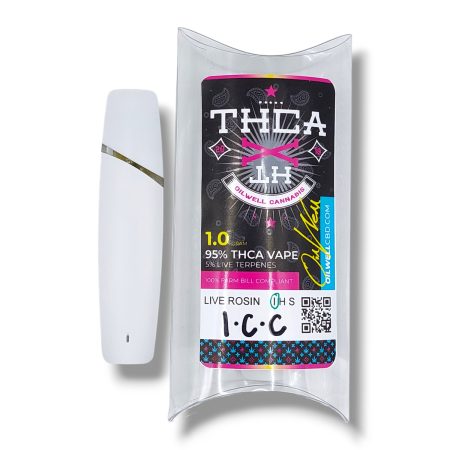
RSO Vape Cartridge ($49.99)
- 1-gram cartridge
- 900 mg+ total cannabinoids
- Six cannabinoids + 5%+ terpenes
- 510-thread universal battery compatibility
- Onset: 1-2 minutes
- Duration: 2-4 hours
When to Use Each Format
| Use Case | Recommended Format | Rationale |
|---|---|---|
| Fast relief (acute pain, nausea, panic) | Vape | 1-2 minute onset |
| Sustained relief (chronic pain, sleep) | Sublingual | 4-6 hour duration |
| Maximum bioavailability | Sublingual | 13-19% absorption |
| Portability and discretion | Vape | Compact, no measuring required |
| Precise dosing control | Sublingual | Graduated dropper in 0.1 mL increments |
| Daytime non-psychoactive use | Sublingual (raw, no heat) | THCa stays inactive, zero impairment |
| Nighttime psychoactive use | Sublingual (decarbed) or Vape | Activated THCa + delta-8 THC |
The Decarboxylation Choice: Patient-Controlled Potency
One of OilWell’s most innovative features is patient-controlled potency. The sublingual formula contains 1,500mg of THCa, which can be used in three ways:
- Raw (Non-Psychoactive): All 1,500mg stays as THCa – completely non-psychoactive. This option is compatible with work, driving, and daytime use.
- Fully Activated (Home Decarboxylation): Heating the oil at 260°F (125°C) for 45-60 minutes converts 1,500mg of THCa into approximately 1,315mg of delta-9 THC. Combined with the existing 90mg of delta-9 THC, this yields approximately 1,405mg of total delta-9 THC.
- Vape (Auto-Decarboxylation): The vape cartridge vaporizes at 400-450°F, instantly converting THCa to delta-9 THC with each inhalation.
This design puts the potency decision entirely in the customer’s hands, aligning with Rick Simpson’s principle that patients should control their own medicine.
Condition-Specific Usage Context for North Americans
Important Disclaimer: The following usage contexts are informed by cannabinoid research and OilWell’s formulation rationale. They are not medical prescriptions or FDA-approved treatment protocols. Always consult a qualified healthcare provider before using cannabinoid products.
Chemotherapy-Related Nausea and Appetite Support
- Pre-chemo: 0.5 to 1.0 mL sublingual approximately 1 hour before treatment
- Acute breakthrough nausea: 2-3 vape puffs for immediate relief
- Post-chemo: 0.5 mL sublingual every 6 hours as needed
- Sleep support: 1.0 to 2.0 mL sublingual before bed (delivers 25-50 mg CBN)
Chronic Pain (Fibromyalgia, Arthritis, Neuropathy)
- Daytime: 0.3 to 0.5 mL raw sublingual – provides anti-inflammatory cannabinoid exposure without psychoactive impairment
- Nighttime: 0.5 to 1.0 mL decarboxylated sublingual – combines pain relief with CBN sleep support
- Breakthrough pain: Vape as needed for rapid onset
Sleep Support
- Before bed: 1.0 to 2.0 mL sublingual (delivers 25-50 mg CBN)
- CBN dosage aligns with emerging sleep research
Anxiety and Stress
- Daytime functional relief: 0.3 mL raw sublingual – CBD and CBG address anxiety-related pathways without psychoactive impairment
- Nighttime: 1.0 mL sublingual – full cannabinoid profile including CBN for sleep architecture
General Titration Principle
Start low, go slow. Begin with 0.25 to 0.5 mL sublingual and assess effects over 2-3 hours before increasing. Individual responses vary based on body weight, metabolism, tolerance, and other factors.
Legal Considerations for North Americans
United States: Farm Bill Compliance
OilWell’s RSO is legal under the 2018 U.S. Farm Bill, which legalized hemp and hemp-derived products containing less than 0.3% delta-9 THC by dry weight at the federal level. Our sublingual oil contains only 90mg of delta-9 THC in the entire 30 mL bottle (3mg per mL), well under the 0.3% threshold.
However, state laws vary:
- Some states have banned delta-8 THC or other cannabinoids.
- A few states have total THC laws that count THCa toward the 0.3% limit.
- Always check your local laws before purchasing.
Canada: Hemp Regulations
In Canada, OilWell’s RSO would be classified as a hemp-derived product under the Industrial Hemp Regulations. The 0.3% delta-9 THC limit applies, and our product complies with this requirement.
Mexico: Emerging Legal Framework
Mexico has decriminalized cannabis and is developing a legal framework for medical and recreational use. Hemp-derived products with less than 0.3% delta-9 THC are generally permitted.
International Shipping
OilWell ships internationally to jurisdictions where hemp-derived products with less than 0.3% delta-9 THC are legal. All international packages include full documentation, Certificates of Analysis (COAs), and receipts for customs purposes.
Accessibility in North America
Houston Delivery Zones
For customers in the Houston area, OilWell offers same-day delivery:
| Zone | Coverage | Delivery Fee | Typical Turnaround |
|---|---|---|---|
| Texas Medical Center | All 60+ TMC institutions | FREE | 2-4 hours |
| Inner Loop (610) | Downtown, Midtown, Montrose, Heights, Rice Village | $5 | 2-4 hours |
| Within Beltway 8 | Bellaire, Memorial, Spring Branch, South Houston | $10 | 3-5 hours |
| Greater Houston Suburbs | Katy, Sugar Land, Pearland, Clear Lake, Woodlands | $15 | 4-6 hours |
| Extended Region (60 miles) | Galveston, Baytown, Rosenberg, Conroe | $20-$25 | Same-day if ordered before 2 PM |
Nationwide Shipping in the U.S.
- All 50 states where Farm Bill-compliant products are legal
- USPS Priority Mail (2-3 business days)
- FedEx and UPS Ground (3-5 business days)
- Discreet packaging with no cannabis branding visible
International Shipping
OilWell ships internationally to countries with compatible hemp laws. Customers are responsible for verifying local legality and customs requirements.
The Science Behind OilWell’s RSO: What North Americans Need to Know
The Evidence Hierarchy
At OilWell, we prioritize evidence in this order:
- Human clinical evidence
- Systematic reviews and meta-analyses
- Institutional summaries (NIH, FDA, etc.)
- Preclinical and mechanistic literature
This hierarchy matters because the evidence base varies dramatically between cannabinoids.
CBD: The Most Studied Cannabinoid in North America
- Strongest Evidence: Epilepsy (Epidiolex is FDA-approved)
- Emerging Evidence: Anxiety, pain, and sleep support
- Safety Considerations: Liver enzyme elevation, drug interactions
Delta-9 THC: Benefits and Risks
- Strongest Evidence: Chemotherapy-related nausea, appetite stimulation, some pain conditions
- Risks: Impairment, anxiety, tachycardia, dependency potential
Minor Cannabinoids: Emerging Research
- CBG: Preclinical evidence for neuroprotection and inflammation
- CBN: Limited evidence for sleep; marketing has outpaced science
- CBC: Preclinical evidence for pain and neurogenesis
Terpenes: More Than Just Aroma
While terpene claims often outpace the evidence, OilWell’s 5% terpene profile includes compounds with plausible bioactivity:
- Limonene: Potential mood elevation
- Caryophyllene: CB2 agonist with anti-inflammatory potential
- Linalool: Potential calming effects
The Entourage Effect
The entourage effect hypothesis suggests that cannabinoids and terpenes work better together than in isolation. While this concept is influential in North American cannabis culture, robust clinical proof remains limited. OilWell’s multi-cannabinoid, multi-terpene formula is designed to explore this potential synergy.
Safety Considerations for North Americans
General Safety Guidelines
- Start Low, Go Slow: Begin with small doses and increase gradually.
- Avoid Driving: Do not operate vehicles or machinery while under the influence.
- Consult Your Doctor: Especially if you have medical conditions or take medications.
- Pregnancy and Nursing: Avoid use during pregnancy and breastfeeding.
- Keep Away from Children: Store products securely.
Drug Interactions
Cannabinoids can interact with medications, particularly:
- Blood thinners
- Blood pressure medications
- Sedatives
- Antidepressants
- Anti-seizure medications
Potential Side Effects
- CBD: Fatigue, diarrhea, appetite changes
- THC: Dry mouth, red eyes, increased heart rate, anxiety, memory impairment
- CBG: Limited data; may cause dry mouth or fatigue
- CBN: Limited data; may cause drowsiness
Why OilWell Stands Out in North America
1. Multi-Cannabinoid Formulation
Most RSO products in North America are THC-dominant. OilWell’s formula includes seven cannabinoids at specific ratios, designed to provide broader therapeutic potential.
2. Patient-Controlled Potency
With 1,500mg of THCa, customers can choose between non-psychoactive use (raw) or full psychoactive potency (decarboxylated), all from the same legal product.
3. Solvent-Free Production
Unlike traditional RSO, OilWell’s products contain no residual solvents. We use organic MCT oil as a carrier and conduct full panel third-party testing.
4. Terpene Inclusion
Traditional RSO destroyed all terpenes. OilWell includes live terpenes at 5% with a defined seven-terpene profile for potential entourage effects.
5. Evidence-Based Approach
Every cannabinoid and terpene in our formula is backed by scientific research, which we transparently share with our customers.
6. Open-Source Philosophy
OilWell publishes complete formulas so that those who can’t afford our products can make their own versions. This aligns with Rick Simpson’s original ethos of accessibility.
7. Legal Accessibility
Our Farm Bill-compliant products are legal in most of the U.S. and available for shipping across North America.
The Future of RSO in North America
As cannabis laws continue to evolve across North America, RSO is poised to play an increasingly important role in medical and wellness applications. Here’s what we see on the horizon:
- Increased Research: As legal barriers fall, more clinical research will explore RSO’s potential benefits and limitations.
- Standardization: Expect to see more standardized RSO products with consistent cannabinoid profiles and dosing.
- Personalization: Future RSO formulations may be tailored to specific conditions or genetic profiles.
- Integration with Conventional Medicine: As evidence grows, RSO may become more integrated with conventional treatment plans.
- Expanded Access: Legal reforms in the U.S., Canada, and Mexico will continue to expand access to RSO products.
Conclusion: RSO in North America – Past, Present, and Future
Rick Simpson Oil has come a long way since its origins in Nova Scotia. What began as a personal journey has evolved into a global phenomenon, particularly in North America where cannabis laws and culture are rapidly changing.
At OilWell Cannabis, we honor Rick Simpson’s legacy while recognizing that modern science and regulation demand a new approach. Our multi-cannabinoid, terpene-inclusive RSO formulas represent the next generation of this tradition – safer, more precise, and more accessible than ever before.
Whether you’re in Houston, Toronto, or Mexico City, OilWell offers a legal, lab-tested RSO option that puts control in your hands. With patient-controlled potency, solvent-free production, and a commitment to evidence-based education, we’re proud to bring this innovative product to North America.
Remember: RSO is not a miracle cure. It’s a tool – one that should be used responsibly, in consultation with healthcare providers, and as part of a broader wellness approach. At OilWell, we’re committed to providing North Americans with the most honest, comprehensive education about RSO so you can make informed decisions about your health.
For more information or to order OilWell RSO, visit oilwellcbd.com.
THCa Rick Simpson Oil
Full-Spectrum • In-House Extraction
THE OILWELL PASSION PROJECT: THCa RSO
Experience true full-spectrum relief. Our Rick Simpson Oil is meticulously crafted in-house to preserve the complete cannabinoid and terpene profile of the plant. Potent, pure, and profound.
- 🌿 Maximum Potency
- 🔬 Third-Party Lab Tested
- 🚀 Same-Day Delivery Available