Rick Simpson Oil (RSO) in Texas: The Complete Guide by OilWell Cannabis
Welcome to OilWell Cannabis. If you are searching for Rick Simpson Oil (RSO) in Texas, you are likely looking for something more profound than standard CBD wellness products. You may be navigating chronic pain, supporting a loved one through cancer treatment, managing sleep disorders, or seeking relief where conventional pharmaceuticals have fallen short. We understand that journey because we have lived it.
We are based in Houston, Texas, operating from the heart of the Montrose neighborhood at 810 Richmond Avenue. Since 2019, we have been dedicated to providing Texans with transparent, evidence-informed, and legally compliant cannabinoid formulations. Our mission is not to sell hope, but to provide the best possible version of cannabis science so you can give it a fair shot and decide for yourself whether it is right for you.
This guide is designed to educate Texas residents on the history of RSO, the evolution of modern formulations, the scientific evidence behind cannabinoids, and how OilWell’s open-source philosophy puts control back in your hands.
Understanding Rick Simpson Oil and Its History
To understand modern RSO, we must honor its origins while acknowledging the advancements made since. Rick Simpson Oil is one of the most searched cannabis extract terms globally, and here in Texas, interest in full-extract cannabis oil continues to grow as patients seek comprehensive therapeutic options.
Who is Rick Simpson?
Rick Simpson was born in 1949 in Amherst, Nova Scotia, Canada. He was not a doctor, scientist, or medical professional. He was a power engineer and maintenance worker—a blue-collar tradesman whose path into cannabis advocacy began not with research but with personal suffering and a deep distrust of the medical system that failed him.
In 1997, while working at a hospital in Moncton, New Brunswick, Simpson fell from scaffolding and suffered a serious head injury. The aftermath included persistent tinnitus, dizziness, and post-concussion symptoms that conventional medicine could not adequately resolve. According to Simpson, the medications he was prescribed either failed to help or made his condition worse. He reported that cannabis provided more relief than anything his doctors offered, but when he asked his physician to support or prescribe cannabis, the request was refused.
Simpson’s interest in concentrated cannabis oil deepened after he learned about a 1974 study funded by the National Institute of Health and conducted at the Medical College of Virginia, in which THC was reported to slow or shrink tumors in mice. That study—originally intended to demonstrate harm—became a foundational reference point in Simpson’s later advocacy, even though its findings were never replicated in controlled human cancer trials.
The pivotal moment in Simpson’s story came in 2003. He reported that three bumps on his arm were diagnosed by his doctor as basal cell carcinoma. Rather than pursuing conventional treatment, Simpson applied concentrated cannabis oil directly to the lesions, covered them with bandages, and waited. According to his account, the bumps disappeared within four days. No independent medical verification of this outcome has been published, and no biopsy confirmation or clinical follow-up has been documented in any peer-reviewed source. Nevertheless, this personal experience became the origin story of Rick Simpson Oil and the foundation of everything that followed.
Important Context: Simpson’s account is presented here as his personal testimony. The absence of clinical documentation, controlled observation, or independent medical confirmation means these events cannot be evaluated as medical evidence. They are, however, historically significant as the catalyst for a global movement around concentrated cannabis oil.
The Traditional RSO Protocol
Simpson’s core treatment recommendation was a structured oral protocol designed to deliver a total of 60 grams (approximately 60 mL) of concentrated cannabis oil over a period of roughly 90 days. He described this as a cancer treatment protocol, though he also recommended it for numerous other conditions.
- Goal: Consume 60 grams of concentrated, high-THC cannabis oil over approximately 90 days.
- Titration Schedule: Begin with a dose approximately the size of half a grain of dry rice (10–15 mg) three times per day. Double the dose approximately every four days until reaching approximately 1 gram per day by weeks 2–5. Maintain the full dose until the 60 grams are consumed.
- Administration: Primary method is oral (sublingual or swallowed). Topical application was recommended for skin cancers. Inhalation was not recommended as a primary treatment method.
- Tolerance: Simpson maintained that patients would develop significant tolerance to the psychoactive effects of THC within approximately three to four weeks.
- Maintenance: After completing the full course, a maintenance dose of 1 to 2 grams per month was recommended indefinitely.
Important Context for Evaluating This Protocol:
This protocol was designed by one person based on his personal experience and anecdotal observations. It was not developed through clinical trials, dose-finding studies, or formal research processes. Several critical points apply for Texas patients considering this approach:
- No Controlled Trial Validation: There are no published randomized controlled trials evaluating this specific 60-gram/90-day protocol for any cancer type or any other condition.
- Very High THC Exposure: At peak dosing, patients were consuming roughly 600 to 900 milligrams of delta-9 THC per day—a dose far exceeding anything studied in controlled clinical settings.
- Real Risks: Consuming high doses of THC daily carries serious risks including severe intoxication, impairment, anxiety, panic, tachycardia, and cannabis use disorder.
- Oncology Context: Patients with active cancer are often medically complex. Using unregulated, unstandardized cannabis oil as a primary cancer treatment potentially in place of proven therapies introduces harm that extends beyond the oil itself.
What is Traditional Rick Simpson Oil?
Traditional RSO refers to the specific type of concentrated cannabis oil that Simpson made and advocated for. It was defined by his method and materials, not by lab specifications.
- Source Material: High-THC, indica-dominant cannabis strains. There was no strain standardization.
- Extraction Solvent: Simpson originally used naphtha (petroleum-based) or 99% isopropyl alcohol. Neither is a food-grade solvent.
- Extraction Process: Involved solvent washing, filtration, and evaporation using a rice cooker. The heat converted essentially all THCa into delta-9 THC and destroyed most volatile terpenes.
- Appearance: Extremely dark, nearly black, thick, viscous, tar-like oil.
- Cannabinoid Profile: Primarily decarboxylated delta-9 THC (60–90% estimated). Minor cannabinoids were present at natural ratios but not controlled.
- Standardization: None. Every batch was different. No Certificate of Analysis (COA) or contaminant screening.
- Residual Solvent Risk: Naphtha may contain benzene, toluene, and other carcinogens. Incomplete solvent purging leaves potentially harmful residues.
Simpson’s Claims vs. The Evidence Record
Rick Simpson made expansive therapeutic claims about his oil, stating it could cure cancer and many other diseases. It is important to evaluate these claims against the actual evidence base.
- What Simpson Was Not: Simpson was not a scientist, physician, or researcher. He never designed, conducted, or published a clinical trial. His evidence base consisted of personal experience and testimonials.
- What the Preclinical Literature Shows: In vitro studies have demonstrated that THC and CBD can induce apoptosis and inhibit proliferation in certain cancer cell lines. Animal model studies have shown some tumor-growth inhibition. These findings are scientifically interesting.
- What the Preclinical Literature Does Not Show: These findings have not translated into proven human cancer cures. No human clinical trial has demonstrated that RSO or any cannabis oil preparation cures cancer.
- Institutional Positions: The U.S. National Cancer Institute (NCI) acknowledges cannabinoid anticancer research but does not endorse cannabis as cancer treatment. The FDA has not approved any cannabis plant product for cancer. Health Canada has never approved RSO for cancer.
- What Simpson Got Right: Simpson drew attention to cannabinoids as a serious area of biomedical research when the world was ignoring it. His advocacy helped create the conditions for the legal cannabis industry.
- What He Overstated: The leap from preclinical signals to cancer cure was not supported by human evidence. Encouraging patients to rely on RSO as a primary treatment in place of proven oncologic therapies carries genuine harm potential.
The OilWell Difference: Evolution of Modern RSO
At OilWell Cannabis, we respect the history of Rick Simpson Oil, but our formulations are not traditional RSO. They are informed by the RSO tradition but depart from it in ways that are deliberate, evidence-motivated, and designed to solve the problems that limited Rick Simpson’s original vision.
The Origin of OilWell Cannabis
OilWell Cannabis was founded by Colin Valencia in Houston, Texas. Colin grew up in McAllen, Texas—right across the river from Reynosa, Tamaulipas, Mexico. The McAllen-Reynosa area, known as the Borderplex, is one of the most economically challenged and dangerous regions along the U.S.-Mexico border. Colin’s childhood in McAllen was marked by exposure to both the opportunities and the challenges of life along the border. By sixteen, he had to leave home for good.
Despite the dangers, Colin did not fall into the darkest paths available to him. Instead, he focused on cannabis, seeing it as a safer and more beneficial alternative. He later became a formally trained software engineer and did custom development work for Baylor College of Medicine, one of the most prestigious medical institutions in the Texas Medical Center. That combination—deep cannabis plant knowledge plus medical-grade technical precision—defines OilWell’s approach.
The company’s origin story begins with a dog named Bentley. Bentley was paralyzed in his back legs and facing euthanasia. Veterinarians said pain medications would destroy his internal organs. In a desperate search for alternatives, Colin learned to create CBD golden paste. Bentley got up. He walked over to Colin and brought him his ball to play. This was not placebo effect—dogs do not respond to placebo. Bentley lived another ten years, passing naturally at age twenty.
During those ten years, Colin developed specialized cannabis formulas for every age-related condition Bentley faced: neurodegeneration, dementia, glaucoma, and crippling arthritis. Single cannabinoids were not enough. Bentley’s evolving conditions required multi-cannabinoid synergy. Bentley’s story is the foundation of OilWell Cannabis, driving our commitment to quality, innovation, and compassionate care.
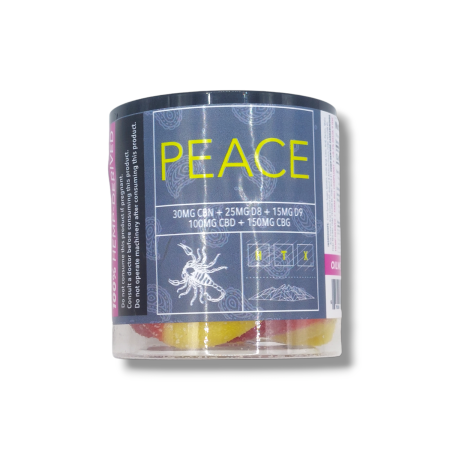
Colin also knows pharmaceutical dependence personally. He struggled with PTSD and benzodiazepine addiction. When he decided to break free from Xanax, he did it cold turkey using the cannabinoid knowledge he had developed keeping Bentley alive. The Peace Gummies formula was created during midnight experiments while fighting through benzo withdrawal. This is not theoretical knowledge. Colin lived what RSO patients live: desperation for relief, failed pharmaceuticals, and the discovery that cannabinoids work when pills do not.
The OilWell RSO Philosophy
Four core principles define OilWell’s approach, each aligning with and evolving Simpson’s original ethos:
- Accessibility Over Gatekeeping: No medical card is required. Anyone age 21 or older can purchase. We ship nationwide across the United States and internationally to customers who verify local legality.
- Patient-Controlled Potency: THCa is sold in its acidic, non-psychoactive form. You decide whether to use it raw for non-psychoactive benefits or to decarboxylate it into delta-9 THC for full psychoactive potency.
- Open-Source Formulas: We publish our complete formulas publicly—every cannabinoid, every milligram amount, every percentage—so that anyone who cannot afford our products can source ingredients and make their own version.
- Evidence-Informed, Not Evidence-Overstating: We are committed to honest education about what the science actually says. We distinguish between what is well-supported, what is emerging, and what is overstated.
Farm Bill Compliance and the THCa Legal Framework
The 2018 Farm Bill legalized hemp and hemp-derived products containing less than 0.3% delta-9 THC by dry weight at the federal level. This legal framework is the foundation of OilWell’s RSO product design.
Our RSO Sublingual Oil contains only 90 milligrams of delta-9 THC in the entire 30 mL bottle—3 milligrams per milliliter—well under the 0.3% threshold. All cannabinoids in the formula are hemp-derived.
THCa (tetrahydrocannabinolic acid) is the acidic, non-psychoactive precursor to delta-9 THC. It is not itself delta-9 THC. This distinction is legally significant: THCa is Farm Bill compliant at the point of sale because it has not been converted to delta-9 THC.
You can decarboxylate THCa into delta-9 THC at home by heating the oil at 260°F (125°C) for 45 to 60 minutes. This converts 1,500 milligrams of THCa into approximately 1,315 milligrams of delta-9 THC. Combined with the existing 90 milligrams of delta-9 THC in the formula, this produces approximately 1,405 milligrams of total delta-9 THC—giving the product psychoactive potency comparable to traditional illegal RSO, entirely at your discretion after purchase.
Important Legal Notice: THCa converts to delta-9 THC when heated. Customers are responsible for understanding and complying with their local laws regarding cannabinoid products. OilWell ships with full documentation, Certificates of Analysis, and receipts. International customers accept all customs and legal responsibility.
Solvent-Free Production and Safety
Traditional RSO production used naphtha or isopropyl alcohol—neither of which is food-grade. OilWell’s RSO is not an extraction product in the traditional sense. It is a formulated blend of individual cannabinoid distillates and isolates combined at specific ratios in a controlled production environment. No naphtha. No isopropyl alcohol. No butane.
We use organic MCT oil (medium-chain triglycerides) as the carrier base. MCT oil is a food-grade lipid carrier that facilitates cannabinoid absorption through sublingual tissue and provides a neutral taste profile.
Third-party lab testing covers cannabinoid potency, terpene profile, and safety panels including pesticides, heavy metals, residual solvents, and microbial contaminants. Certificates of Analysis (COAs) are available on request.
Media Recognition and Community Impact
Between September 2019 and April 2023, ABC13 Houston (KTRK)—the ABC affiliate serving the fourth-largest city in the United States—featured Colin Valencia and OilWell Cannabis in seven distinct news segments. Five different ABC13 reporters sought Colin out across those years. No other Houston cannabis operator appears with that frequency or across that breadth of subject matter during the same period.
Community Leadership
In August 2021, OilWell offered a unique incentive to get people vaccinated. We gave away 1,000 special edition caviar pre-rolls (valued at approximately $35,000 in product) to those who got vaccinated. We coordinated with the city of Houston to help more people get vaccinated, with no political strings attached.
Ethical Advocacy
In October 2021, when Texas classified Delta-8 as a Schedule I controlled substance overnight, Colin proactively removed all Delta-8 products from shelves before enforcement began. He warned other operators who were unknowingly shipping Schedule I narcotics. This willingness to absorb a major revenue loss to act ethically defines our character.
Personal Stake
In October 2022, during coverage of President Biden’s marijuana pardon announcement, it was revealed that Colin has previously faced charges for marijuana possession. This personal history transforms our mission. We are not outside entrepreneurs who saw a business opportunity. We are people who lived the consequences and built a legal business to prove the industry could operate with integrity.
Colin’s quote from the first ABC13 feature in September 2019 captures the OilWell philosophy: “I’m not trying to sell people snake oil. I’m not trying to sell people hope. But there’s enough research out there that people just need to know and try and have the best possible version to base their opinions off of to give it a fair shot as to whether it’s right or wrong for them.”
The Science: General Knowledge and Evidence
We prioritize sources in the following order: human clinical evidence, systematic reviews and meta-analyses, NIH and other institutional summaries, then mechanistic or preclinical literature. That weighting matters because the evidence base is not evenly distributed.
Institutional Baseline
The National Center for Complementary and Integrative Health (NCCIH) states that the strongest established cannabinoid evidence is for certain rare epilepsies, chemotherapy-related nausea and vomiting, and appetite indications associated with HIV/AIDS. The FDA has not approved the cannabis plant itself for medical use. Safety concerns repeatedly highlighted include impairment, motor vehicle crash risk, cannabis use disorder, and pregnancy-related concerns.
Cannabinoid Profiles
- CBD: Strongest human evidence in the current formula set, especially for seizure disorders. Anxiety and pain research are promising but heterogeneous. Safety concerns include liver enzyme elevation and drug interactions.
- CBG: Mostly review-level and preclinical. Pharmacologically distinct from THC and CBD. Potential relevance to neurologic disorders and inflammatory bowel disease, but not yet clinically established.
- Delta-8 THC: Pharmacologically relevant and psychoactive. Less potent than delta-9 THC but with incomplete human safety characterization and manufacturing-quality uncertainty.
- THCa: Acidic precursor of THC. Does not produce psychoactive effects unless decarboxylated. In vitro literature suggests anti-inflammatory and neuroprotective possibilities.
- Delta-9 THC: Strongest human evidence of psychoactive cannabinoids, but also the clearest adverse-effect burden. Relevant for nausea and pain, but carries intoxication and psychiatric liabilities.
- CBN: Often marketed for sleep, but clinical support is far thinner than the market suggests. No strong validated-trial base yet identified for sleep promotion.
- CBC: Emerging and preclinical. Distinct pharmacodynamics. Antinociceptive and antibacterial areas are interesting research targets, but not yet validated clinical actives.
Terpene Profiles
Terpene claims need strict interpretation. Much of the literature comes from isolated compounds or preclinical models. Robust proof of clinically meaningful entourage effects in humans remains limited.
- Limonene: Multifunctional monoterpene with antioxidant and anti-inflammatory potential. Oxidation products are clinically relevant contact allergens.
- Myrcene: Anxiolytic and analgesic properties in preclinical studies. Human studies are lacking.
- Caryophyllene: Selective CB2 receptor agonist. Unusual and relevant for pharmacologic discussion. Anti-inflammatory and neuroprotective signals exist.
- Pinene & Linalool: Promising preclinical literature for brain health. Evidence is mostly preclinical; well-designed clinical trials are lacking.
- Humulene & Terpinolene: Translationally interesting but early. Dominated by in silico, in vitro, and animal studies.
Practical Takeaways
The most evidence-developed actives in our formulas are CBD and delta-9 THC. Delta-8 THC is not a trivial ingredient; it is psychoactive. THCa meaningfully changes with processing. CBG, CBN, and CBC are scientifically credible but clinically immature. The listed terpenes are likely highly relevant to aroma and flavor, but compound-specific human therapeutic claims should be made carefully.
Our Product Formulas: Transparent and Open-Source
We publish our complete formulas publicly. If you cannot afford our products, you can see exactly what the formula contains and make your own version. This is a direct echo of Rick Simpson’s original ethos, adapted for the modern marketplace.
RSO Sublingual Oil
Price: $129.99
Format: 30 mL bottle (1 fl oz)
Total Cannabinoids: 16,590 mg (553 mg per mL)
| Cannabinoid | Amount |
|---|---|
| CBD | 4,500 mg |
| CBG | 3,000 mg |
| Delta-8 THC | 6,000 mg |
| THCa | 1,500 mg |
| Delta-9 THC | 90 mg |
| CBN | 750 mg |
| CBC | 750 mg |
| Total | 16,590 mg |
- Live Terpenes: 5% (Limonene, Myrcene, Caryophyllene, Pinene, Linalool, Humulene, Terpinolene)
- Base: Organic MCT Oil
- Onset: 15 to 45 minutes
- Duration: 4 to 6 hours
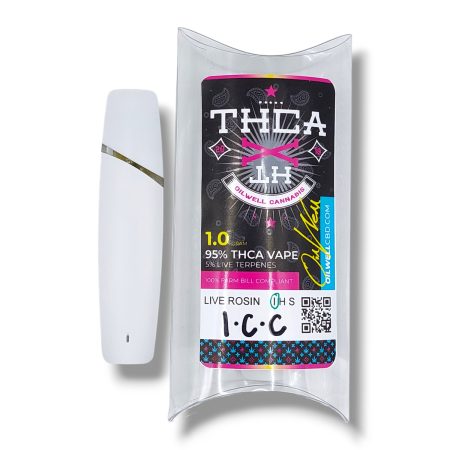
RSO Vape Cartridge
Price: $49.99
Format: 1 Gram cartridge
Total Cannabinoids: 900 mg+
| Cannabinoid | Percentage |
|---|---|
| CBD | 30% |
| CBG | 20% |
| Delta-8 THC | 15% |
| THCa | 10% |
| CBN | 10% |
| CBC | 10% |
- Live Terpenes: 5%+
- Compatibility: 510-thread universal battery
- Onset: 1 to 2 minutes (Fastest delivery method)
- Duration: 2 to 4 hours
- Note: Automatic THCa decarboxylation at vaping temperature (400–450°F)
When to Use Each Format
- Fast Relief (Acute Pain, Nausea, Panic): Vape (1–2 minute onset)
- Sustained Relief (Chronic Pain, Sleep): Sublingual (4–6 hour duration)
- Daytime Non-Psychoactive Use: Sublingual Raw (No heat, THCa stays inactive)
- Nighttime Psychoactive Use: Sublingual Decarbed or Vape
Condition-Specific Usage Context
Disclaimer: These contexts are not medical prescriptions. Consult a healthcare provider.
- Chemotherapy-Related Nausea: 0.5 to 1.0 mL sublingual approximately 1 hour before treatment. Acute breakthrough nausea: 2 to 3 vape puffs.
- Chronic Pain: Daytime: 0.3 to 0.5 mL raw sublingual. Nighttime: 0.5 to 1.0 mL decarboxylated sublingual.
- Sleep Support: 1.0 to 2.0 mL sublingual before bed. At 2.0 mL, this delivers 50 mg CBN.
- Anxiety and Stress: Daytime: 0.3 mL raw sublingual. Nighttime: 1.0 mL sublingual.
General Titration Principle: Start low, go slow. Begin with 0.25 to 0.5 mL sublingual and assess effects over 2 to 3 hours before increasing.
Delivery and Accessibility in Texas
We operate the only same-day RSO delivery system in Houston. Beyond Houston, we ship nationwide and internationally.
Houston Same-Day Delivery
| Zone | Coverage | Delivery Fee | Turnaround |
|---|---|---|---|
| Texas Medical Center | All 60+ TMC institutions (MD Anderson, Memorial Hermann, etc.) | FREE | 2 to 4 hours |
| Inner Loop (610) | Downtown, Midtown, Montrose, Heights, Galleria | $5 | 2 to 4 hours |
| Within Beltway 8 | Bellaire, Memorial, Spring Branch, Hobby Airport | $10 | 3 to 5 hours |
| Greater Houston Suburbs | Katy, Sugar Land, Pearland, Woodlands, Cypress | $15 | 4 to 6 hours |
| Extended Region | Galveston, Baytown, Conroe, La Porte | $20 to $25 | Same-day if ordered before 2 PM |
Free delivery to the Texas Medical Center—the world’s largest medical complex with over 10 million patient visits annually—reflects our commitment to accessibility for the patients who need it most.
Nationwide and International Shipping
We ship to all 50 states where Farm Bill-compliant products are legal via USPS, FedEx, and UPS. International shipping is available with full documentation and COAs. The THCa legal framework makes this possible: because the product contains less than 0.3% delta-9 THC at the point of sale, it meets the definition of a hemp-derived product.
Broader Product Portfolio
Beyond RSO, OilWell Cannabis produces a range of cannabinoid products developed from the formulation knowledge Colin built over Bentley’s ten-year journey and his own experience with PTSD.
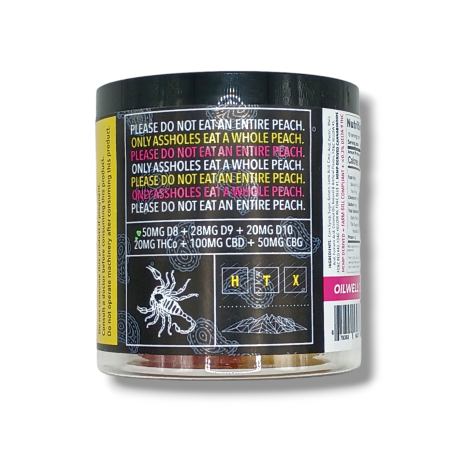
- Asshole Peach: OilWell’s most popular product. Particularly favored by veterans for pain and PTSD relief.
- Peace Gummies: Developed from Colin’s own experience with PTSD and benzodiazepine addiction. Helps manage insomnia and severe PTSD.
- SWEETemintz: Sugar-free vegan peppermint hard candy designed for diabetic and health-conscious consumers.
- Custom Creations: We design tailored products on request for specific cannabinoid ratios, delivery formats, or health circumstances including formulations for vegans and diabetics.
Contact and Business Hours
We invite you to reach out to us with any questions. Transparency is our standard.
- Address: 810 Richmond Ave, Houston, TX 77006 (Montrose neighborhood)
- Phone: (832) 416-2816
- Email: [email protected]
- Website: https://oilwellcbd.com/
- Instagram: @oilwellcbd
Business Hours:
- Monday–Thursday: 10:00 AM – 7:00 PM
- Friday–Saturday: 10:00 AM – 10:00 PM
- Sunday: 10:00 AM – 4:00 PM
Important Disclaimers and Safety Warnings
- Age Requirements: You must be 21 years or older to purchase RSO products.
- FDA Disclaimer: These statements have not been evaluated by the Food and Drug Administration. This product is not intended to diagnose, treat, cure, or prevent any disease.
- Safety Warnings: May cause drowsiness or impairment. Do not operate vehicles or machinery while under the influence of psychoactive cannabinoids. Consult a physician if pregnant or nursing. Keep out of reach of children.
- Legal Responsibility: Buyer is responsible for checking local laws. OilWell assumes no legal responsibility for customer’s use or decarboxylation decisions. Void where prohibited by law.
- Drug Testing: THCa stays non-psychoactive when raw; delta-8 and activated THCa will trigger drug tests. Be honest about your usage.
OilWell Cannabis is more than a brand—it is a promise to our customers that we will always strive to deliver the best, most thoughtful cannabis products available. We are not here to follow trends. We are here to set them. And as we continue to grow, our focus remains on maintaining the same level of integrity, creativity, and commitment that has defined us from the day Bentley got up, walked across the room, and brought his ball to play.
For Texas residents seeking evidence-informed, legally compliant, and transparent cannabinoid medicine, we are here to serve you with the depth of knowledge and the quality of care you deserve.
THCa Rick Simpson Oil
Full-Spectrum • In-House Extraction
THE OILWELL PASSION PROJECT: THCa RSO
Experience true full-spectrum relief. Our Rick Simpson Oil is meticulously crafted in-house to preserve the complete cannabinoid and terpene profile of the plant. Potent, pure, and profound.
- 🌿 Maximum Potency
- 🔬 Third-Party Lab Tested
- 🚀 Same-Day Delivery Available