
THCa Vape Carts
HANDMADE • SMALL-BATCH — 1 Gram Rick Simpson Oil (RSO) Vape
$54.99
🔥 HANDMADE & MADE-TO-ORDER — small-batch, fresh, in-house by OilWell Cannabis (Houston, TX). Buy 2 of a strain, get your 3rd FREE.
Product Description
🔥 The 1-Gram RSO Vape Cartridge: Rick Simpson's Full-Spectrum Legacy, Distilled Into Your Pocket
Six cannabinoids. Five percent live terpenes. Eighty-seven point seven percent decarboxylation efficiency waiting inside every draw. One gram of pharmaceutical-grade, hemp-derived, full-spectrum cannabis medicine engineered to deliver the complete entourage effect Rick Simpson gave away to five thousand people from his backyard in Nova Scotia — except now it fits in a 510-thread cartridge, hits in ninety seconds, and is legal under the 2018 Farm Bill in all fifty states.
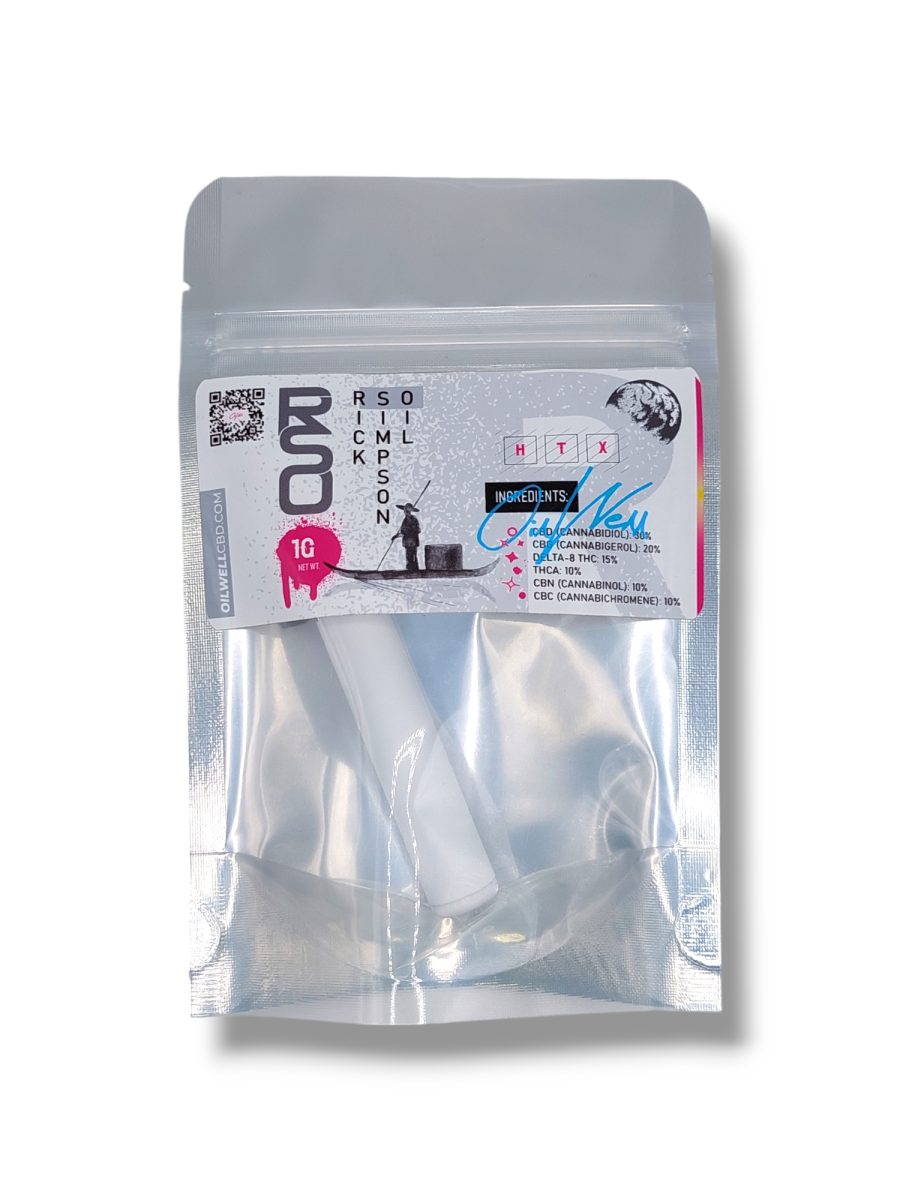
This is the OilWell Cannabis RSO Vape: a one-gram cartridge carrying a precise 30% CBD / 20% CBG / 15% Delta-8 THC / 10% THCa / 10% CBN / 10% CBC profile suspended in five percent preserved live terpenes. No isolate. No "broad-spectrum" euphemism for "we stripped the THC and hoped nobody noticed." No mystery distillate cut with botanical terpenes pretending to be cannabis. Every cannabinoid on the COA is a real, named, quantified compound, and every percentage on the label is verified within five percent by independent third-party labs using HPLC and UHPLC potency confirmation, ICP-MS heavy metal screening, LC-MS/MS and GC-MS/MS pesticide panels across four hundred plus compounds, headspace GC residual solvent analysis below FDA Class 3 limits, and full microbial testing for E. coli, Salmonella, and Aspergillus. That is the standard. That has been the standard since the founder started formulating cannabinoid medicine for a paralyzed pitbull named Bentley — the paralyzed pitbull who walked again, who lived ten more years to age twenty, and whose standard of "Quality, Innovation, and Authenticity" lives inside every batch we ship.
If you've been looking for an RSO experience without the tar-syrup texture, the 30-to-90-minute oral onset, the guessing game of rice-grain dosing, or the criminal risk of buying high-THC cannabis oil off the street — this is what Rick Simpson's vision looks like when it's been refined for the modern era.
What Rick Simpson Actually Built — And Why a Vape Is the Right Form Factor
Rick Simpson was a Canadian engineer working in a Nova Scotia hospital boiler room in 1997 when toxic fumes gave him a severe head injury. The post-concussion syndrome that followed brought persistent tinnitus and dizzy spells that conventional medicine could not touch. In 1999, after watching David Suzuki's "The Nature of Things" on CBC, he recalled a 1974 Washington Post report about a Medical College of Virginia study finding that THC slowed the growth of malignant tumors. By 2003, three suspicious basal cell carcinomas had appeared on his arm and face. Refusing surgery, he applied his homemade cannabis oil topically under bandages — and within four days, all three growths disappeared. His doctor confirmed the cancers were gone but would not credit cannabis. Simpson began giving his oil away to anyone who needed it. Over the next decade, more than five thousand people received his RSO free of charge. He documented the results. The medical establishment largely ignored him. In 2009, legal persecution forced him into exile. But the protocol he left behind — the famous 60-gram, 90-day regimen — became the foundation of modern full-spectrum cannabis medicine and the reason anyone can type "RSO" into a search bar today and find a global movement instead of a single Canadian man.
Simpson's original RSO was a thick, dark, almost tar-like oil that patients consumed orally in graduated doses, starting with half a grain of rice three times per day in week one, doubling every four days through week five, working up to one gram per day for weeks six through twelve. That protocol works. It has worked for thousands of people managing cancer, chronic pain, severe insomnia, autoimmune disease, and treatment-resistant conditions. But the form factor created real barriers: imprecise dosing from a syringe, intense bitter taste, a half-hour-to-ninety-minute onset that made titration frustrating, and a texture that many patients simply could not tolerate.
The OilWell RSO Vape keeps the full-spectrum cannabinoid profile Rick Simpson discovered and modernizes the delivery. Lung absorption bypasses first-pass liver metabolism entirely, so cannabinoids reach the bloodstream in one to two minutes instead of ninety. Each puff delivers a consistent, measurable dose — no rice-grain guesswork, no clumpy syringe, no tar on the spoon. The five percent live terpene blend preserves the authentic flavor and therapeutic profile of fresh-frozen cannabis instead of the burnt, bitter notes of decarbed oral oil. And the entire 900+ milligram formulation ships legal, federally compliant, and arrives at your door in a sealed, tamper-evident, nitrogen-purged, UV-protected oxygen-free package with a QR-coded Certificate of Analysis you can scan to verify every number on this page.
The Six Cannabinoids Inside — The Science of Full-Spectrum Relief
Cannabis is not a single-molecule plant. Hemp and marijuana together produce more than 400 distinct chemical compounds, including over 120 cannabinoids that interact with the human endocannabinoid system — the same receptor network (CB₁ in the central nervous system, CB₂ in immune tissues, TRPV₁ for pain and heat, 5-HT₁A for mood, PPARγ for inflammation, GPR55 for bone and cancer signaling) that endocannabinoids like anandamide and 2-AG have been modulating for 600 million years of vertebrate evolution. The 1992 discovery of anandamide by Raphael Mechoulam at Hebrew University and the 1993 mapping of CB₂ by Sean Munro at Cambridge revealed that the body was already running on cannabis-like chemistry. Cannabis doesn't introduce a foreign system; it feeds an existing one.
When isolated cannabinoids are consumed alone, they engage one or two receptors and produce a narrow therapeutic band. When consumed together in their natural ratios — with their natural terpenes intact — they engage the entire network simultaneously, amplifying each other's effects through what researchers now call the entourage effect. Johns Hopkins University confirmed this in 2024 with the first clinical proof: D-limonene combined with THC produced a 54.8% reduction in anxiety ratings in a double-blind, placebo-controlled trial (N=20), an effect neither compound could deliver alone at those doses. The MDPI 2024 CBG+CBD synergy study showed the same pattern in inflammation — co-administration significantly outperformed either cannabinoid alone, reducing TNF-α while raising anti-inflammatory IL-10 and IL-37. That is the foundation this cartridge is built on. Not single-molecule thinking. The whole orchestra.
CBD — 30% — The Foundation Cannabinoid
Cannabidiol (molecular formula C₂₁H₃₀O₂, molecular weight 314.46 g/mol) is the most researched phytocannabinoid in human history, with more than 23,000 publications indexed on PubMed and an FDA approval (Epidiolex, 2018) for Lennox-Gastaut syndrome, Dravet syndrome, and tuberous sclerosis complex. CBD does not produce intoxication because it binds CB₁ weakly as an allosteric modulator rather than an agonist. Instead, it works through CB₂, TRPV₁, 5-HT₁A, GPR55 antagonism, and PPARγ activation — calming inflammatory cascades, modulating serotonin signaling, and inhibiting the FAAH enzyme that breaks down the body's own anandamide, effectively raising natural bliss-molecule levels.
A June 2024 meta-analysis in Psychiatry Research (N=316) confirmed significant anxiety reduction. The National Academy of Sciences reviewed 17,722 studies in 2017 and found "substantial evidence" for chronic pain relief. A 2024 MDPI clinical trial demonstrated CBD's anti-inflammatory mechanism through TRPV-1 activation and statistically significant reductions in C-reactive protein, the key systemic inflammation marker. Dr. Peter Grinspoon of Harvard Medical School described CBD in 2024 as "a helpful, relatively nontoxic option" for anxiety, insomnia, and chronic pain. At 30% of this cartridge, CBD is the workhorse — chronic pain, arthritis, anxiety disorders, PTSD baseline management, epilepsy support, inflammatory conditions, and the everyday wellness foundation that lets the other five cannabinoids do their specialized work without producing jitter or impairment.
CBG — 20% — The Mother Cannabinoid
Cannabigerol (C₂₁H₃₂O₂) is the stem-cell cannabinoid. Every other cannabinoid in the plant — THC, CBD, CBC, CBN, THCV — derives from CBGa through enzymatic conversion during the flowering cycle. By harvest, mature flowers typically contain less than 1% CBG, which makes concentrated CBG genuinely rare and pharmacologically precious. CBG is non-psychoactive. It acts as a partial agonist at both CB₁ and CB₂, an agonist at alpha-2 adrenergic receptors (relevant to blood pressure and anxiety), an antagonist at 5-HT₁A, an agonist at the TRPM₈ "cold and menthol" receptor, a PPARγ agonist, a GABA reuptake inhibitor, and a COX-2 inhibitor.
Washington State University's 2024 double-blind, placebo-controlled trial (N=34) demonstrated that 20 mg of CBG significantly reduced anxiety — and produced a striking secondary finding: memory ENHANCEMENT, the opposite of THC's well-known memory-impairing effect. NIH research in 2024 documented CBG's protection of neural cells against amyloid-beta toxicity, the pathological hallmark of Alzheimer's disease, as well as its efficacy against MRSA — drug-resistant staph that antibiotics increasingly cannot touch — by disrupting bacterial cell membranes. CBG's GABA reuptake inhibition produces muscle relaxation similar to benzodiazepines but without addiction, tolerance escalation, or withdrawal risk. At 20% of this cartridge, CBG is the neuroprotective, anti-inflammatory, muscle-relaxing, gut-calming, antibacterial anchor. IBS, IBD, glaucoma, Huntington's, bacterial infection risk, neurodegenerative support, and appetite stimulation all live in this cannabinoid.
Delta-8 THC — 15% — Smooth, Legal Psychoactive Relief
Delta-8 THC is an isomer of Delta-9 THC — the same atoms arranged in a slightly different position, producing roughly 60% of Delta-9's psychoactive potency with a dramatically different subjective profile. The Journal of Cannabis Research 2022 survey (N=521 across 38 states) found that 74% of Delta-8 users reported NO anxiety and 83% reported NO paranoia, numbers that would be unthinkable for Delta-9 in a comparable population. A 1995 pediatric study found Delta-8 100% effective in preventing chemotherapy-induced vomiting in children ages three to thirteen, with ZERO psychoactive effects reported in those young patients. Delta-8 delivers the therapeutic benefits of cannabinoid receptor activation — pain reduction, anti-nausea, appetite stimulation, mood elevation — without the racing thoughts, racing heart, and panic spiral that make traditional THC inaccessible to many medical users.
Per the 2018 Farm Bill, hemp-derived Delta-8 THC containing less than 0.3% Delta-9 THC by dry weight is federally legal and shippable to all fifty states. This cartridge's Delta-8 content delivers clear-headed, functional psychoactivity at 15% — strong enough to matter, balanced enough by the surrounding CBD and CBG that the experience stays therapeutic rather than overwhelming. Best for: nausea, appetite loss, anxiety without paranoia, chronic pain management, chemotherapy side effects, evening stress relief.
THCa — 10% — Raw Cannabis Power With a Conversion Option
Tetrahydrocannabinolic acid (C₂₂H₃₀O₄) is the acidic precursor to Delta-9 THC that exists in fresh, undried, unheated cannabis. In its raw form, THCa is non-psychoactive — it does not cross the blood-brain barrier in a way that produces intoxication because the carboxylic acid group (COOH) prevents CB₁ binding. THCa activates TRPA₁ receptors (with a Kᵢ of 12.3 µM), modulates COX-2 inflammation, and acts as a potent PPARγ agonist.
NIH research in 2023 established that THCa is responsible for the MAJORITY of anti-inflammatory activity in colon inflammation models through COX-2 inhibition. A 2024 NIH study confirmed THCa as a potent PPARγ receptor agonist that protects brain cells from oxidative stress. A separate 2023 NIH paper documented that THCa ameliorated Alzheimer's-like features in mouse models of neurodegeneration. For autoimmune conditions, severe nausea, seizure disorders, and inflammation-driven pain, raw THCa is the therapeutic lever.
But heat changes everything. When this cartridge's oil is vaporized, the heating element raises temperatures above 220°F, the threshold at which decarboxylation begins. THCa loses its COOH group as CO₂ and converts to active Delta-9 THC at approximately 87.7% efficiency. That means roughly 87.7 mg of this cartridge's 100 mg of THCa per gram becomes activated THC during normal vaping — adding another layer of psychoactivity on top of the Delta-8 already present, while preserving THCa's anti-inflammatory and neuroprotective contributions through the partial decarb. The patient controls the experience: lower voltage (2.8V) preserves more raw THCa for non-psychoactive therapeutic effects; higher voltage (3.4V) drives fuller decarboxylation for stronger activation. Best for: lupus, severe nausea, seizure disorders, neurodegenerative conditions, inflammation, treatment-resistant pain.
CBN — 10% — Nature's Sleep Aid
Cannabinol (C₂₁H₂₆O₂) forms when THC degrades through aging, oxidation, and UV exposure — a chemical fact that explains why old, improperly stored cannabis reliably puts people to sleep. CBN is mildly psychoactive at very high doses but functionally sedative at therapeutic levels. The University of Sydney published the first objective evidence in 2024 that CBN increases BOTH NREM and REM sleep in animal models, with an effect comparable to zolpidem (Ambien). The active metabolite 11-OH CBN carries significant CB₁ binding affinity that contributes to sedation. Oxford Academic published a 2024 randomized controlled trial (N=1000+) showing 50 mg of CBN significantly improved sleep versus placebo in human subjects. CBN also demonstrates antibacterial effectiveness against MRSA, anti-inflammatory action, and pain relief that intensifies with continued use.
At 10% of this cartridge, CBN provides the evening-use sedation that turns the same product into a sleep preparation when dosed appropriately. Best for: insomnia, restless leg syndrome, muscle tension and spasms, chronic pain with sleep disruption, evening anxiety that prevents sleep onset.
CBC — 10% — The Mood and Brain Enhancer
Cannabichromene (C₂₁H₃₀O₂), discovered in 1966, is the second most prominent cannabinoid in most cannabis cultivars. CBC does not bind strongly to CB₁ or CB₂, which initially made it seem pharmacologically quiet — until researchers discovered it operates through TRPV₁ and TRPA₁ ion channels AND inhibits anandamide reuptake, effectively raising the body's own bliss-molecule levels without direct receptor binding.
A 2024 NIH study confirmed that CBC positively influences the maturation of adult neural stem progenitor cells (NSPCs), promotes new brain cell formation in the hippocampus (the brain structure responsible for memory consolidation and learning), and upregulates neuronal differentiation markers — all through anandamide reuptake inhibition. Penn State University's 2024 research review described CBC's "unique therapeutic potential" across anti-inflammatory, neurogenesis-promoting, and mood-enhancing pathways. At 10% of this cartridge, CBC amplifies the mood-elevation of Delta-8, supports cognitive resilience, and contributes to anti-inflammatory and acne-fighting effects through sebum regulation. Best for: depression and mood disorders, cognitive enhancement and brain health, skin conditions, pain amplification through TRP channel engagement.
Live Terpenes — 5% — The Entourage Effect Amplifiers
The five percent live terpene fraction is where this formulation earns its full-spectrum designation. Live extraction means the source material was fresh-frozen immediately after harvest, preserving volatile aromatic compounds that conventional drying and curing destroy. Myrcene delivers sedation and muscle relaxation while increasing blood-brain barrier permeability to cannabinoids (a literal entourage enhancement). Limonene — validated by Johns Hopkins 2024 to produce 54.8% anxiety reduction in combination with THC — provides mood elevation and stress relief. Pinene supports alertness and memory retention, potentially counteracting the short-term memory effects of THC. Linalool, the same terpene found in lavender, interacts with GABA receptors to reduce anxiety and promote sleep. Beta-caryophyllene is the only known terpene that directly activates CB₂ receptors — a dietary cannabinoid classification — providing anti-inflammatory and analgesic effects without any psychoactivity.
The University of Arizona's 2024 NIH-funded study (Award R01AT011517) examined five terpenes for pain-relevant properties in mouse models and found meaningful analgesic contributions that complement cannabinoid-driven pain relief. The synergy is real, measurable, and clinically relevant. Research indicates certain terpenes can increase cannabinoid absorption across the blood-brain barrier by 30-50%, amplifying the effects of the six cannabinoids they ride alongside.
The Entourage Effect: Why Whole-Plant Medicine Wins
Single-cannabinoid products — even pure, high-quality CBD isolate or pure Delta-8 distillate — miss the point of cannabis. The plant evolved as a chemical orchestra, not a soloist. Isolated CBD cannot replicate the anti-inflammatory power of CBD combined with CBG and beta-caryophyllene. Isolated Delta-8 cannot match the sedative depth of Delta-8 layered with CBN and myrcene. Isolated CBC does not engage TRPV₁ and TRPA₁ with the same amplification as CBC in the presence of limonene and pinene. The British Journal of Pharmacology has documented whole-plant extracts outperforming isolated cannabinoids by two to four times for pain relief and inflammation reduction across multiple model systems.
This cartridge is engineered to maximize that synergy. The 30/20/15/10/10/10 ratio is not arbitrary — each percentage was calculated to deliver the optimal balance where CBD's anxiolytic foundation moderates Delta-8's psychoactivity, CBG's neuroprotection amplifies CBD's anti-inflammatory action, THCa provides non-psychoactive therapeutic depth with conversion potential on heat, CBN builds the sedative foundation for evening use, CBC lifts mood through anandamide preservation, and the live terpene matrix amplifies bioavailability and adds the aromatic, sub-cannabinoid therapeutic layer that makes full-spectrum medicine measurably more effective than the sum of its parts.
How to Use This Cartridge for Maximum Therapeutic Benefit
Onset: One to two minutes from inhalation. Cannabinoids cross the alveolar membrane in the lungs and enter arterial circulation almost immediately, reaching the brain in seconds.
Peak effects: Ten to fifteen minutes.
Duration: Two to four hours depending on dose, individual metabolism, and tolerance.
Redosing: Safe to redose every two to three hours as needed.
New to cannabis: Start with one to two small puffs (two to three seconds each), wait fifteen minutes to assess effects, then increase by one puff until you find your dose.
Some experience: Start with two to three moderate puffs, wait ten minutes between doses, most users find three to five puffs optimal.
Experienced users: Begin with three to five puffs for baseline assessment. CBN and CBG effects build over time with regular use. Some users prefer six to ten puffs for maximum therapeutic depth.
Morning use: Two to four puffs for CBD and CBG-dominant anti-inflammatory and mental clarity effects with mild Delta-8 mood enhancement — functional daytime relief without impairment.
Afternoon use: Three to six puffs for balanced cannabinoid activation — Delta-8 and CBD combine for stress relief, CBC lifts mood without sedation.
Evening use: Five to ten puffs as CBN becomes the dominant force — natural progression toward relaxation and sleep readiness, best taken thirty to sixty minutes before desired sleep time.
Micro-dosing protocol: One to two puffs every two to three hours throughout the day maintains steady therapeutic levels with minimized tolerance buildup, ideal for chronic conditions requiring constant background relief.
Battery voltage: Use a variable-voltage 510-thread battery set between 2.8 and 3.4 volts. Lower temperatures (2.8-3.0V) preserve terpene flavors and provide smoother draws; higher temperatures (3.2-3.4V) produce more visible vapor and stronger effects. Avoid exceeding 3.4V — burning the oil produces harsh vapor and degrades the terpenes.
Handmade, Small-Batch, Made-to-Order — The OilWell Standard
Every RSO Vape cartridge in this batch was formulated, filled, sealed, and third-party tested as a small, numbered production run — not pulled off a continuous industrial line pumping out millions of identical units. Handmade, small-batch, made-to-order is not marketing language here; it is a production reality. Each batch receives individual attention: cannabinoid ratios are verified by HPLC before filling, terpene profiles are confirmed by GC-MS after blending, and finished cartridges are leak-tested, draw-tested, and quality-checked before they receive their batch number and COA. That standard is the one we set when the founder was formulating cannabinoid medicine for a paralyzed pitbull named Bentley who, against every veterinarian's recommendation, stood up one morning, walked across the room, dropped his tennis ball in his owner's lap, and lived another ten years to age twenty. The same dedication. The same precision. The same refusal to cut corners. Every product we ship carries that standard — "Quality, Innovation, and Authenticity: Our Unbreakable Foundation."
Legal Compliance — Hemp-Derived, Federally Legal, Third-Party Tested
This cartridge complies with the 2018 Farm Bill, which legalized hemp-derived cannabinoid products containing less than 0.3% Delta-9 THC by dry weight. All cannabinoids are derived from legally cultivated hemp, produced in compliance with state agricultural guidelines, and verified through DEA-compliant production and testing protocols. Every batch carries a Certificate of Analysis accessible via QR code on the packaging — exact cannabinoid percentages, full terpene breakdown, complete safety panel results, production date, and batch number. Interstate shipping is legal to all fifty states under federal hemp law, though a small number of states have enacted specific restrictions on certain hemp-derived cannabinoids; check your local laws if you live in Alaska, Colorado, Delaware, Idaho, Iowa, Montana, New York, Nevada, North Dakota, Rhode Island, Vermont, Utah, or Washington.
This product contains THC compounds that may produce a positive result on standard drug screenings. If you are subject to workplace testing, consult your employer's policy before use. Do not drive or operate machinery after consumption. Keep out of reach of children and pets.
Why OilWell Cannabis
OilWell Cannabis is a Houston-based brand built on a paralyzed pitbull's recovery and a founder's refusal to accept "there's nothing else we can do." We ship same-day across Houston from our location on Richmond Avenue in the Montrose district and we ship nationwide to every state where hemp-derived cannabinoids are legal. Our products have been featured on ABC13 Houston's Tom Abrahams, Steve Campion, Shelley Childers, and Nick Natario — the network turning to our founder again and again as Houston's cannabis authority, including coverage of the day Texas reclassified Delta-8 and our founder pulled product off the shelf before regulators finished writing the press release. That compliance reflex, that refusal to ship anything we are not certain is legal in your jurisdiction today, is why our customers trust us. As one veteran managing chronic pain wrote in a verified review: "The THCa RSO changed my life. My doctors are amazed at my progress. Worth every penny." Another on the customer service side: "Called with questions and talked to an actual person who knew their products. Unheard of in this industry."
The $54.99 price for one gram of six-cannabinoid, full-spectrum, lab-verified, COA-documented, small-batch-made RSO vape is positioned against the alternatives. Epidiolex, the FDA-approved CBD isolate medication, runs $30,000 to $50,000 per year. Marinol (dronabinol) runs $12,000 to $24,000 per year. Prescription sleep medications run $1,800 to $3,600 annually with documented dependency risk. Over-the-counter pain and sleep supplements add up across multiple products. This cartridge replaces several of those line items with one full-spectrum formula that hits in ninety seconds and tests clean on every panel that matters.
Frequently Asked Questions
What is the difference between this RSO Vape and traditional Rick Simpson Oil?
Traditional RSO is a thick, tar-like oil consumed orally in graduated doses following Rick Simpson's original 60-gram protocol over 90 days. Onset takes 30 to 90 minutes and dosing is imprecise. This RSO Vape preserves the full six-cannabinoid profile plus live terpenes in a cartridge that delivers precise, titratable doses in one to two minutes through lung absorption — the same therapeutic chemistry, a fundamentally better delivery system.
How does this compare to regular vape cartridges?
Most vape cartridges on the market contain one or two cannabinoids — usually just THC or just CBD. This RSO Vape contains six therapeutic cannabinoids plus five percent live terpenes, delivering the complete entourage effect that isolated products structurally cannot. The therapeutic breadth is wider and the synergistic depth is deeper.
Will this get me high?
The cartridge contains 15% Delta-8 THC and 10% THCa, which partially decarboxylates to Delta-9 THC when vaped. Yes, you will experience mild to moderate psychoactive effects. However, the 30% CBD and 20% CBG content substantially balances the psychoactivity, producing a functional, clear-headed experience rather than impairment. Most users describe it as calm and therapeutic rather than intoxicating.
How long does one cartridge last?
With typical therapeutic use of three to five puffs, two to three times daily, most users report two to four weeks per cartridge. Micro-dosers using one to two puffs per session may extend a single cartridge to six to eight weeks. Heavier users consuming six to ten puffs multiple times daily typically finish in one to two weeks.
Can I use this for specific medical conditions?
This product has not been evaluated by the FDA and is not intended to diagnose, treat, cure, or prevent any disease. Many users report benefits for chronic pain, insomnia, anxiety, inflammation, nausea, and stress management. Always consult a qualified healthcare provider before incorporating cannabinoid products into any treatment plan, especially if you take prescription medications — CBD inhibits CYP450 enzymes (CYP2C9, CYP2C19, CYP3A4) and can increase blood concentrations of warfarin, clobazam, tacrolimus, and other drugs metabolized through those pathways.
Will this cause me to fail a drug test?
Yes. This product contains Delta-8 THC and converts THCa to Delta-9 THC during vaporization. Both metabolites are detectable on standard urine, blood, and hair drug screenings. THC can be detected in urine for days to weeks after use depending on frequency, dose, and individual metabolism. If you are subject to workplace, military, athletic, or legal drug testing, do not use this product.
How should I store the cartridge?
Store upright at room temperature (60-75°F), away from direct sunlight and extreme temperatures. Avoid leaving in hot vehicles or freezing conditions. Proper storage maintains potency and prevents oil crystallization or separation for twelve to eighteen months.
Is this legal in my state?
This hemp-derived product is federally legal under the 2018 Farm Bill and ships to all fifty states. Some states have specific restrictions on Delta-8 THC or other hemp-derived cannabinoids. Check your local and state laws before purchasing, particularly if you reside in Alaska, Colorado, Delaware, Idaho, Iowa, Montana, New York, Nevada, North Dakota, Rhode Island, Vermont, Utah, or Washington, which have varying restrictions.
What voltage should I use?
For optimal flavor, vapor production, and cannabinoid preservation, use a variable-voltage 510-thread battery set between 2.8 and 3.4 volts. Lower voltages (2.8-3.0V) preserve terpene flavors and produce smoother draws. Higher voltages (3.2-3.4V) produce more visible vapor and slightly stronger effects. Do not exceed 3.4V — burning the oil creates harsh vapor and degrades the terpene profile.
Disclaimer
These statements have not been evaluated by the Food and Drug Administration. This product is not intended to diagnose, treat, cure, or prevent any disease. Must be 21 or older to purchase. Keep out of reach of children and pets. Do not drive or operate machinery after use. Consult a physician before use if you are pregnant, nursing, or taking medication.